
Ekam Eco Solutions, founded in 2013, is transforming India’s sanitation landscape through innovative waterless urinal technology. Its flagship product, Zerodor, helps save up to 1.5 lakh litres of water annually per unit while promoting sustainable sanitation solutions across India.
Ekam Eco Solutions Is Rewiring What a Urinal Does.
India flushes 70,000 litres of clean water every year through a single urinal. A standard flush uses 2-3 litres per use, and a urinal in a high-traffic public space is used several thousand times annually. Multiply across 10,000 train coaches, airports, shopping malls, corporate campuses, and school blocks, and the number stops being an engineering footnote and becomes a water crisis wearing a very familiar uniform. Uttam Banerjee was studying industrial design at IIT Delhi when he started thinking about this calculation. Coming from Bokaro, Jharkhand, he had grown up around water bodies and he watched them shrink. His co-founder, Dr. Vijayaraghavan Chariar, was a professor at IIT Delhi’s Centre for Rural Development, researching sustainable sanitation. Together, with Sachin Joshi, they founded Ekam Eco Solutions in 2013. The question they started with was one of the most useful kinds: what if you simply stopped flushing?
The Zerodor Mechanism
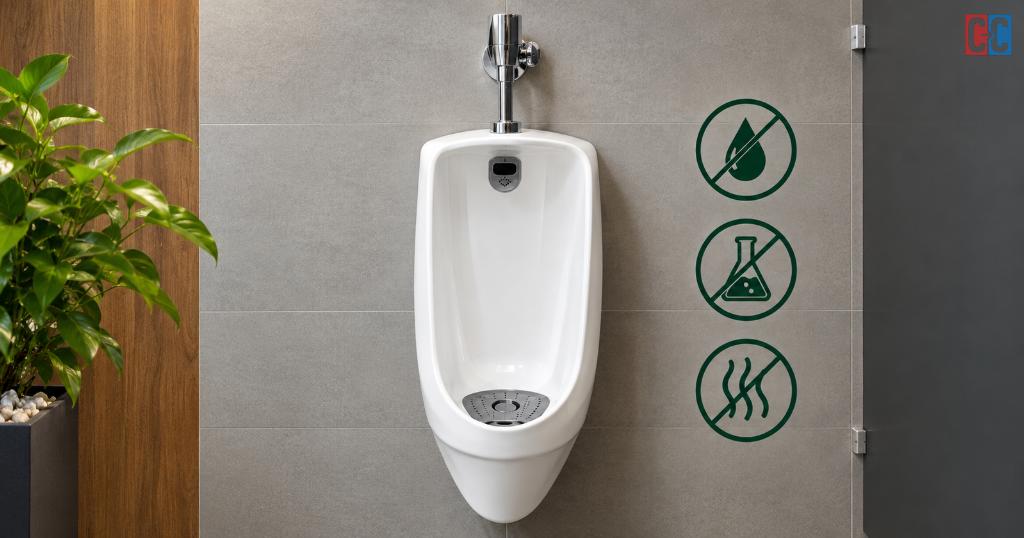
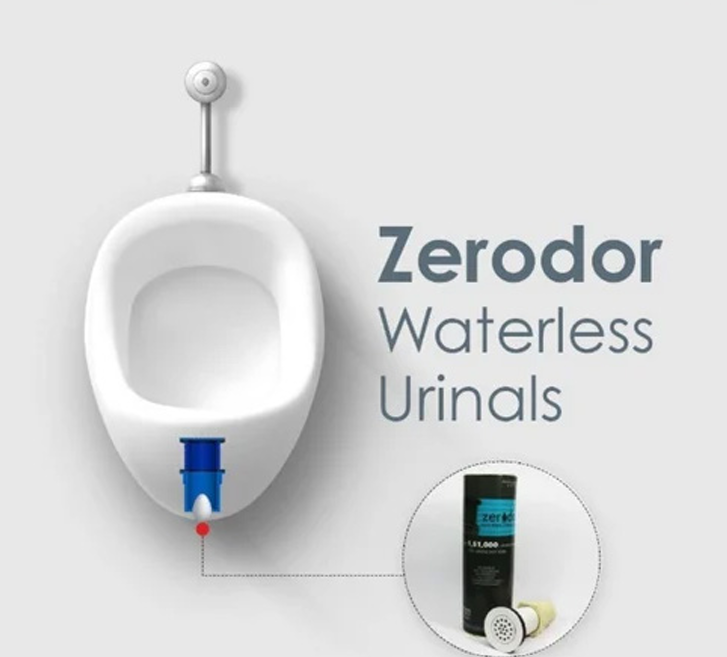
Zerodor, Ekam’s flagship product, is a waterless urinal system that retrofits onto standard urinal bowls. It uses a patented, no-consumable mechanism that allows urine to drain freely while blocking the upward passage of sewer gases and odour. The result is a urinal that smells less than a flushed one, uses no wate and requires no chemical maintenance. Each unit saves up to 1.5 lakh litres of water per year.
Zerodor is currently installed in Indian Railways coaches, airports, shopping malls, hotels, cinema halls, hospitals, schools and corporate offices. The company’s own data counts 85,000-plus installations across India. The technology has been validated by government quality certification bodies and meets green building norms under the Indian Green Building Council framework.
Beyond the Urinal: A Full WASH Portfolio
Ekam’s product range has grown considerably since the first Zerodor units shipped. The CARE line includes natural sewage care solutions based on home-grown bacterial strains and organic nutrients. These accelerate decomposition in septic tanks and sewage treatment plants, reducing greenhouse gas emissions in the process. Sludge management products convert faecal organic matter into nutrient-rich water suitable for irrigation or gardening, without chemicals, in 8 to 72 hours. There are natural enzyme-based drain cleaners and surface cleaning agents that replace chlorine-heavy commercial alternatives. Food composting systems complete the circular picture. The company’s design philosophy — ‘inspired by nature, built for the realities of a developing world’ — is not marketing language. It is the actual constraint the founders designed within: products requiring specialist maintenance or proprietary consumables fail in the settings where India’s WASH gap is largest.
Shark Tank, Rainmatter and the Validation Gap
In a widely watched episode of Shark Tank India, Ekam presented before the investment panel and left without a deal. The sharks were unconvinced by the unit economics or scale potential. But the story did not end there. Rainmatter Foundation, the impact investment arm of Zerodha, subsequently invested in Ekam, providing both capital and strategic support. The company has raised $874,000 across three funding rounds. As of March 2026, Ekam employs 20. It now serves over 700 client organisations. The technology that the Sharks passed on is sitting in Indian Railways coaches, saving water every time a train runs.
The Way Forward
Ekam Eco Solutions has solved a real problem with a manufacturable, maintainable product at 85,000 units of proof. The next challenge is procurement policy. India’s public infrastructure estates continue to specify flush-based urinal systems in tender documents, because flush is the default, not because anyone has run a recent water-cost analysis. The Ministry of Housing and Urban Affairs and the Bureau of Energy Efficiency should jointly update green building specifications for all government-funded construction to include waterless urinal systems as the baseline in commercial-scale washrooms, not as an optional upgrade. India uses roughly 70,000 litres per urinal per year. It does not have to. Ekam has already done the engineering. The government’s job is to stop treating what already works as an exception and start writing it into the rule.
Clear Cut WASH Desk
New Delhi, UPDATED: September 30, 2026 18:00 IST
Written By: Tanmay J. Urs