
Bindeshwar Pathak transformed sanitation in India through the Sulabh Sanitation Movement, promoting affordable toilet technology and challenging the practice of manual scavenging. His legacy highlights the need for effective rehabilitation, safer sanitation systems and dignity for sanitation workers.
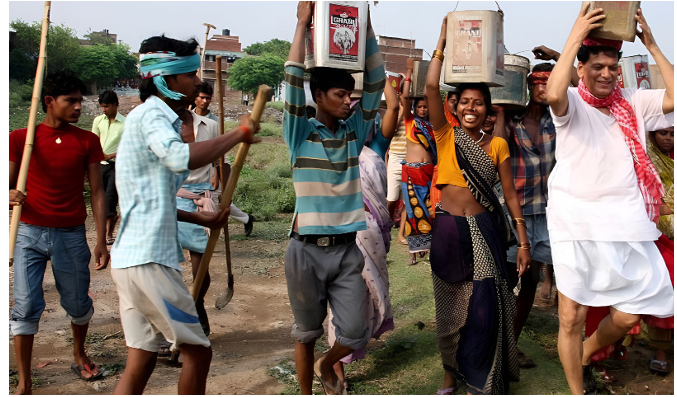
He once picked up human waste with his own hands. Do not confuse it for a metaphor or a gesture. He did it literally in front of a photographer, in front of the people whose lives he had decided to spend fixing. Bindeshwar Pathak carried the head-load that manual scavengers in India had been forced to carry across generations of caste hierarchy. He spent the next 5 decades building a world where nobody would have to pick it up again. On 15 August 2023, he died at the age of 80 at AIIMS Delhi, following a cardiac arrest. He left behind 1.5 million household toilets, more than 10,000 public pay-and-use toilet complexes, and a word, “Sulabh”. That has become synonymous in the Indian public imagination with the idea that sanitation can be, as the name means, easy.
The Idea That Changed Everything
In 1970, India had roughly 3.5 million manual scavengers when Pathak founded the Sulabh Sanitation Movement. The 1961 census revealed an uncomfortable truth: excreta from dry latrines were collected by hand, disproportionately by Dalits, especially women. Mr Pathak was a sociologist from Patna. He was trained in Gandhian thought at the Bettiah ashram. He looked at that number and understood it as a caste crime dressed in economic language. His solution was a twopit pour-flush toilet that sealed waste from human contact. It allowed safe decomposition and costed a fraction of conventional sanitation infrastructure. The design required no manual cleaning. It produced biogas. It could be maintained by the household that owned it. Bihar’s government commissioned 200. Then the word spread.
Scale that policy could not ignore
Sulabh International eventually worked across 1,586 towns in 24 states and 5 Union Territories, with 3 million volunteers. Over 170 biogas plants are operational across Bihar, Uttar Pradesh and Gujarat. The clean, staffed, pay-and-use public toilet complexes became the baseline for public hygiene access, with more than 10 million people using Sulabh facilities daily. Pathak liberated over 120,000 scavengers from the profession. He rehabilitated destitute widows in Vrindavan. In 1978, a Patna conference gave Sulabh national recognition.
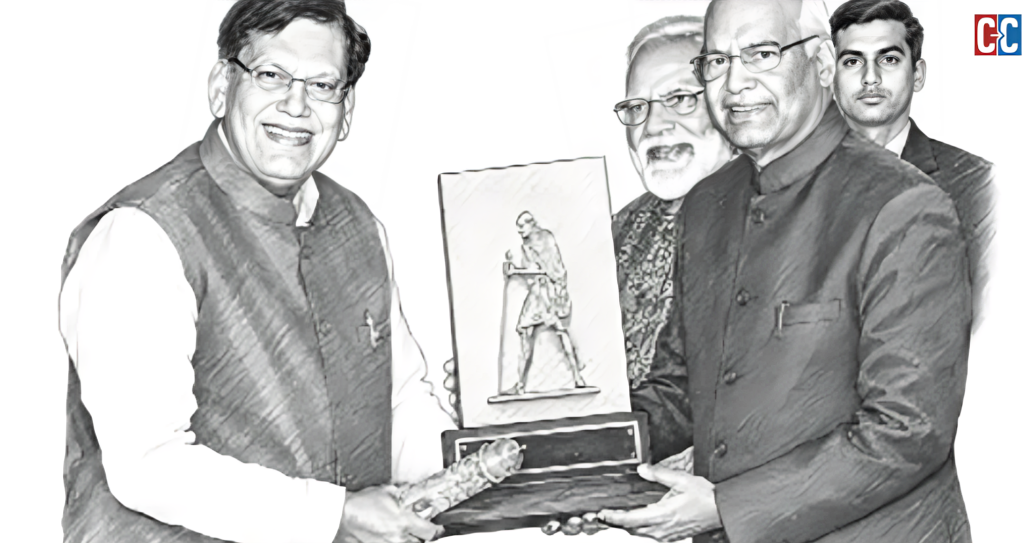
By 1980, 33 countries had been introduced to the model. In 2009, the Royal Swedish Academy of Sciences awarded him the Stockholm Water Prize. In 2016, Sulabh received the Gandhi Peace Prize. The Padma Bhushan came in 1991.
The Work He Left Unfinished
None of this erases the distance still to travel. At the time of his death, government estimates placed more than 50,000 people still engaged in manual scavenging. The Prohibition of Employment as Manual Scavengers Act, 2013, exists in law. Its enforcement is a patchwork of state discretion and political will. Manual scavenging in sewer and septic tank cleaning continues to kill workers every year. The data on how many is not centrally tracked. That failure to count is its own statement about whose deaths the system notices. Pathak spent fifty years proving the problem was solvable. The infrastructure exists. The technology is simple. The business model is selfsustaining. What ran out, in his own assessment, was never resources.
The Way Forward
Bindeshwar Pathak died on Independence Day. His legacy should be measurable in the proportion of India’s remaining manual scavengers formally rehabilitated, retrained and economically resituated by the next Independence Day. That figure should appear in the Union Budget, tracked with the rigour of fiscal deficit and inflation. He built the model. He proved the business case. He spent a life demonstrating that dignity is not a luxury. The policy establishment’s job now is to stop treating his work as inspiration and start treating it as an instruction manual.
Clear Cut WASH Desk
New Delhi, UPDATED: September 29, 2026 17:35 IST
Written By: Tanmay J. Urs