
When the FSSAI’s order in October 2025 banned the use of “ORS” on any beverage or product that is not in accordance with the formula of WHO’s standard Oral Rehydration Solution, it marked a concrete step toward the check on misleading labeling. While all attention was focused on the Delhi High Court’s decision upholding the directive, the real action started on the ground in Tamil Nadu, where the state administration moved fast to implement the regulation.
Swift and resolute State action
The Food Safety and Drug Administration Department of Tamil Nadu acted almost immediately after the FSSAI directive. Detailed instructions were issued within days to district food safety officers to check markets, pharmacies, and retail outlets selling products making “ORS” or “rehydration” claims that did not meet WHO standards.
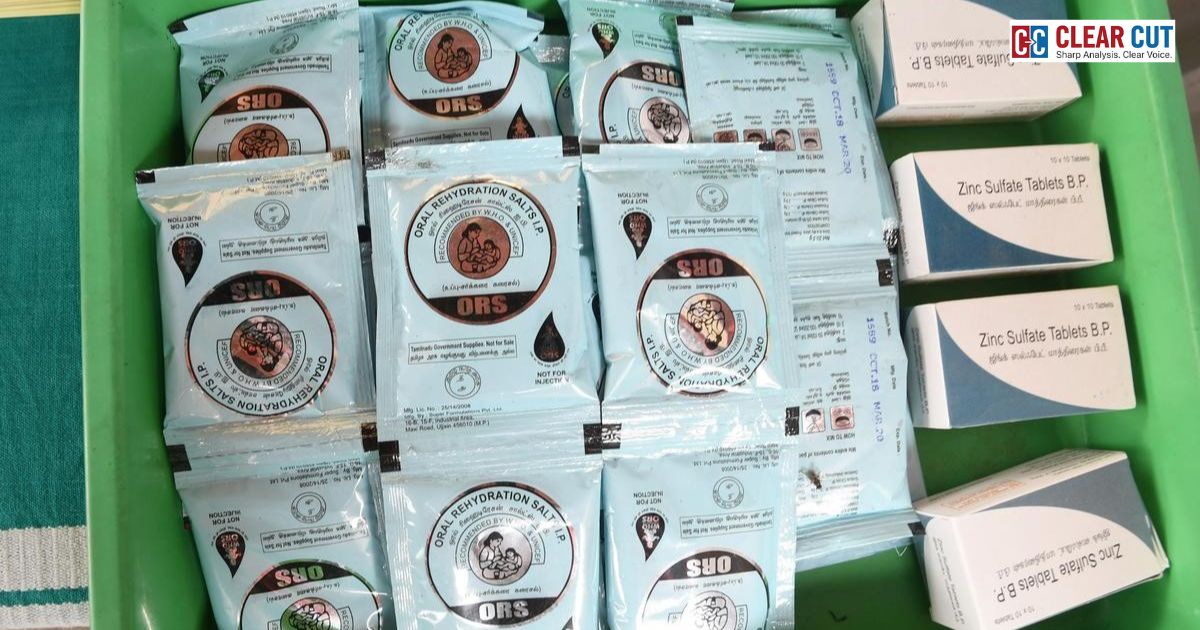
Inspectors seized non-compliant stock, issued show-cause notices to brands, and initiated relabelling proceedings wherever required. This was arguably one of the fastest compliance drives in India and a textbook example of how state-level enforcement can make or break a national health directive.
Setting a Benchmark for Other States
Tamil Nadu’s proactive stance was not an accident. The state has historically been known for its efficient public health governance and stringent food safety system. Indeed, it has earlier spearheaded various drives against adulterated milk, spurious packaged water, and artificial sweeteners not meeting standards. The infrastructure and institutional muscle built through these earlier drives put the state in a position to react quickly and decisively when the FSSAI order came into effect.
By contrast, other states were slower to respond, and some were still conducting internal reviews before commencing field inspections. Tamil Nadu’s example once again underlined the role of strong local enforcement in realising national policy objectives.
The Health Risks Behind the Label
But beneath the anger over ORS lies a deeper health concern. The term “ORS” is not simply a marketing catch-all; it’s a real, life-saving formulation of glucose, sodium, potassium, and citrate, whose use is widespread across the world as a treatment against dehydration due to diarrhoea. Products masquerading under this name but failing to match up to the formula can indeed be dangerous, particularly to children.
In some instances, there have been reports of parents giving these sugary drinks to children with diarrhoea, mistaking them for medically approved oral rehydration solutions. This uninformed consumption can worsen dehydration and lead to dangerous health consequences. Tamil Nadu’s crackdown was thus not only about consumer protection but also about preventing a possible public health hazard.
The Role of Medical Advocacy
Hyderabad-based paediatrician Dr Sivaranjani Santosh was instrumental in highlighting this as a national issue. For years, she had been documenting several clinical cases where misleading packaging was responsible for delayed or incorrect diagnosis and treatment. The value of her continuous efforts to call for stricter labelling standards resonated with parents and policy makers alike.
‘Waiting with bated breath’! Today’s Delhi High Court’s decision and FSSAI’s decision are going to have tremendous implications for the future of the health and lives of children! This is either going to be the beginning for stopping misleading labelling, marketing, and selling, or it is going to crash the hopes that 150 crores Indians are having on our system!
One more win! Thank you to the Government of Tamilnadu!
– tweeted Dr Sivarajini
When the FSSAI directive came through, her public comments hailed it as “victory for child health,” but she also made it a point to underline that it would work only when implemented effectively at the state level. Tamil Nadu’s response, in that sense, vindicated her call for stronger enforcement.
A Public Health and Governance Moment
What happened in Tamil Nadu is a rare example of harmony between medical advocacy, regulatory action, and administrative implementation. It is a lesson in how a state government can, by working its apparatus in concert with national guidelines, turn a policy decision into actual public health outcome.
The case also raises broader questions about accountability in food labeling: Should there be more stringent penalties for misleading consumers with such quasi-medical claims? Should packaging regulations for children’s products be subject to additional scrutiny? Tamil Nadu’s example suggests that without state vigilance, even the best-intentioned central policies risk falling into bureaucratic obscurity.
This has been the success story of Tamil Nadu’s enforcement, which can be emulated by other states. Further progress in this area will involve regular inspections, consumer awareness campaigns, and collaboration of the food safety departments with paediatric associations.
Clear Cut Health Desk
New Delhi, UPDATED: Nov 04, 2025 11:10 IST
Written By: Janmojaya Barik