

Clear Cut Magazine

Support Clear Cut—the only magazine focused solely on social issues—to keep independent, data-driven journalism alive.

Support Clear Cut—the only magazine focused solely on social issues—to keep independent, data-driven journalism alive.

Admin

The Rise of ESG and Its Influence on India’s Development Sector

India’s growing ESG regulations are transforming how NGOs and development organisations access CSR funding, pushing them toward stronger impact measurement and compliance systems. While ESG creates new opportunities for collaboration and blended finance, smaller grassroots organisations risk being excluded due to limited compliance capacity. The Proposal She had to Rewrite Three Times Deepika Nair has…

Read More

Digital Democracy in India: Does Online Outrage Actually Change Anything? 

India’s digital activism has occasionally influenced political accountability, as seen in M.J. Akbar’s resignation during the #MeToo movement, but most online outrage fails to create lasting policy change. The article argues that India needs stronger digital accountability laws and institutional mechanisms to turn viral public pressure into meaningful democratic reform. The Hashtag that did cost…

Read More

India’s New Eyes in the Field: What the NITI Aayog CPO Portal Must Deliver

NITI Aayog’s newly launched CPO Portal aims to improve real-time coordination between field officers, districts, and ministries. While the platform could reduce bureaucratic delays, its success will ultimately depend on accountability and institutional follow-through. When field reports arrive too late  Earlier this year, a District Magistrate in Khunti, Jharkhand — one of the districts covered under…

Read More

Born Into Poison: India’s Children, Open Waste Sites, and the Right to a Clean Environment

Children living near India’s landfills face severe health risks from toxic waste, polluted water, and poor sanitation, leading to stunting, disease, and developmental harm. The article argues that this is not merely an infrastructure failure but a serious child rights and environmental justice crisis demanding urgent policy action. She plays where the city throws its waste  One…

Read More

A Routine Inspection Exposed a Deeper Crisis in Delhi’s Neglected Wards 

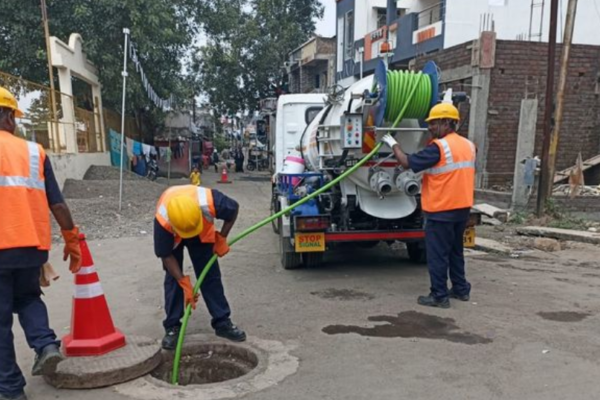
Delhi’s waste crisis in Ward 42 highlights how decades of unequal urban planning and poor sanitation continue to impact low-income colonies like Mangolpuri and Sultanpuri. Overflowing dhalaos, weak waste segregation, and failing civic infrastructure have turned a sanitation issue into a major public health and social development concern. When Delhi’s MCD staff visited Ward 42 in Rohini Zone on…

Read More

The City That Was Supposed to Save Her: Urban Poverty and India’s Unfinished SDG Promise  

India’s SDG ranking has improved, but urban poverty continues to leave millions in slums without proper housing, water, healthcare, and education. The article highlights how sustainable development cannot succeed unless cities become inclusive for vulnerable residents like Kamla Bai. She moved to the city for a better life Kamla Bai came to Bhopal from a…

Read More

CSR Technology and The Role of AI

Artificial intelligence and skills-based volunteering are transforming CSR by improving impact tracking, ESG reporting, and corporate engagement, but they also raise serious concerns around bias, unequal funding, and nonprofit autonomy. The future of CSR will depend on whether companies prioritize ethical oversight and genuinely nonprofit-led collaboration. What’s Changing in CSR’s Technology Stack A close look…

Read More

The Supreme Court Said Protecting the Environment Is a Fundamental Duty. Corporate India Filed a CSR Report Instead.

India’s corporate environmental responsibility debate is shifting from voluntary CSR to a constitutional duty under Articles 21 and 51A(g), backed by decades of Supreme Court rulings. The real challenge now is whether regulators and companies will move beyond symbolic green projects toward measurable environmental accountability. There’s a constitutional argument about corporate environmental responsibility in India…

Read More

The Plastic Treaty Is Failing in Real Time. The Industry Wrote That Into the Negotiating Text.

The global plastics treaty is at risk of becoming a waste management agreement that ignores the root cause: rising plastic production. Without binding caps, pollution will continue to grow despite improved recycling efforts. What Was Promised and What Is Happening In March 2022, the UN Environment Assembly in Nairobi agreed to negotiate a legally binding…

Read More