


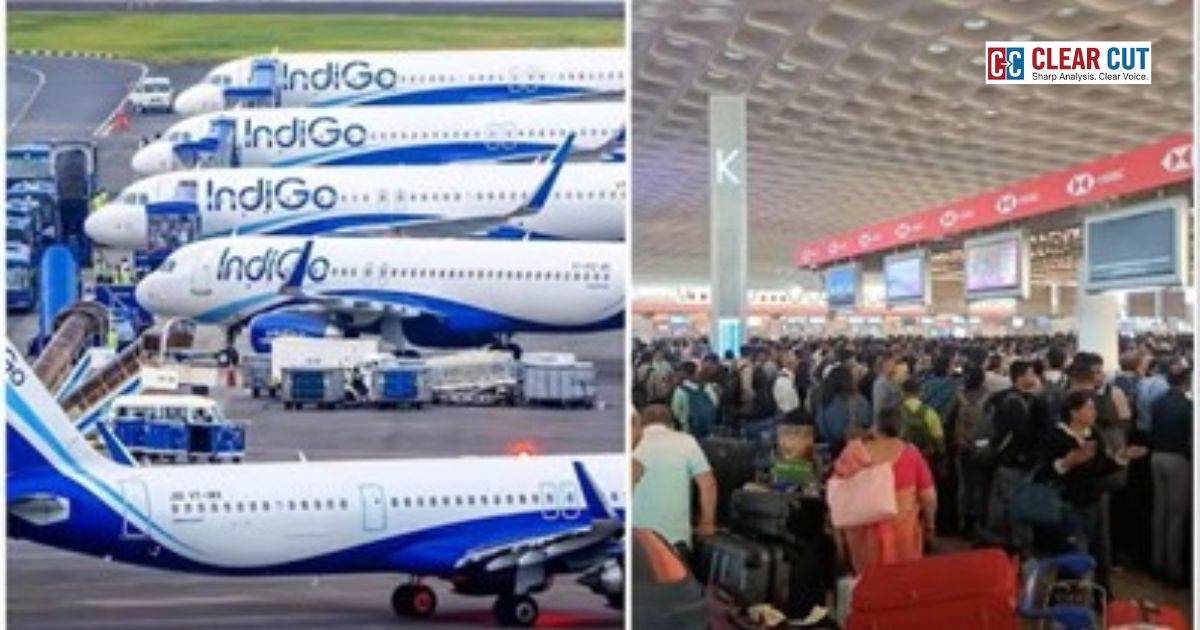
On Wednesday and Thursday, over 300 flights were cancelled by India’s biggest airline, IndiGo, causing travel mayhem throughout the nation and a significant operational breakdown. The carrier’s network, which operated over 2,300 flights daily, encountered considerable passenger discomfort, cascading delays and increasing regulatory scrutiny. Thousands of passengers were stuck at airports in key hubs like Delhi, Bengaluru, and Mumbai on Wednesday, even though difficulties had been building since the start of the week.
The severe lack of cockpit and cabin personnel is at the core of the problem. It was made worse by the second phase of India’s Flight Duty Time Limitation (FDTL) restrictions, which went into force on November 1, 2025. The revised FDTL regulations drastically reduce the number of permitted night landings from six to just two. Further it requires longer weekly rest intervals and broadens the meaning of night hours. Due to the airline’s reliance on high utilization and extended nighttime operations, IndiGo has been disproportionately affected by these changes.
IndiGo has a small buffer capacity due to its fleet of 416 aircraft, 50 of which are already grounded. The crew’s availability and scheduling flexibility were immediately stretched by the more stringent regulations. Sources claim that the airline had trouble deploying enough cabin and cockpit personnel, particularly in its busiest hubs. It resulted in unforeseen cancellations and extensive network instability. The primary cause of the increasing disruptions turned out to be this scarcity.
IndiGo’s performance measures made the operational pressure quite evident. At the six major airports under the civil aviation ministry’s observation, its on-time performance (OTP) fell to just 35% on Tuesday. By contrast, Akasa Air scored 73.2%, SpiceJet 82.5%, Air India Express 79.5%, and Air India 67.2%. The disparity demonstrated how the new FDTL regulations significantly affected IndiGo’s busy schedule.
Confusion and mayhem were depicted in passenger reports from Delhi’s Indira Gandhi International Airport. Numerous reports stated that important touchpoints lacked IndiGo ground personnel. Passengers reported that there were no updates regarding changed departure schedules. Also, the airline frequently made last-minute gate adjustments without informing them. Many passengers were uninformed of whether their flights were delayed or cancelled until just before departure which increased annoyance due to the lack of visibility of ground staff.
There were substantial knock-on impacts on travel. Families had to reschedule their trip arrangements, business travellers missed appointments and passengers who connected to foreign planes suffered further losses. While some waited in enormous lines for rebooking or refunds others spent hours inside terminals without any help. Passengers from cancelled flights poured into customer service desks and check-in queues, causing severe traffic jams at airports.
In its initial statement on Wednesday, IndiGo blamed a combination of “technical issues, airport congestion and operational requirements” for the interruptions. However, the airline then provided a more thorough explanation admitting that a “multitude of unforeseen operational challenges” had affected its network. These included minor technical issues, changes to the winter schedule, unfavourable weather, traffic throughout the aviation industry, and most importantly the revised crew-rostering regulations brought about by the upgraded FDTL standards. The airline expressed regret and stated that its teams were working nonstop to stabilize the network.
IndiGo announced precise changes to its flight schedules for the next 48 hours, including more cancellations and significant rescheduling in an effort to return to normal. The airline acknowledged that these actions were required to restore punctuality and avoid further network collapse, even if it did not provide the precise number of flights that would likely be affected. Refunds or other travel options are being made available to impacted passengers.
The senior leadership of IndiGo has been called in for an explanation by the Directorate General of Civil Aviation (DGCA). DGCA has taken the matter seriously. The regulator has requested a thorough mitigation plan and is looking into the reasons behind the malfunction. According to DGCA data, IndiGo cancelled 1,232 flights in November personnel and FDTL restrictions were directly responsible for 755 of these cancellations. The airline’s OTP dropped from 84.1% in October to 67.7% in November due to an increase in operational delays. 16% of delays were caused by ATC congestion, and 6% were caused by crew-related problems.
IndiGo stated that it is engaged in crew planning and rostering systems, upgrading turnaround procedures and improving collaboration with airport operators and ATC in order to address the situation. However, despite these efforts, the frequent disruptions point to deeper structural issues for the biggest airline in India, particularly if industry-wide limitations such as capacity shortages and regulatory changes become more severe.
Passengers continue to be the principal victims of aviation turbulence for the time being. This incident highlights the critical need for improved communication, more robust operational buffers, and more resilient systems in India’s quickly expanding aviation industry as IndiGo struggles to restore normalcy.
Clear Cut Livelihood Desk
New Delhi, UPDATED: Dec 06, 2025 02:00 IST
Written By: Nidhi Chandrikapure


One thought on “IndiGo’s Widespread Flight Disruptions and Deep Operational Strain”