Today, India can send rockets to the Moon with precision, yet a courier still struggles to find the right house down the street.
This predicament has stinging implications. A decades-old 6-digit PIN tries to search for a needle in a haystack, leaving little room for efficient logistics or the smooth delivery of government benefits. For millions of Indians from a dense slum cluster to rapidly expanding urban blocks the simple act of being “found” is still a daily challenge. In response to these systemic inefficiencies, the Department of Posts has introduced the flagship DHRUVA Initiative also known as “The Digital Hub for Reference and Unique Virtual Address”. Built on the foundation laid by the Digital Postal Index Number (DIGIPIN) system, DHRUVA aims to completely reimagine how India structures, shares, and governs digital addresses.
What is the DHRUVA Initiative?
DHRUVA builds directly on DIGIPIN, a geo-coded, grid-based system assigning every 4×4 m patch of India a unique 10-character alphanumeric code corresponding to its latitude and longitude. Under DHRUVA, these precise geocodes are paired with virtual address labels like “name@entity” that map back to both the DIGIPIN and the descriptive address.
The Post Office Act 2023’s draft amendment provides the legal backbone for this transformation. It proposes a consent-based, interoperable digital addressing ecosystem, governed by a not-for-profit entity to ensure secure and regulated data sharing. Thus, while DIGIPIN offers unprecedented spatial precision, DHRUVA layers on usability, privacy protections and system-wide interoperability transforming delivery, governance and e-services across India.
Why Shift from the 6-Digit PIN to the 10-Character DIGIPIN?
The PIN system of 1972 worked when cities were small and services slow. Today, it is the digital equivalent of using a paper map in the GPS era.
- One PIN = thousands of households. Vast neighbourhoods and villages share the same code, making exact location identification nearly impossible.
- Urban expansion creates chaos. New streets inherit outdated PINs, causing misdirected parcels and frequent courier confusion.
- Deliveries fail often. A wrong PIN even with an accurate written address can divert, delay, or return packages, especially in an e-commerce-heavy economy.
- KYC and welfare delivery struggle. Imprecise addresses delay banking verification, insurance paperwork, and distribution of government benefits.
- No digital DNA. Traditional PIN codes cannot interface with GPS, drones, navigation apps, or real-time logistics tools, leaving them obsolete in a modern ecosystem.
Enter DIGIPIN Redrawing India, 4 Meters at a Time
- Unique 10-character codes generated from latitude/longitude give each 4×4 m area a precise identity eliminating ambiguity.
- Pinpoint deliveries. Couriers can reach exact doorsteps, even in congested lanes or nameless rural roads.
- GPS-compatible and future-ready. DIGIPIN plugs smoothly into maps, drones, automated logistics, and smart-city technologies.
- Fewer failed deliveries. Precise coordinates reduce misrouting, lowering return-to-sender rates.
- Boosted governance. Geocoded locations help target welfare schemes and subsidies with greater accuracy critical in slums and remote areas.
- Instant digital updates. Unlike static PINs, DIGIPIN adapts as settlements grow, shift, or densify.
How DHRUVA Takes It Further
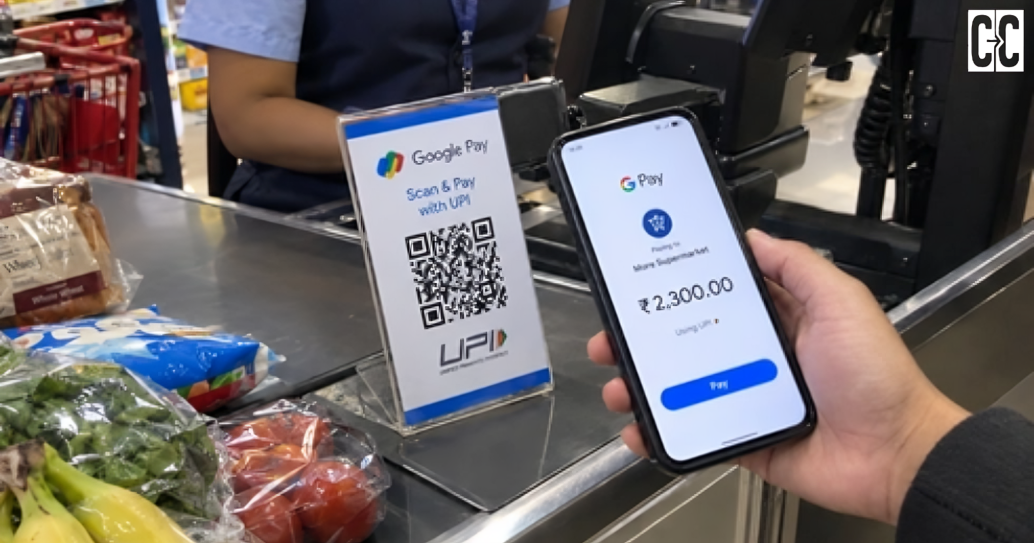
- DHRUVA adds a virtual address label much like a UPI ID to each DIGIPIN, making location-sharing simple and user-friendly.
- It transforms India’s addressing framework into a true digital public infrastructure accurate, consistent, secure, and future-aligned.
As drones, automated logistics, and smart-city systems scale, DHRUVA can become the trusted location identity for every Indian household cutting delivery failures, strengthening governance, and enabling frictionless digital services across an increasingly dynamic physical landscape.
Concerns Raised by Naysayers
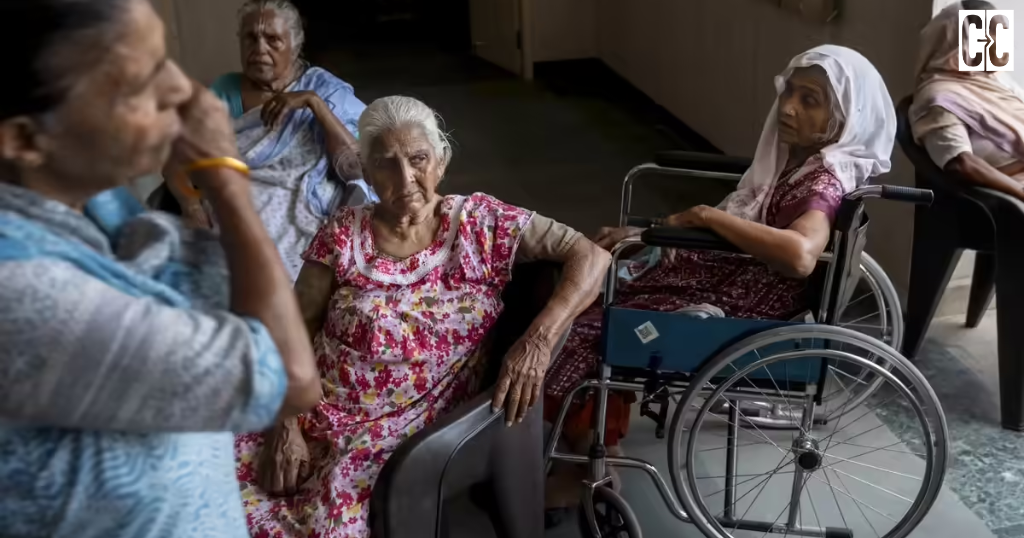
Implementing DHRUVA in informal rural areas brings significant privacy and operational concerns. Many residents lack formal land titles or clear property boundaries. Assigning permanent geo-coordinates in such contexts may trigger disputes over land ownership or expose residents to surveillance risks. Low digital literacy makes informed consent fragile, increasing chances of misuse or accidental oversharing of sensitive location data. Limited connectivity and lack of devices further complicate secure enrolment and authentication. Informal settlements evolve rapidly homes shift, expand, or get rebuilt making precise geocodes difficult to maintain. Errors could lead to exclusion, missed delivery or misidentification. Without robust safeguards, community engagement, and offline-friendly systems, DHRUVA may deepen mistrust, widen inequalities, and inadvertently marginalise the very populations it seeks to include.
Where Does the Balance Lie?
The world today is accelerating towards digital governance. Our lives have become deeply intertwined with identity and access. India has already reached its remotest corners through ambitious digital initiatives. But it also requires governance that the State reliably reach its citizens. By adding four extra alphanumeric characters to the traditional PIN, the government unlocks a vast landscape of opportunity bridging the gap between abundance and accessibility. Yet, careful regulation and ethical implementation are vital. If mishandled, DHRUVA risks nudging the world’s largest democracy toward an Orwellian dystopia. Also, if implemented wisely, it could instead position India as a Utopia of Access and Opportunity.
Clear Cut Research Desk
New Delhi, UPDATED: Dec 09, 2025 03:47 IST
Written By: Joydeep Chakraborty