
Russia’s Strategy to Maintain India Oil Exports
Russia is actively restructuring its oil supply chain to keep crude oil flowing to India despite Western sanctions. Analysts say the Kremlin is using alternate exporters and supply routes to bypass restrictions imposed mainly by the United States and the European Union.
Since the Ukraine war began in 2022, India has emerged as the world’s second-largest buyer of Russian crude oil, drawing from heavy discounts that make Russian barrels far cheaper than Middle Eastern alternatives.
Industry experts report a recent dip in Russian oil shipments to India from about 1.7 million barrels per day to around 1.2 million in December 2025. But they stress this is temporary. Russia is already reorganising its oil supply lines through newly emerged companies that escape direct sanction exposure.
Western Pressure and India’s Response
The United States, under President Donald Trump, has ramped up pressure on New Delhi to cut back on Russian oil imports. Trump’s administration has slapped punitive tariffs on Indian exports and threatened further economic penalties if India continues its purchases.
In August 2025, the U.S. imposed a 25% tariff on Indian exports as a measure targeting New Delhi’s oil buying choices. Trump publicly argued that India’s continued purchases help fund Russia’s war in Ukraine, a claim Indian officials strongly deny.
Despite this, India has maintained that its energy policy is a sovereign decision. Government sources indicate New Delhi will not let external pressures dictate its energy strategy.
Meanwhile, diplomatic tensions have stalled broader trade negotiations between India and the U.S., making cooperation on other fronts more difficult.
Sanctions Bypasses and Shadow Networks
According to analysts, Russia’s response to sanctions includes expanding its so-called shadow fleet of tankers and intermediaries. These vessels and companies help move sanctioned oil while avoiding direct links to major state exporters like Rosneft and Lukoil,the original targets of Western measures.
Homayoun Falakshahi, Head Crude Oil Analyst at Kpler, told The Guardian that new exporters are emerging to replace sanctioned ones, effectively keeping oil shipments to India alive.
He added: “It looks like Russia is reorganising its supply chain. The new players are likely to dominate exports and most barrels will be supplied by entities not on the sanctions list.”
Economic Imperatives for India
India imports roughly 90% of its oil needs. Cheap Russian crude helps lower fuel costs and stabilise energy supply for its growing economy.
June Goh, senior oil market analyst at Sparta Commodities, said discounted Russian oil is “too attractive for Indian refiners to ignore,” noting that the savings could total billions of dollars annually.
For state-run refiners such as Indian Oil Corporation (IOC), Russian crude remains central to operations. However, some private firms like Reliance Industries have paused purchases to comply with sanctions and protect broader export markets.
To diversify supply and ease geopolitical pressure, IOC recently bought crude from Ecuador and Colombia,moves analysts view as hedging rather than a full shift from Russian oil.
Geopolitical Stakes Ahead
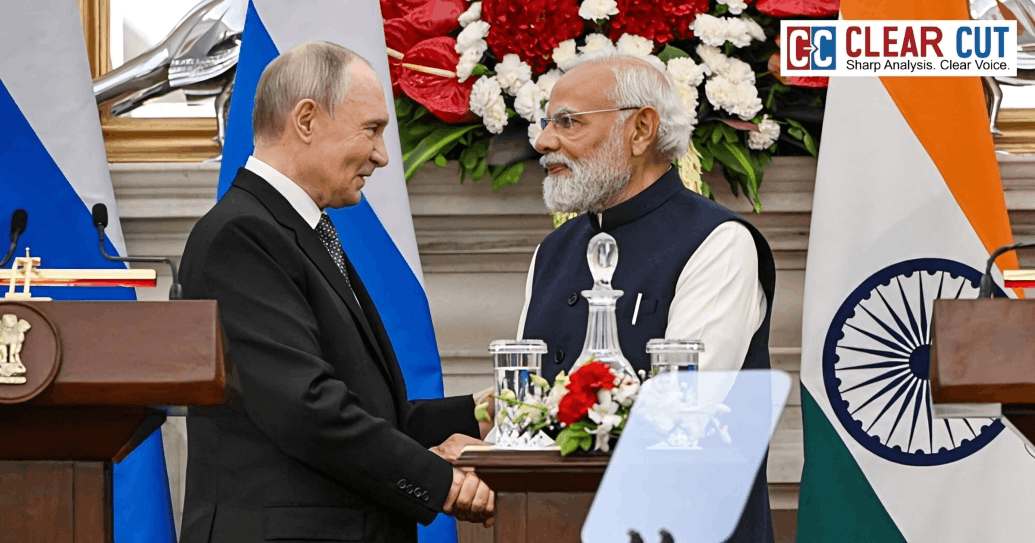
Russia has assured India of continued oil deliveries, framing the partnership as mutually beneficial and independent of Western pressure.
At the same time, global enforcement actions, including U.S. and U.K. interceptions of sanctioned tankers, highlight how contested oil supply networks are becoming central to international politics.
As Russia diversifies its export strategies and India balances economic needs with diplomatic costs, the energy relationship between the two nations will remain a key geopolitical flashpoint in 2026.
Clear Cut Research Desk
New Delhi, UPDATED: Jan 17, 2026 09:00 IST
Written By: Ayushman Meena