
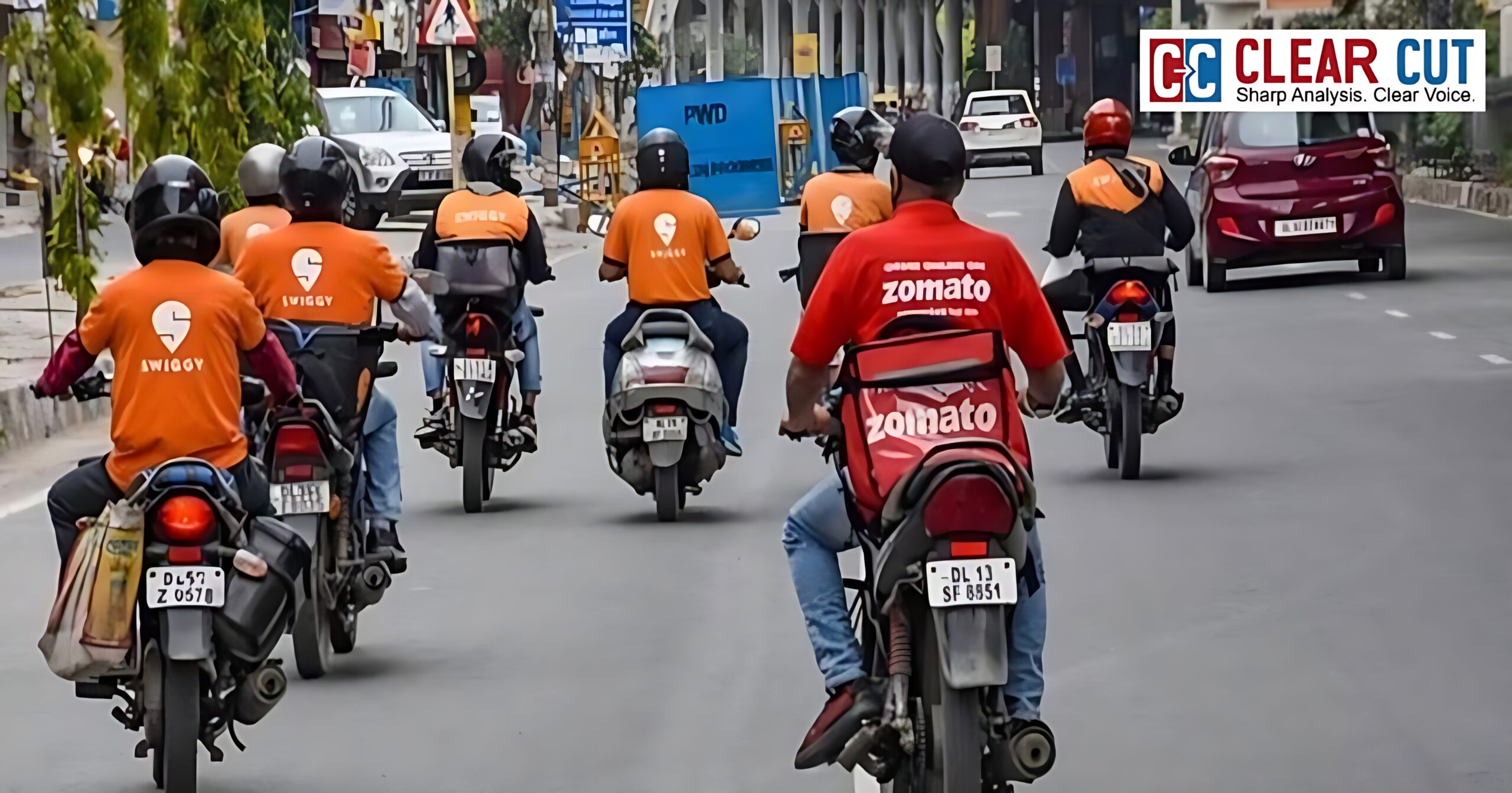
India’s gig economy has grown rapidly with the rise of digital platforms such as Uber, Ola, Swiggy, Zomato, Urban Company, and so on. Millions of workers depend on app-based jobs for income now. However, for years, these workers remained outside India’s formal labour protection system. The Code on Social Security, 2020 aims to change this reality by extending legal recognition and social security to gig and platform workers.
According to NITI Aayog, India had 7.7 million gig and platform workers in 2020–21. This number is expected to rise to 23.5 million by 2029–30, forming nearly 7% of the non-agricultural workforce. Despite their growing importance, gig workers lacked access to basic welfare benefits. The SS Code represents a major policy response to this gap.
Life Before the Social Security Code
Before the SS Code, gig and platform workers were treated as independent contractors. Labour laws did not recognise them as employees. As a result, they had no legal entitlement to provident fund, health insurance, pensions, or maternity benefits. Most workers paid for medical care and accident costs themselves.
Some platforms offered limited insurance. However, these schemes were voluntary and uneven. During the COVID-19 lockdowns, this lack of protection became clear. Many gig workers lost income overnight and had no social safety net. The SS Code seeks to address this long-standing vulnerability.
Mandatory Contributions and the Social Security Fund
A key feature of the SS Code is the creation of a dedicated Social Security Fund for gig and platform workers. Aggregators must now contribute 1–2% of their annual turnover. This contribution is capped at 5% of the payments made or payable to workers.
This provision marks a clear shift from voluntary welfare to statutory responsibility. It places part of the welfare burden on platforms that benefit from gig labour. The Code also allows funding from government sources and other prescribed channels, creating a shared financing model.
This approach recognises that gig workers often earn unstable incomes. According to NITI Aayog, nearly 47% of gig workers are in low- or medium-skilled jobs. Many face income uncertainty and lack long-term savings.
Access to Social Security Schemes
Under the SS Code, gig and platform workers become eligible for government-notified social security schemes. These include:
- Accident and life insurance
- Health and maternity benefits
- Disability and old-age protection
- Other welfare schemes notified by the government
Although the Code does not fix benefit amounts, it creates a legal framework for coverage. This is an important shift. Gig workers now have statutory recognition within India’s social security system.
Portability of Benefits Across Platforms
Gig work often involves frequent job changes. Workers may switch platforms or work for multiple apps at the same time. Earlier, any welfare benefit ended when a worker left a platform.
The SS Code introduces portability of social security benefits. Workers can now retain benefits even when they change platforms. Registration on the e-Shram portal enables this portability.
Each worker receives a unique Aadhaar-linked ID through self-registration. This ID allows benefits to continue across platforms. As of 2024, over 290 million unorganised workers had registered on e-Shram, making it one of the largest labour databases in the world.
National Database and Better Policy Design
The e-Shram portal also helps create a national database of gig and platform workers. This database supports targeted welfare delivery, skill development, and better labour policy design.
For the first time, policymakers can access reliable data on gig workers’ demographics, skills, and geographic spread. This data-driven approach can improve future employment and social protection strategies.
Grievance Redressal and Institutional Support
Earlier, gig workers had no formal grievance redressal mechanism. They often faced issues such as sudden account deactivation, delayed payments, or unfair penalties.
The SS Code allows governments to set up helplines, call centres, and facilitation centres for grievance redressal. This gives workers access to institutional support and improves accountability within platforms.
Challenges and the Way Forward
Despite its progressive vision, the SS Code faces implementation challenges. Governments must notify schemes, ensure platform compliance, and reach diverse categories of gig workers. Enforcement remains a key concern. Even so, the Code on Social Security, 2020 marks a turning point in India’s gig economy. By creating a social security fund, enabling benefit portability, and recognising gig workers in law, it lays the foundation for a more inclusive and resilient labour system. As platform work continues to expand, effective implementation will determine whether this promise translates into real protection for millions of workers.
Clear Cut Research Desk
New Delhi, UPDATED: Jan 22, 2026 01:10 IST
Written By: Nidhi Chandrikapure