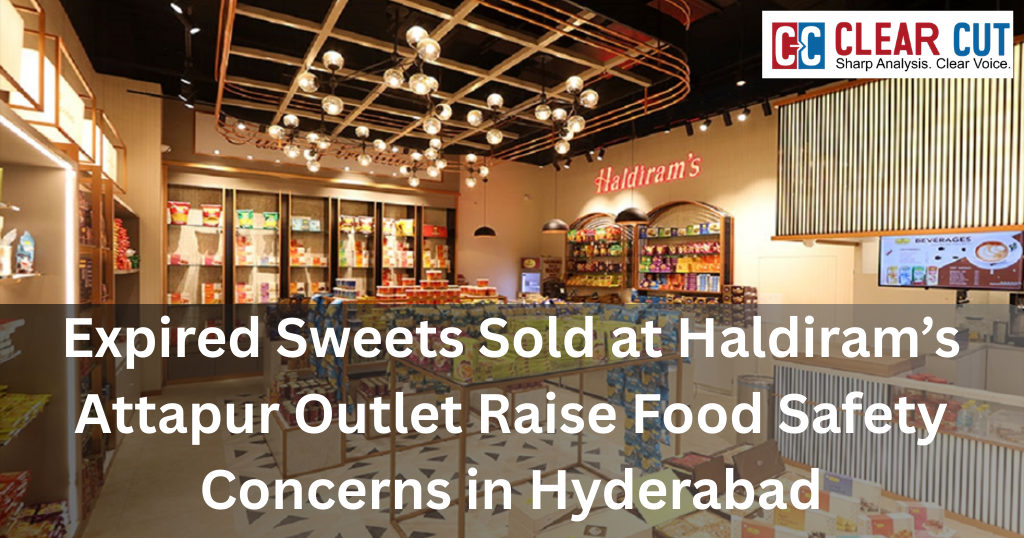
Telangana food safety officials found expired sweets and labeling violations at Haldiram’s Attapur outlet in Hyderabad during an inspection. Samples were collected for laboratory testing under FSSAI regulations.
Key Highlights
• Food safety officials found expired sweets at a Haldiram’s outlet in Attapur, Hyderabad
• Some products allegedly lacked proper labeling and expiry details
• Temperature control and storage conditions were also examined during inspection
• The inspection was conducted by Telangana food safety authorities
• Samples were reportedly collected for further laboratory analysis
• The incident raises broader concerns about food safety compliance in branded outlets
What the Incident Is About
In simple terms, food safety authorities found expired sweets and labeling irregularities at a Haldiram’s outlet in Attapur, Hyderabad. The issue came to light during an inspection carried out by state food safety officials.
According to reporting by India Today (February 17, 2026), officials discovered sweets that had crossed their expiry date and some packaged products that did not display proper labeling information as required under food safety regulations.
Authorities initiated action against the outlet and collected samples for further testing. The case has raised public concern because the outlet belongs to a well-known national brand.
What Officials Found During Inspection
As reported by India Today, Telangana’s food safety department conducted the inspection as part of routine monitoring and compliance checks. During the visit, officials identified food items that were allegedly past their expiry date.
They also observed irregularities in labeling, including the absence of mandatory details such as manufacturing date, expiry date, and batch numbers on certain products.
Officials additionally examined storage practices, including temperature control and cold chain management. Sweets made with dairy ingredients such as khoya and ghee require controlled storage conditions to prevent spoilage. Any lapse in refrigeration or display temperature can accelerate bacterial growth and reduce product safety.
Under the Food Safety and Standards Authority of India (FSSAI) regulations, all packaged food products must clearly display:
• Date of manufacture
• Expiry or “best before” date
• Batch number
• Ingredients list
• FSSAI license number
The absence of these details constitutes a violation of labeling norms under the Food Safety and Standards Act, 2006.
Legal Framework Governing Food Safety
The Food Safety and Standards Authority of India (FSSAI) regulates food businesses under the Food Safety and Standards Act, 2006. The law mandates strict compliance with hygiene, labeling, storage, and quality standards.
Food business operators must ensure that expired products are removed from shelves. Selling expired food is considered unsafe and punishable under the Act.
According to FSSAI’s guidelines, food that is past its expiry date may pose risks including:
• Food poisoning
• Gastrointestinal infections
• Contamination-related illnesses
Food safety authorities have the power to:
• Conduct inspections
• Seize products
• Collect samples for testing
• Impose fines or suspend licenses
In this case, authorities reportedly collected samples for laboratory analysis to determine whether the products were unsafe for consumption.
Why Expiry Dates and Labelling Matter
Expiry labels are not mere formalities. They protect consumers from health risks.
Food items like sweets often contain milk, khoya, ghee, and sugar. These ingredients can spoil if not stored properly. Improper storage, poor temperature maintenance, or prolonged shelf display increases the risk of bacterial contamination.
India’s National Centre for Disease Control (NCDC) has repeatedly noted that foodborne illnesses remain a public health concern, especially in urban areas with high consumer turnover.
Clear labeling ensures traceability. If a batch is found contaminated, authorities can track its source and prevent further distribution.
Without proper labeling, consumers cannot make informed decisions.
Brand Responsibility and Public Trust
Haldiram’s is a well-established food brand in India, operating multiple outlets across states. When such outlets face regulatory violations, the issue extends beyond a single shop.
Branded food chains are expected to maintain high compliance standards because they serve large volumes of customers daily.
Food safety experts argue that bigger brands must implement:
• Regular internal audits
• Staff training on storage norms
• Digital inventory tracking
• Expiry monitoring systems
Public trust in food brands depends heavily on consistent quality assurance.
Broader Food Safety Concerns in India
India’s food safety ecosystem has strengthened in recent years. FSSAI has increased inspections and awareness campaigns.
However, enforcement challenges remain due to:
• High volume of food businesses
• Limited inspection personnel
• Inconsistent compliance at outlet level
According to FSSAI’s annual reports, thousands of inspections are conducted every year, and violations related to labeling and hygiene remain among the most common findings.
Urban consumers increasingly rely on packaged and branded food products. This increases the importance of strict monitoring.
Social and Consumer Impact
Incidents like this create anxiety among consumers. People expect that products sold in branded outlets are safe and properly monitored.
Expired food can especially affect:
• Children
• Elderly individuals
• People with compromised immunity
Consumer rights advocates stress that transparency and swift action are essential to maintain trust.
The case also highlights the need for consumers to check expiry dates carefully before purchasing packaged food.
In rapidly urbanising Indian cities, working households increasingly depend on ready-made and branded foods. Many families rely on packaged sweets and snacks for daily consumption, festivals, and social gatherings. Safety lapses in such outlets therefore affect not just individual buyers but wider urban food trust systems.
When trusted brands fail to maintain compliance, it weakens consumer confidence in the broader organised food sector. In cities like Hyderabad, where nuclear families and working professionals depend heavily on quick, branded purchases, food safety violations can have systemic social consequences.
Maintaining hygiene and regulatory standards is not just a legal requirement but a social obligation toward urban consumers.
Regulatory Action and Next Steps
Food safety authorities have initiated action against the outlet and are awaiting laboratory test results. If the investigation confirms violations, penalties may include fines, product seizure, or suspension of operations under FSSAI norms.
Authorities may also conduct follow-up inspections to verify corrective measures, including proper labeling, safe storage conditions, and effective temperature control systems.
Such enforcement actions send a message that regulatory standards apply equally to small vendors and large brands. Strengthened monitoring and consistent compliance checks remain essential to protect public health.
Conclusion
The discovery of expired sweets and labeling violations at a Haldiram’s outlet in Attapur underscores the importance of strict food safety compliance.
As reported by India Today, Telangana food safety officials acted after detecting expired products, labeling irregularities, and reviewing storage practices.
The Food Safety and Standards Authority of India mandates clear labeling, proper storage, and removal of expired products from sale.
This incident reminds businesses that compliance is not optional. It also reminds consumers to remain vigilant.
Food safety is a shared responsibility. Regulators must enforce standards. Businesses must ensure compliance. Consumers must stay informed.
Trust in the food system depends on consistent accountability at every level
Clear Cut Health, Research Desk
New Delhi, UPDATED: Feb 25, 2026 09:00 IST
Written By: Samiksha Shambharkar