

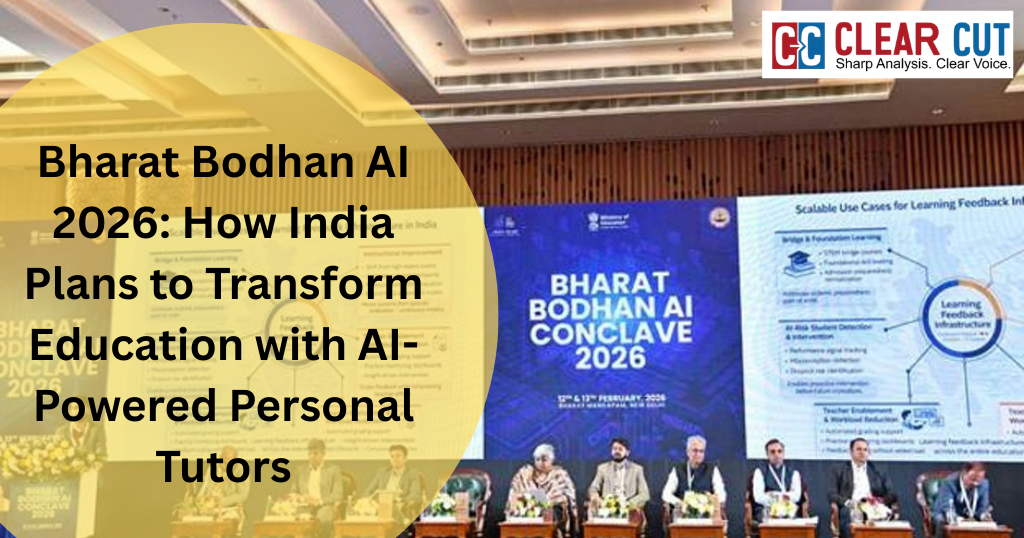
Bharat Bodhan AI is India’s initiative to introduce AI-powered personal tutors and teacher-support tools to provide personalised, multilingual, and inclusive learning, improve educational outcomes, and bridge the urban-rural divide while adhering to ethical AI standards.
India has taken a major step toward integrating artificial intelligence into its education system through the Bharat Bodhan AI initiative. The Ministry of Education recently concluded the Bharat Bodhan AI Conclave 2026 in New Delhi, where policymakers, technologists, educators, and academic institutions discussed how AI can reshape learning across schools and universities.
Bharat Bodhan AI aims to use artificial intelligence to provide personalised tutors for students, smart teaching aids for teachers, and data-driven tools for administrators. The government wants to improve learning outcomes, reduce teacher workload, and bridge educational inequality using technology.
According to an official statement issued by the Ministry of Education, the initiative aligns with the National Education Policy (NEP) 2020, which emphasises digital learning, skill development, and future-ready education systems.
What Is Bharat Bodhan AI?
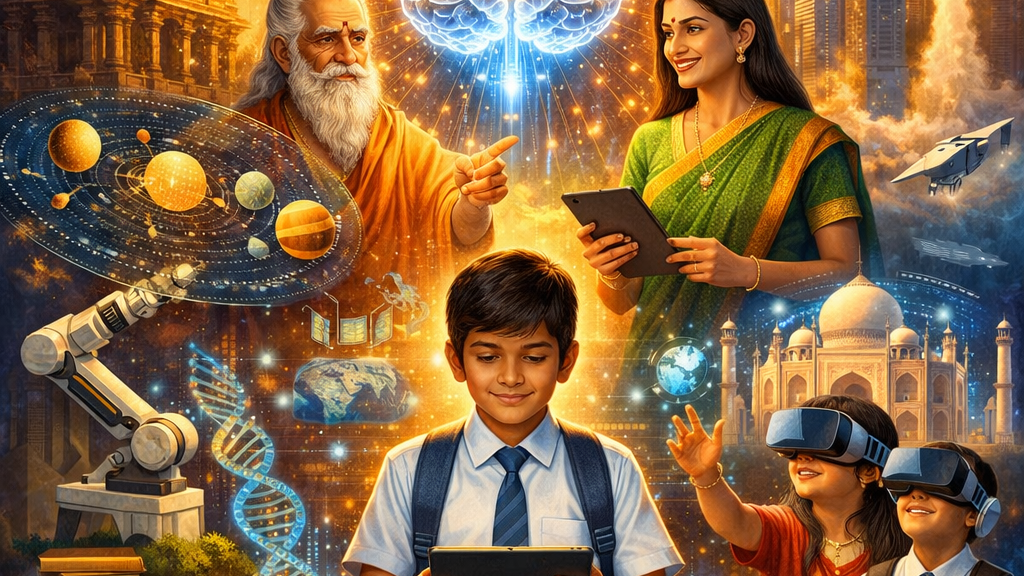
Bharat Bodhan AI is a national-level initiative designed to embed AI tools into classrooms and higher education institutions. The programme envisions AI-powered systems that adapt to each student’s pace, language preference, and learning gaps.
Officials at the conclave explained that the platform will support multilingual learning, interactive assessments, and customised lesson plans. The aim is not to replace teachers but to assist them.
India has over 25 crore school students and nearly 1.5 crore teachers across more than 15 lakh schools, according to Unified District Information System for Education (UDISE+) data. Managing quality at this scale remains a challenge. The Ministry believes AI can help address gaps in access and consistency.
Personalised Learning for Every Student
One of the most ambitious components of Bharat Bodhan AI is the creation of AI-powered personal tutors. These tools will analyse a student’s performance and recommend specific exercises to strengthen weak areas.
Education experts participating in the conclave noted that personalised learning can significantly improve comprehension levels. Studies by national assessment bodies have shown learning gaps in mathematics and language proficiency across grade levels.
The AI system will provide instant feedback, adaptive quizzes, and learning recommendations. Officials stated that the platform will support regional languages, in line with NEP 2020’s focus on mother-tongue education in early years.
By tailoring lessons to individual needs, the government hopes to reduce dropout rates and improve foundational literacy and numeracy.
Empowering Teachers with AI Tools
The initiative also focuses on teacher empowerment. AI-based tools will assist teachers in preparing lesson plans, generating practice questions, tracking classroom performance, and identifying struggling students early.
During the Bharat Bodhan AI Conclave 2026, senior officials from the Ministry of Education emphasised that teachers remain central to the system. AI will function as a support mechanism.
India’s teacher-student ratio varies across states. In rural and remote areas, teacher shortages remain a concern. AI-driven tools could help manage large classrooms by automating administrative tasks and assessments.
Officials highlighted that professional development modules will train teachers to use AI responsibly and effectively.
Data-Driven Governance and Policy Planning
Beyond classrooms, Bharat Bodhan AI aims to support policymakers. Education administrators will receive anonymised analytics dashboards to track learning outcomes, attendance, and academic performance.
The Ministry stated that data collected through AI tools will help identify regional disparities and guide resource allocation. For example, districts with lower mathematics scores can receive targeted interventions.
Officials clarified that strict data protection measures will apply. Student privacy will remain protected under existing digital governance frameworks.
Bridging the Urban-Rural Divide
India’s digital divide remains a structural challenge. According to government digital access reports, rural internet penetration has improved but remains uneven. The Bharat Bodhan AI programme acknowledges this gap.
Officials confirmed that the initiative will integrate with existing digital infrastructure such as DIKSHA and PM eVIDYA platforms. Offline functionality and low-bandwidth versions are being considered for remote regions.
The government views AI as a tool for inclusion. Students in rural areas often lack access to high-quality tutoring. AI tutors can provide academic assistance beyond school hours at minimal cost.
This approach could reduce inequality in competitive exam preparation and higher education readiness.
Ethical AI and Responsible Deployment
During the conclave, policy experts discussed ethical safeguards. AI systems must avoid bias, ensure transparency, and protect user data.
The Ministry of Education stated that Bharat Bodhan AI will adhere to India’s broader digital governance standards. Expert committees will monitor implementation and recommend safeguards.
Officials stressed that AI must enhance critical thinking rather than promote rote learning. The system will encourage conceptual understanding, interactive learning, and problem-solving skills.
Industry and Academic Collaboration
The Bharat Bodhan AI Conclave brought together technology firms, startups, universities, and research institutions. Collaboration will drive innovation.
Officials indicated that public-private partnerships may support development and scaling. Academic institutions will pilot AI models before nationwide deployment.
India’s growing EdTech ecosystem positions the country as a potential global leader in AI-enabled education.
Social Impact and Long-Term Vision
Education shapes economic mobility. When students gain access to personalised learning, they perform better in competitive exams and job markets.
India aims to become a global knowledge economy. AI integration in education aligns with this vision. By building digital skills early, the country prepares students for emerging sectors such as artificial intelligence, robotics, and data science.
The social dimension is significant. AI tutors can support first-generation learners who lack academic guidance at home. They can assist differently abled students with customised accessibility features.
Officials at the conclave described Bharat Bodhan AI as an investment in human capital.
Key Highlights
• Ministry of Education concluded Bharat Bodhan AI Conclave 2026 in New Delhi
• AI-powered personal tutors to provide customised learning
• Teacher aids to support lesson planning and assessment
• Integration with NEP 2020 and existing digital platforms
• Data analytics to improve governance and policy decisions
• Focus on multilingual, inclusive, and ethical AI deployment
A Turning Point for Indian Education
Bharat Bodhan AI signals a strategic shift in India’s education policy. The government is moving from traditional one-size-fits-all teaching toward adaptive, technology-enabled learning.
The initiative recognises that scale and diversity define India’s education system. AI offers tools to manage both.
Success will depend on careful implementation, teacher training, digital infrastructure, and privacy safeguards. If executed effectively, Bharat Bodhan AI could redefine classroom learning and strengthen India’s position as a global leader in digital education.
The next phase will focus on pilot programmes and phased rollout. For millions of students and teachers, AI-assisted education may soon become part of everyday learning.
Clear Cut Education, Research Desk
New Delhi, UPDATED: Feb 17, 2026 05:00 IST
Written By: Samiksha Shambharkar