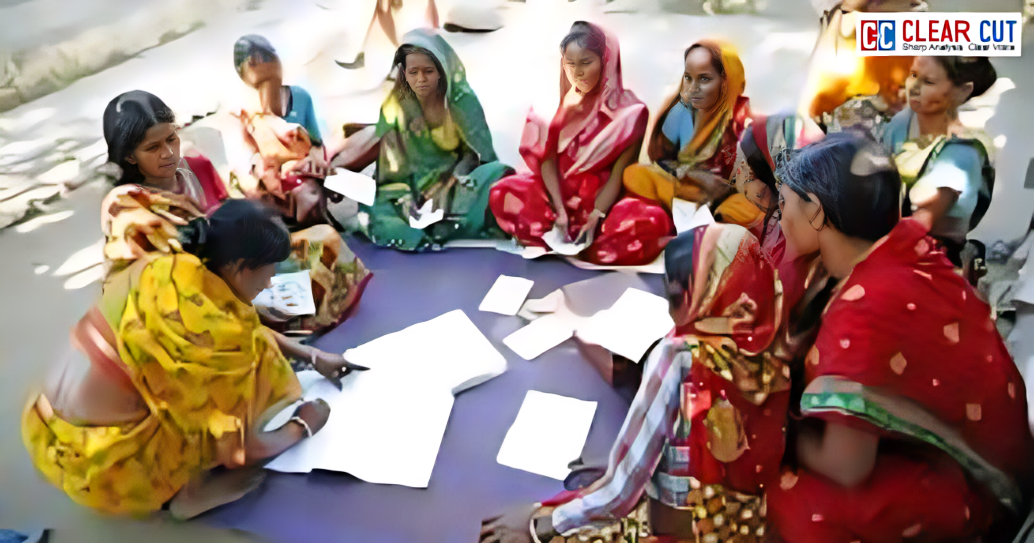


Nirmal Initiative’s Sukhawati program addresses Child Sexual Abuse (CSA) through a whole-school, community-oriented approach, emphasizing safe spaces, teacher training, and child empowerment. It uses an intersectional lens to tackle caste, gender, disability, and social inequalities, promoting prevention, disclosure, and support. The framework fosters human dignity, fraternity, and community, aiming to transform school and societal ecosystems that perpetuate abuse.
Child rights to education, care, health, safety – are routinely violated. A research commissioned by the Ministry of Women and Child Development (Study on Child Abuse: India 2007) reported that 53.22 %
children faced some form of sexual abuse, frequently by persons known to them, often in positions of trust and responsibility. There is no comprehensive public policy to deal with this disturbing reality.
In such a situation, the efforts ofNirmal Initiative, a small, decade-old NGO, acquire relevance. Working at the grassroots, its intersectional approach seeks to transform the entire ecosystem in which child abuse takes place.
Nirmal Initiative has designed `Sukhawati’, a whole-school, community-oriented framework for primary prevention of Child Sexual Abuse (CSA). ‘Sukhawati’ signifies spaces where every child feels safe; it envisages strategic interventions in school and society, moving from a culture of stigma and suffering, to a culture of safety and accountability. The approach recognizes caste, class, gender, disability as part of the ethos which perpetuates violence against children. Dr Ruchi Sachan, a trustee of Nirmal Initiative, and Delhi University faculty member, notes, “Human dignity, a constitutional right, is denied to a majority of
our children.”
Sukhawati: Safe Spaces for Children
Shweta Goswami, a PhD-holder from JNU, and founder-Director of Nirmal Initiative, explains: “… systematic dehumanization, and the ecosystem of caste, patriarchy and ableism enable sexual violence.” The rape-and-murder of 17-year old Dalit student, Delta Meghwal (in 2016), by a teacher in the institution in Rajasthan where she was studying, goaded Goswami into setting up Nirmal Initiative, to stop such violence.
Clearly, educational institutions need to ensure child protection, non-discrimination, and sexuality education. It is ironical that schools are specific sites of violence, where children are disciplined and
categorised, fear inculcated. NEP (National Education Policy 2020) emphasizes the need for schools to address issues of child safety, yet teacher education programmes across the country fail to provide requisite information or skills. Nor does CBSE’s Adolescence Education Programme equip students with life skills to effectively handle abuse or exploitation.
Nirmal Initiative’s teacher training module, piloted in upper primary schools of Delhi and Uttar Pradesh, offers knowledge, skills and support to teachers, in the belief that “well-supported, responsible, confident, sensitive, and informed teachers can help equip students with a sense of self-care, mutual respect, implications of a variety of touches, language for disclosure, and so on.” The module engages with schools over two years. Since CSA takes place in an intricate social matrix, addressing the issue requires rigorous, multi-pronged and sustained engagement.
An innovative colouring workbook, Suraksha ka Adhikar (Right to Safety), and lively songs such as Mein Hoon (I Am) and Hum Bache Chowkidar (We Vigilant Children), enhance awareness, validate children’s feelings and develop shared vocabulary. They convey the importance of sensitive speech, instil a sense of confidence, and urge resistance to gender and caste oppression. Through creative teaching aids, ‘Sukhawati’ encourages self-protection, personal safety, a sense of ownership of one’s body, the mportance of touch, different varieties of touch, nuances of disclosure, and actions to be taken in case of sexual abuse.
Goswami notes, “We, including guardians, teachers, children, face an absence of language. What words shall a child use to talk about breach of trust, violation of bodily integrity, manipulation of innocence and curiosity?” Sensitive language is crucial, to build trust, conversation, sharing and acceptance, displacing the current climate of shame, silence and oblivion.”
Sukhawati treats with respect the inner world of the child. Schools are encouraged to create teaching-learning environments with a sense of warmth, maturity, concern and compassion. Children are encouraged to be active participants in their own safety and welfare – though adults must play their part.
Importance of Intersectional Lens
Nirmal Initiative critiques the traditional child-safety education model as insufficient – where children are taught to recognise ‘bad touch good touch’ and advised to ‘Know-Shout-Run-Tell’; the one-size-fits-all curriculum fails to consider social and structural dynamics in which abuse occurs. For effective CSA prevention, differentiated realities must be recognised and an intersectional lens included, for marginalized identities experience multiple vulnerabilities.
Nirmal Initiative reaches out to community and parents for one to one conversations, and facilitates setting up of ward-level Child Protection Committees. Teachers, as trusted adults, are trained to
be the point of disclosure of abuse. Some teachers find it disturbing to deal with issues children report, and are themselves offered counselling by the Sukhawati team.
The team discovered that disclosure of abuse often results in child marriage and school dropout for girl children. Caste and disability- based discrimination add further layers of complexity. Shampa Sengupta, founder-director of Shruti Disability Rights (Kolkata), relates the case of an adolescent girl with disability regularly exploited by her male cousin; a young boy with disability whose aunt touched him inappropriately while bathing and dressing. Such complex cases do not yield to easy resolution.
Anita Bharti, Dalit activist and ex-Principal of a government school, emphasizes, “Indian society, built on hierarchy and exploitation, has normalised abuse of children, especially Dalit /poor/ girls. When a child reports abuse, staff members try to squash the complaint, police refuse to act.” She recalls recently taking a complaint to the police, but rather than file an FIR, police called the child’s parents and brokered a compromise, leaving the child at the mercy of abusive adults. Bharti asks, “POCSO is a strong law, but how is it to be implemented? Police refuse to file FIRs. Rapists roam free. We have to strengthen our voices, to ensure justice for children.”
Feminist and Ambedkarite
Sukhawati incorporates an in-depth, long-term vision of social and individual change, reasserting basic values of human co-existence, communication and ‘belonging’. Dr Vandana Prasad, Director, Public Health Resource Network (PHRN), notes that abuse is interwoven into the very fabric of society, for instance during recent research in Malkangiri, Odisha, PHRN found adolescent girls, some 14 years old,
married/ pregnant/ already mothers. Children exposed to violence often suffer from depression or PTSD (post-traumatic stress disorder). Pervasive patriarchy promotes CSA through control and sexualization
of the body, cultures of shame and silence, and authoritarian child-rearing practices.
Professor Kalpana Kannabiran, Centre for Social Development, Hyderabad, notes that Brahmanical patriarchy, based on graded inequality, legitimizes violence against Dalits, minorities, women, and other
marginalized groups. Its values have seeped into social consciousness, promoting cruelty. “Any solution,” she reflects, “has to turn away from cruelty – whether carceral, punitive or retributive and be rooted instead in genuine community. Ambedkar emphasized supplanting public morality with
constitutional morality, and this remains very relevant today.”

Through the Sukhawati framework, Nirmal Initiative seeks to rebuild Maitreyi (community) and Bandhutva (fraternity), in consonance with Ambedkarite understanding. It focuses on Manuski or shared humanity, and Samyak Seemayein or safe spaces. The underlying motivation is to overcome dukkha (suffering), reawaken conviviality, rebuild relationships, and a culture of profound dignity, care and responsibility, equality and justice.
About the Author: Dr Deepti Priya Mehrotra is a political scientist, teacher, and consultant with specialization on gender, education and social issues. She writes in English and Hindi, has authored
several books including acclaimed biographies of Irom Sharmila, Gulab Bai, stories of single mothers, and a history of street theatre in India.
Clear Cut Gender Desk
New Delhi, UPDATED: Feb 08, 2026 7:30 IST
Written By: Dr Deepti Priya Mehrotra