
The Farmer Who Cannot Wait for a Summit
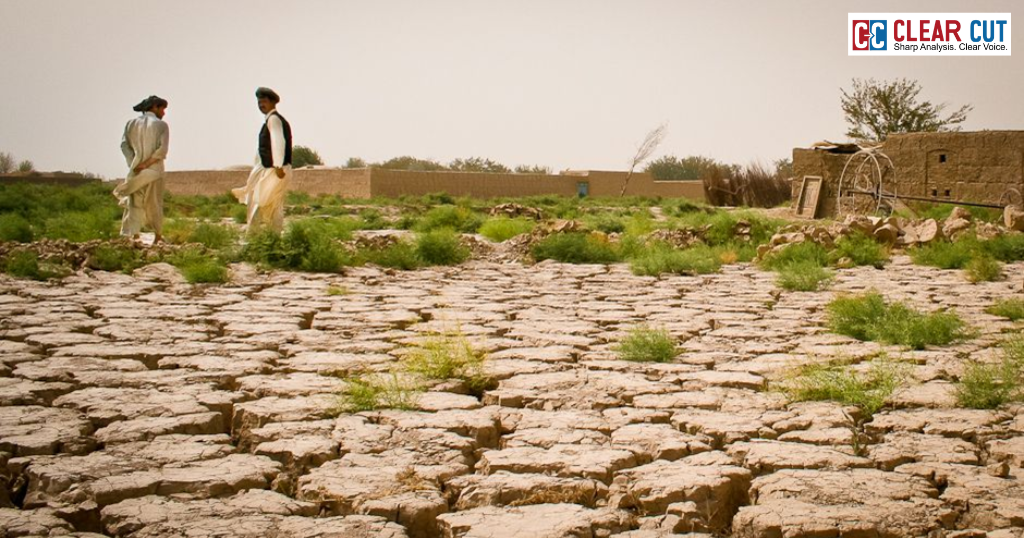
The paddy farmers follow 2 different calendars in the flat fields of Bihar, India. The farming calendar, ten months during which rains come, seeds get sowed and harvest is due. The other happens to be the disasters calendar. The time when years of floods wipe out the harvest, when droughts strike early, and years when a cyclone erases both calendars within an afternoon.
These farmers bear no responsibility for the climate crisis, and their carbon footprints are negligible. However, they pay the price each farming season which is mostly uninsured. Most of these hands have no bankable credit, and virtually always with no adaptable infrastructure to see through a tough year.
Away from the fields of Bihar, across the globe, there are climate finance commitments worth hundreds of billions made by governments and multilateral banks in the conference halls of Baku, Brussels, and Belém. There is no denying the validity of such figures. But then again, neither can anyone deny the existence of the huge disparity between the two.
Here is the story of that disparity and the closing it might entail.
The Architecture of Climate Commitments
As announced by the MDBs at COP29 in Baku, November 2024, the commitment was that they would provide a combined annual commitment of US$120 billion in climate finance for developing nations by 2030, which included a commitment of US$42 billion in particular to adapt the impact (EIB, 2025). In addition, a promise was made to mobilize an additional US$65 billion from the private sector (EIB, 2025).
At COP30 held in Belém, Brazil in November 2025, countries pledged to triple their efforts to provide adaptation financing by 2035. There was a decision taken to allocate US$120 billion toward adaptation measures as part of a larger goal of providing US$300 billion annually in public climate finance by 2035 (WRI, 2025).
These figures may sound fictitious; however, multilateral development banks jointly delivered record US$137 billion in total climate finance in 2024, of which US$85.1 billion were invested in developing nations, representing a growth of 14 percent over the previous year and twice as much as that invested in developing nations five years ago (EIB, 2025).
Of the total US$85.1 billion, about 69 percent or US$58.8 billion went toward mitigation, or cutting down emissions. The balance or approximately 31 percent, which is US$26.3 billion, went to adaptation. It helped countries prepare for the climate impacts already locked in (EIB, 2025). This ratio matters enormously.
The Mitigation Bias and Who It Leaves Out
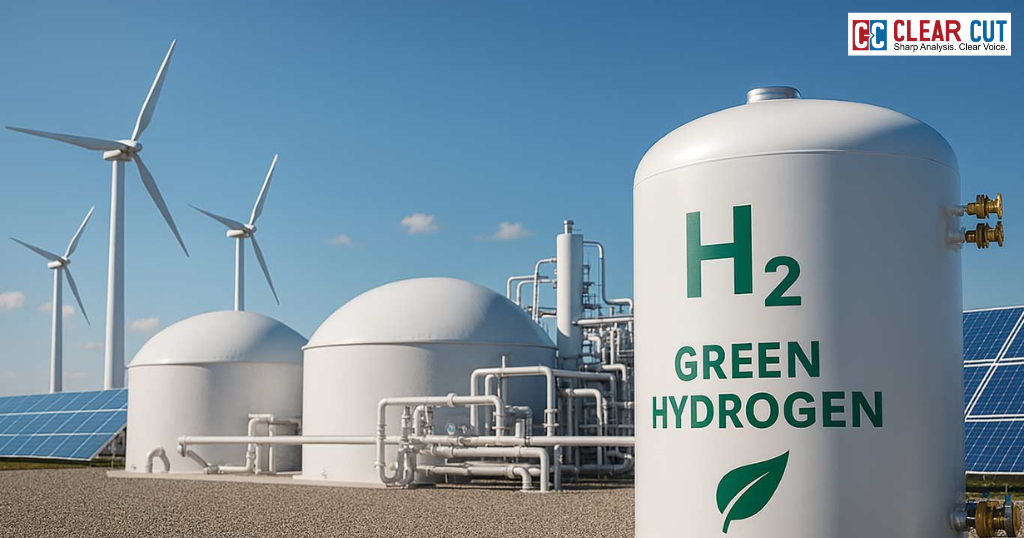
Climate mitigation financing, whether renewable energy, low-emission transport, or emissions reduction, is typically commercially viable. It yields profits. It can be packaged as loans. Private investors can take part. Industrialized nations’ governments see such actions as politically legitimate.
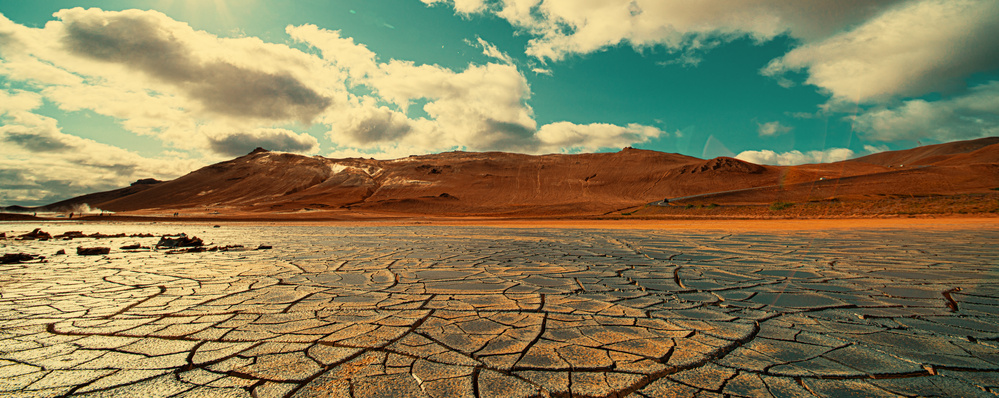
On the other hand, climate adaptation financing, such as flood defences, drought-tolerant agriculture, disaster warnings, and coastal protection, is quite dissimilar. Often, it does not produce financial gains. It involves grant money or highly concessional loans. Such projects are localised, unique, and invisible to capital markets.
Adaptation is indispensable for the most climate-exposed populations in the world. It means survival following a calamity or annihilation by the same event.
However, the trend in global climate financing has persistently leaned towards mitigation. An assessment by Carbon Brief of the initial US$100 billion per year in climate funding goal, met in 2022 for the first time, shows that 58 percent of the funding was allocated to mitigation, 33 percent to adaptation, and the remaining to cross-sectoral initiatives (Carbon Brief, 2025). In addition, climate adaptation financing depends largely on grants. The existing system emphasizes loans that must be repaid even after a hurricane wipes out the very infrastructure the loan looked to build.
The Stockholm Environment Institute (SEI) documented that adaptation projects globally have a disbursement ratio of only 66%, compared with 98% for overall development finance. It means a third of committed adaptation funds do not reach their intended destination (Institute for Energy Economics and Financial Analysis [IEEFA], 2026).
The gap is not uniform. South Asia received merely 51% of distributed bilateral adaptation funds in the period from 2017 to 2021, while sub-Saharan Africa received 79%, partly because Africa receives proportionally more grants, which disburse more reliably (SEI, 2023).
The World Bank’s Role and Its Limitations
The World Bank Group is the biggest multilateral financier of adaptation finance, responsible for 51% of all adaptation finance committed by MDBs in 2023 (Center for Global Development [CGD], 2025). The World Bank pledged to allocate 45% of its yearly total funding to climate-related activities in the fiscal year 2024-2025, which amounts to more than US$40 billion (World Bank, 2023).
In July 2025, the World Bank announced a US$400 million expansion of its REPAIR program in Eastern and Southern Africa, helping climate resilience in Angola, Burundi, Malawi, Seychelles, and Zambia (World Bank, 2025). The program showed that quick financial aid distribution, as quickly as seven days after the disaster, can be done with proper systems in place.
However, the current commitment of the World Bank is inconsistent with the geographic distribution of climate risk. Countries that are highly vulnerable to climate change are poor, landlocked, conflict-ridden, agrarian, and do not receive adaptation finance commensurate with their level of risk exposure (CGD, 2025).
By late 2025, just three out of 34 rated countries in Africa had been granted credit status in investment grade, which means that most countries face high borrowing costs, especially at a time when climate calamities demand borrowing (Columbia Climate School, 2026). In an emerging market, a climate crisis may lead to bond yields going up by more than 140 basis points, compared to about 66 basis points in developed markets (Columbia Climate School, 2026). It is costly to survive the flood due to the flood itself.
The US Withdrawal and the Pressure It Creates
However, the U.S. appears to have officially disengaged from its public climate financing for developing nations, under the current administration. Following several years of escalating commitment to bilateral climate finance for developing countries under the Biden administration, the U.S.’ bilateral climate finance has been completely phased out by 2025 (Carbon Brief, 2025). Such a move represents a reduction of US$11 billion in climate finance per annum compared to previous commitments made in 2024 (NRDC, 2025).
This comes at a time when ambitions for multilateral climate financing are expanding, even as bilateral efforts shrink. With the cuts to ODA being made by the UK, Germany, and France, this is going to put the MDBs in a difficult position – MDBs that cannot simply ignore the political decisions made in Washington, D.C., or London. For India, the country not only faces climate risk but also contributes greatly to Gavi and is one of the world’s most significant emitters, this poses something of a problem.
India’s National Bank for Agriculture and Rural Development (NABARD) handles preparing yearly climate adaptation plans at the district level, yet with the reduction in external financing, and the reality of budgetary constraints within the country itself,
India’s National Bank for Agriculture and Rural Development (NABARD) already prepare annual district-level plans for climate adaptation investment. But with external climate finance uncertain and domestic fiscal constraints real, the scale of what NABARD can mobilise remains limited (Green Central Banking, 2025).
What Real Climate Justice Looks Like
The figures associated with each COP are indeed staggering until you pose a pertinent question: How much of this money actually trickled down to the community health care provider, the farmer, the fisherwoman along the coast – and what did she receive in return?
Africa, which is the least culpable continent in terms of historical emissions, only gets less than US$14 billion annually in adaptation funding when the actual demand stands at more than US$100 billion, and more than half of the funds come in the form of interest-bearing loans (Columbia Climate School, 2026).
A transition towards a low carbon economy will cost more than US$8.4 trillion every year until the end of this decade (Nature, 2025). Existing initiatives, both from governments and the private sector, have not reached the mark.
Climate justice cannot be measured only by increased numbers. It involves a shift in focus from mitigation financing to adaptation funding in the most vulnerable countries. It involves lending and grants rather than commercial loans for communities without fiscal room. It means changing how MDBs and donors manage, report on, and finance climate adaptation projects. Finally, it means giving countries in the Global South the right to shape programmes affecting their citizens.
The REPAIR project in Eastern Africa proves that quick and flexible release of funds can be made operationally feasible. COP30’s promise to triple funding for adaptation demonstrates that political will exists. What still needs to happen is the courage to transform the system so that the farmer in Bihar – and her peers in Malawi, in Bangladesh, in Ethiopia – do not need to wait for an international conference where they will never set foot to see their name on the list of beneficiaries.
Climate finance that does not reach the most vulnerable is not climate finance at all. It is merely an accounting trick.
References
Carbon Brief. (2025, November 17). Analysis: Seven charts showing how the $100bn climate-finance goal was met. https://www.carbonbrief.org/analysis-seven-charts-showing-how-the-100bn-climate-finance-goal-was-met/
Center for Global Development. (2025). Do the most climate-vulnerable countries get more adaptation finance from the World Bank? https://www.cgdev.org/blog/do-most-climate-vulnerable-countries-get-more-adaptation-finance-world-bank
Columbia Climate School. (2026, March 18). Climate finance has failed Africa twice over. Here’s how to fix it. https://news.climate.columbia.edu/2026/03/18/climate-finance-has-failed-africa-twice-over-heres-how-to-fix-it/
European Investment Bank. (2025, September 11). Multilateral development banks hit record $137 billion in climate finance to drive sustainable development worldwide. https://www.eib.org/en/press/all/2025-328-multilateral-development-banks-hit-record-usd137-billion-in-climate-finance-to-drive-sustainable-development-worldwide
Green Central Banking. (2025, June 3). National development banks: Untapped source of climate finance. https://greencentralbanking.com/2025/06/03/national-development-banks-an-untapped-source-of-climate-finance/
Institute for Energy Economics and Financial Analysis. (2026, February 9). Actions to unlock adaptation financing can shield Southeast Asia from climate shocks. https://ieefa.org/articles/actions-unlock-adaptation-financing-can-shield-southeast-asia-climate-shocks
Nature. (2025). Filling the climate finance gap: Holistic approaches to mobilise private finance in developing economies. npj Climate Action. https://www.nature.com/articles/s44168-025-00220-x
NRDC. (2025). International climate finance goals: Where are we, where do we need to be, and how do we get there? https://www.nrdc.org/bio/joe-thwaites/international-climate-finance-goals-where-are-we-where-do-we-need-be-and-how-do-we
Stockholm Environment Institute. (2023, November 10). Three major gaps in climate-adaptation finance for developing countries. https://www.sei.org/perspectives/three-major-gaps-in-climate-adaptation-finance-for-developing-countries/
World Bank. (2023, December 1). World Bank Group doubles down on financial ambition to drive climate action and build resilience. https://www.worldbank.org/en/news/press-release/2023/12/01/world-bank-group-doubles-down-on-financial-ambition-to-drive-climate-action-and-build-resilience
World Bank. (2025, July 23). Expanding financial coverage to save lives and livelihoods in Eastern and Southern Africa. https://www.worldbank.org/en/news/press-release/2025/07/23/expanding-financial-coverage-to-save-lives-and-livelihoods-in-eastern-and-southern-africa
World Resources Institute. (2025, November 25). Reaching $120 billion in international adaptation finance is possible — here’s what it takes. https://www.wri.org/insights/tripling-adaptation-finance-goal
Clear Cut Climate Desk
New Delhi, UPDATED: April 12, 2026 05:00 IST
Written By: Tanmay J Urs