
Delhi has launched the CM SHRI Schools Project to modernise government education, aiming to convert 7,000 classrooms into AI-enabled smart classrooms by 2026. The initiative aligns with National Education Policy 2020 (NEP 2020) and focuses on digital learning, skill development, career guidance, and inclusive education.
New Delhi has formally entered a new phase of public education reform with the launch of the CM SHRI Schools Project, a programme the Delhi government describes as outcome driven, technology intensive, and aligned with national education priorities. The initiative was unveiled at a public function in Sarojini Nagar, where senior leaders from the Centre and the Delhi government jointly outlined the roadmap for large scale transformation of government schools.
Union Education Minister Dharmendra Pradhan and Delhi Chief Minister Rekha Gupta inaugurated the programme. During the event, foundation stones were laid for 75 CM SHRI Schools across the capital, while one fully operational AI enabled government school was opened as a live demonstration of the model. Officials said these schools will be developed in a phased manner, with priority given to high enrolment zones and underserved areas.
According to the education department, the project has been structured to directly translate the objectives of the National Education Policy 2020 into classroom level execution, particularly in government schools that serve students from economically weaker backgrounds.
AI Enabled Classrooms and Clear Implementation Targets
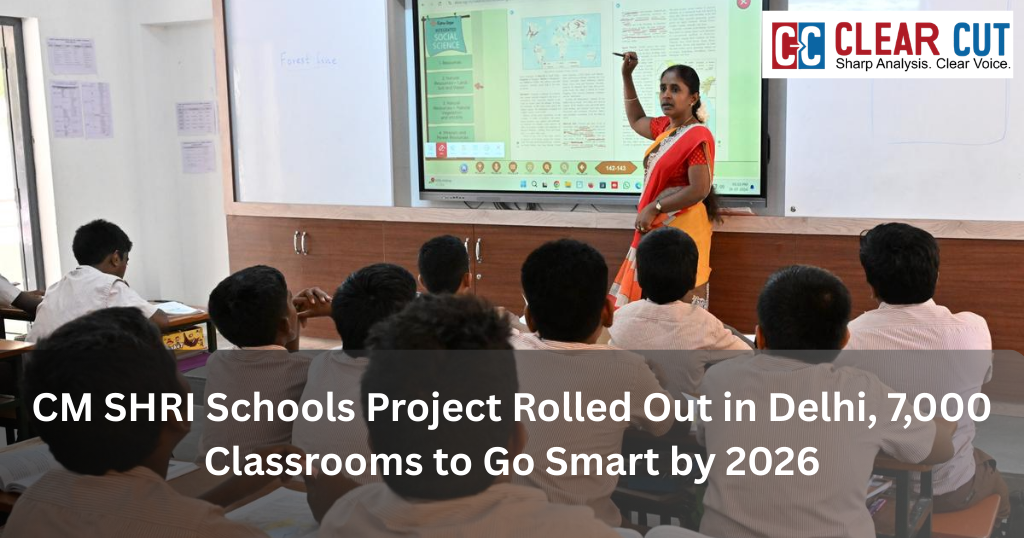
A central pillar of the CM SHRI Schools Project is the large-scale upgrade of classrooms using artificial intelligence based learning systems. The Delhi government has set a concrete target of converting nearly 7,000 classrooms into smart classrooms by March 31, 2026. These classrooms will feature interactive digital boards, AI assisted lesson planning tools, and continuous assessment systems designed to monitor student progress.
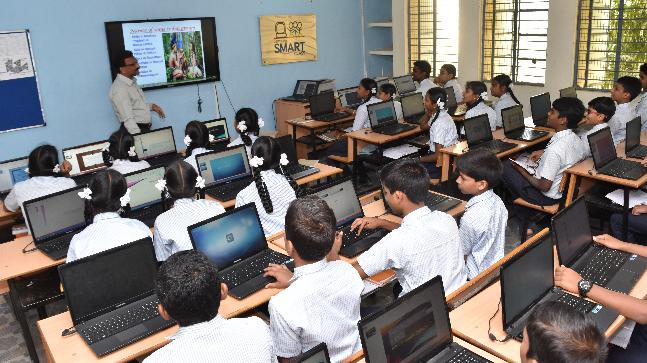
Delhi Education Minister Ashish Sood said that the focus is on measurable learning outcomes rather than symbolic digitisation. He stated that AI tools will help teachers identify subject wise learning gaps at an early stage, enabling remedial teaching within the academic year itself. According to him, this data driven approach is expected to reduce dropout rates and improve board exam performance in government schools.
Officials confirmed that each CM SHRI School will also include fully equipped ICT labs, digital libraries with curriculum mapped content, modern science laboratories, and dedicated language labs. In addition, skill development labs focusing on robotics, coding, electronics, and applied sciences will be introduced to expose students to emerging technologies before they reach senior secondary classes.
Career Guidance and Skill Readiness Built into Schooling
Beyond infrastructure, the CM SHRI framework places strong emphasis on career readiness. Dedicated career counselling centres will be set up in these schools to guide students on higher education pathways, competitive examinations, and vocational options. Education department officials said counsellors will work closely with students from Class 9 onwards to help them make informed academic and career choices.
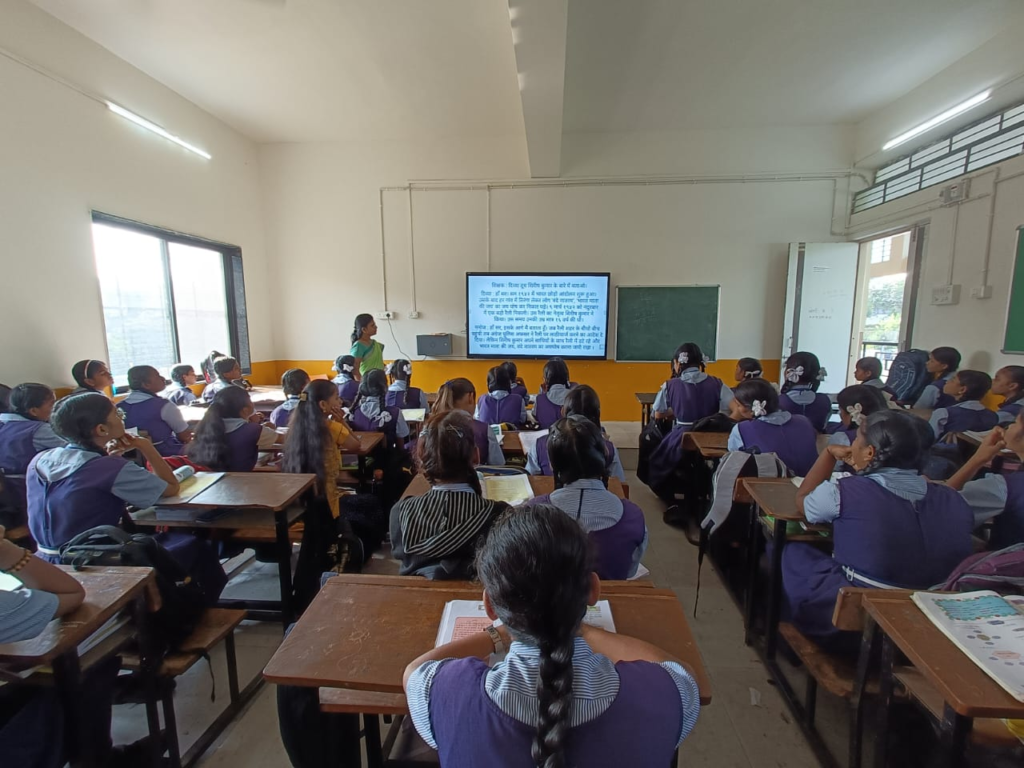
Addressing the gathering, Dharmendra Pradhan said the initiative reflects a structural shift in how public education is delivered. According to remarks reported by PTI, he stated that quality education should not be limited to private institutions. He added that CM SHRI Schools aim to offer facilities comparable to premium private schools, ensuring that students from government schools can compete nationally and internationally.
Chief Minister Rekha Gupta said the project is designed as a long term investment in Delhi’s human capital. She stressed that education policies must prepare students for real world challenges such as technological disruption and changing job markets. According to her, CM SHRI Schools focus on critical thinking, communication skills, adaptability, and confidence building, rather than rote learning.
Inclusion, Mental Well Being, and Practical Learning
The CM SHRI model also includes specific provisions for inclusive education. Dedicated resource rooms with assistive technologies will support students with disabilities and special learning needs. Officials said trained educators and counsellors will be deployed to ensure these students are fully integrated into mainstream classrooms.
Another notable feature is the introduction of Science of Living spaces, which focus on mental health awareness, emotional resilience, and life skills. Education officials said these spaces respond to growing concerns around student stress, screen fatigue, and academic pressure, especially in urban school systems.
Hands-on learning forms a core component of the project. Teachers from pilot schools said students are already working on practical projects such as basic robotics models, automated systems, and problem solving tasks linked to real life scenarios. According to educators, early exposure to such projects improves conceptual clarity and student engagement.
Built on Earlier Investments and Under Close Watch
The CM SHRI Schools Project builds on earlier reforms in Delhi’s education sector, including the recent launch of over 100 computer labs in government schools and expanded teacher training programmes. Budget documents from the previous financial year show increased allocations for digital infrastructure, language labs, and innovation based learning modules.
Education policy experts quoted by national dailies have noted that the scale of the CM SHRI initiative makes it one of the most closely watched public education reforms in India. Analysts have pointed out that sustained teacher training, regular system maintenance, and transparent performance tracking will determine whether the project delivers lasting impact.
If implemented with rigour and sustained oversight, the CM SHRI Schools initiative has the potential to set a national benchmark for modernising government education in line with the National Education Policy. The true test, however, lies in execution. The next few academic cycles will be closely watched to assess whether Delhi’s significant public investment leads to measurable gains in student learning levels, teacher capacity, and school infrastructure, impacting lakhs of students enrolled in government schools across the capital.
Clear Cut Education Desk
New Delhi, UPDATED: Feb 20, 2026 01:00 IST
Written By: Ayushman Meena