
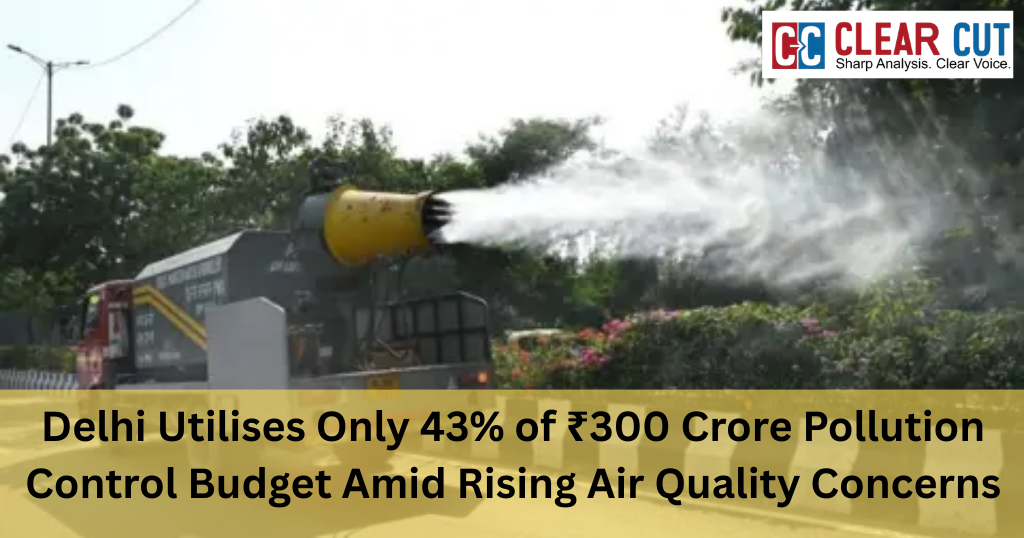
Delhi spent only 43% of its ₹300 Crore pollution control budget, raising concerns over air quality, public health, and long-term environmental measures.
Delhi, one of India’s most polluted cities, allocated ₹300 crore in its 2025–26 budget for pollution control and emergency measures. Yet, an official response to a Right to Information (RTI) request has revealed that only about 43% of this allocation — around ₹129.83 crore — was spent by January 20, 2026. This slow utilisation of funds has raised concerns among citizens, environmentalists, and policymakers about the government’s ability to tackle air pollution and environmental harm effectively.
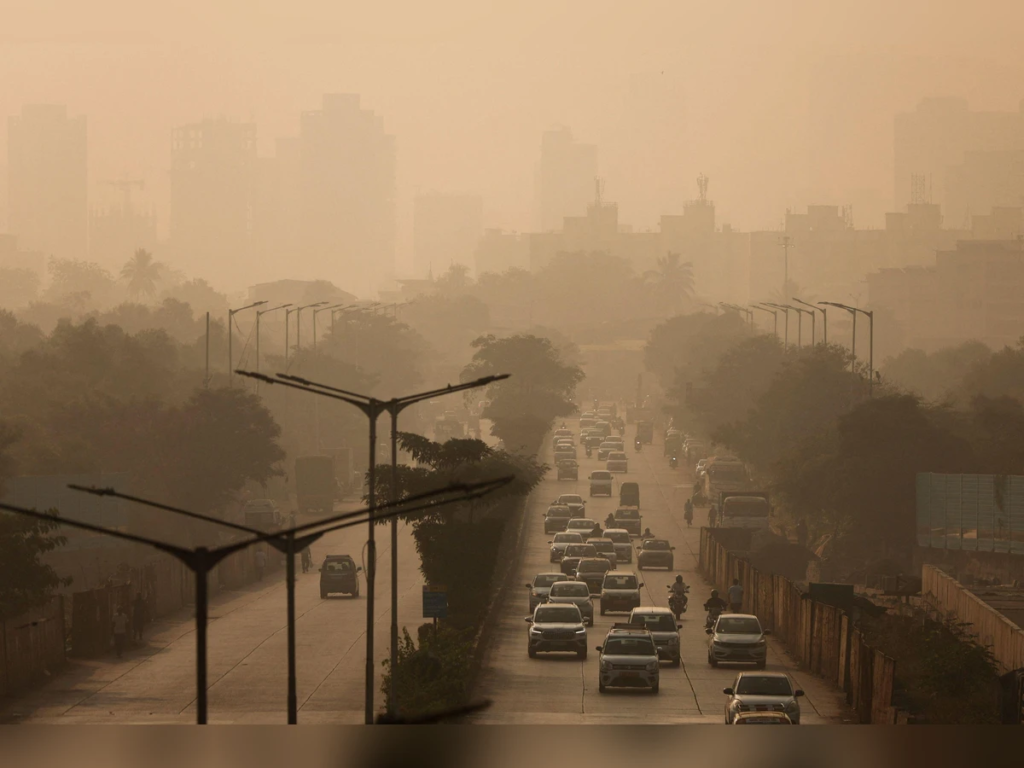
This article explains what has happened, why it matters, and what the under-utilisation of funds means for Delhi’s air quality and public health. It also discusses broader issues in environmental budgeting at both city and national levels.
What the RTI Revealed: Numbers Tell a Story
The RTI reply from the Environment Department of the Delhi government showed that only ₹129.83 crore out of ₹300 crore earmarked for pollution control and emergency action was utilised by January 20, 2026. That is just 43% of the allocated budget.
The funds were primarily spent on short-term air pollution mitigation measures, such as:
- ₹23.37 crore on mist spray systems installed on electric poles and central road verges.
Some allocations recorded zero expenditure so far. These include:
- ₹70 crore earmarked for environmental remediation by the Delhi Pollution Control Committee.
- ₹64.40 crore set aside for mechanical road sweepers, water sprinklers, and anti-smog guns by the Municipal Corporation of Delhi.
- Funds for e-waste projects, real-time pollution studies, and improvements within the Environment Department also remained unused.
Some smaller components, such as activities by eco-clubs in schools and parks and gardens, did see partial utilisation, but these amounts were modest relative to what was allocated.
Why the Spending Gap Matters
Delhi continuously struggles with poor air quality, often recording “poor” to “very poor” Air Quality Index (AQI) levels, especially in winter months. Polluted air poses severe risks to public health, including respiratory illnesses, cardiovascular diseases, and reduced life expectancy.
However, even as pollution persists, the slow spending on pollution control measures raises several issues:
1. Short-Term Measures vs Long-Term Solutions
Much of the money spent went to immediate measures like mist spray systems rather than long-term structural solutions such as:
- Strengthening continuous air quality monitoring.
- Increasing mechanical sweepers for dust control.
- Improving policy enforcement for industrial and vehicle emissions.
When ₹70 crore for environmental remedies and ₹64.4 crore for key pollution control tools remain unused, it suggests the city may be prioritising quick fixes over enduring strategies.
Logistical and Institutional Barriers
The utilisation gap also highlights common administrative challenges:
- Coordination between departments — air pollution control requires cooperation among multiple bodies like the Pollution Control Committee, municipal corporations, traffic and urban development departments.
- Project implementation delays — processes like tendering for equipment, contracting services, or setting up infrastructure often take time.
- Lack of real-time monitoring centres — while some proposals exist for integrated data systems, these are yet to be fully operational.
This combination of coordination and execution challenges can slow down spending even when funds are available.
Wider Budget Trends Raise Further Questions
The city budget is not the only source of funding for pollution-related work in India. The Union Budget 2026–27 also made allocations for pollution control, but overall funds were lower than in the previous year’s revised estimates. The national allocation for the “Control of Pollution” scheme stood at ₹1,091 crore, which was below the revised estimate of ₹1,300 crore from 2025–26.
This national trend shows that even at the federal level, less money may be available for environmental monitoring and control, despite growing pollution challenges in cities like Delhi-NCR, where air quality regularly breaches safe limits.
What This Means for People and Health
Poor air quality affects everyone, but especially:
- Children, whose lungs are still developing.
- Elderly citizens, who are more vulnerable to disease.
- People with pre-existing respiratory or cardiovascular conditions.
- Outdoor workers exposed to pollution throughout the day.
When pollution control funds are under-spent, these groups bear the brunt of slow progress in mitigation efforts.
A Social Perspective: Why Budget Execution Matters
Money allocated for public welfare, like pollution control, is meant to protect people’s health and quality of life. When such funds remain unused:
- Public trust in government action erodes.
- Clean air initiatives lose momentum.
- Social equity is affected because poorer communities often live in the most polluted areas.
Real, measurable action — like upgrading public transport, strict pollution enforcement, and community awareness programmes — requires not just money, but also timely execution of plans.
Moving Forward: More Action Needed
To improve pollution control outcomes, Delhi and national policymakers need to:
- Ensure timely utilisation of allocated funds.
- Focus more on long-term infrastructure like air quality monitoring stations, waste management systems, and cleaner public transport options.
- Strengthen inter-agency coordination so that funds are spent efficiently and transparently.
- Communicate clearly with the public about goals and achievements.
Only when plans are fully executed will the investment translate into cleaner air, healthier lives, and a more sustainable city.
- Only 43% of a ₹300 crore pollution control budget was used by late January 2026.
- Large allocations for important environmental measures remain unused.
- Short-term mitigation received most spending, while key long-term actions lag.
- Broader budget reductions in the national pollution control scheme raise further concerns.
- Without full execution, public health and environmental goals risk being delayed.
Clear Cut Climate, Research Desk
New Delhi, UPDATED: Feb 27, 2026 02:10 IST
Written By: Samiksha Shambharkar