
Marco Rubio’s speech at the Munich Security Conference signals the end of “easy globalization,” where geopolitics, security, and alliances now shape global trade. For Indian businesses, success will depend on trust, resilience, compliance, and strategic alignment, not just low cost and efficiency.
What Rubio’s Munich Speech Reveals About the New Rules for Indian Business
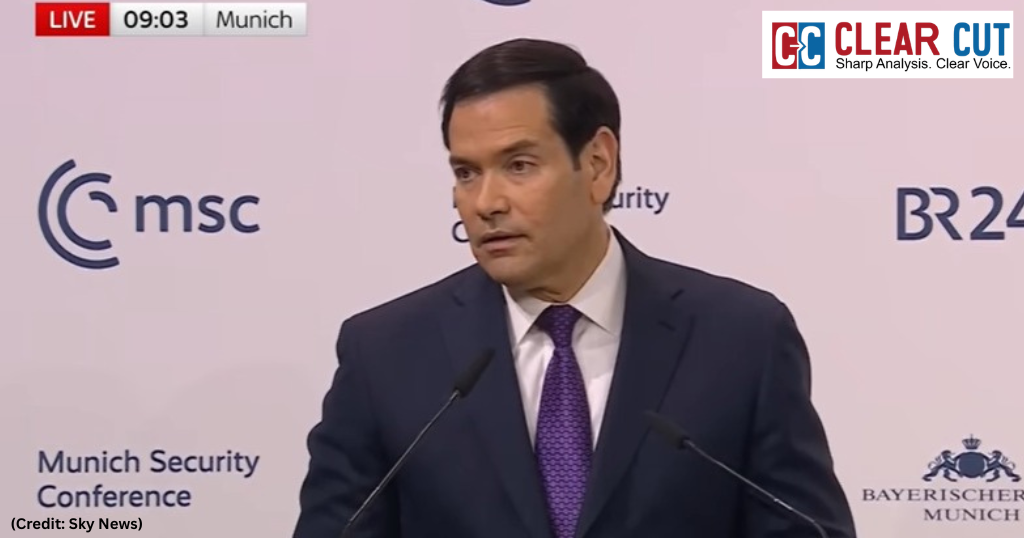
When Marco Rubio spoke at the Munich Security Conference, he was not only addressing Europe. He was quietly describing the future of the global economy. His line that the United States “will always be a child of Europe” came after a year of visible tension between the U.S. and its European allies. It was meant as reassurance, but it also reflected a deeper reality: the world is no longer run by free markets alone. Power, alliances, and national interests are once again shaping how countries trade and how companies grow.
For many years, globalization felt simple. Businesses focused on efficiency, cost reduction, and global expansion without thinking too much about political borders. Supply chains were designed for speed and price, not for risk or resilience. That model is now under strain. Trade disputes, wars, sanctions, technology restrictions, and shifting alliances have made it clear that geopolitics can disrupt business overnight. What we are witnessing is not the end of globalization, but the end of “easy” globalization.
(Credit: Sky News)
Rubio’s speech is important because it shows how the U.S. and Europe are trying to realign after a period of disagreement. Both sides are now more cautious about who they depend on for critical technologies, energy, data, and manufacturing. They are rethinking global trade through the lens of security, values, and long-term stability. This shift will influence how global rules are written, how standards are set, and who gets access to key markets.
In practical terms, this shift is already visible across sectors. Governments are subsidizing domestic manufacturing, screening foreign investments more carefully, and tightening export controls on sensitive technologies. The logic is simple: economic strength is now directly linked to national security. Companies operating globally must therefore understand not only market demand, but also policy direction. For Indian businesses, this means tracking geopolitical developments as closely as they track financial indicators.
For Indian businesses, this change is not distant or theoretical. Europe and the United States are two of India’s most important economic partners. As these regions redesign their trade and industrial policies, Indian companies will increasingly be judged not only on price and quality, but also on trust, compliance, transparency, and strategic alignment. The question is no longer just “Can you supply?” but also “Can you be relied upon in times of crisis?”
At the same time, this new environment creates opportunity. Global companies are actively looking to reduce dependence on a few concentrated manufacturing hubs. They want diversified, reliable partners. India is well positioned to benefit from this shift if it can strengthen its infrastructure, simplify regulations, and invest in technology and skills. Sectors such as electronics, renewable energy, digital services, pharmaceuticals, and defence manufacturing are already seeing rising interest.
Another important dimension is capital flow. Global investors are reallocating funds toward politically stable and strategically neutral economies. India’s macroeconomic stability and demographic advantage make it attractive in this environment. However, investors will increasingly look for clarity in regulatory frameworks and long-term policy consistency. The competition is not just about labour cost anymore; it is about predictability and trust.
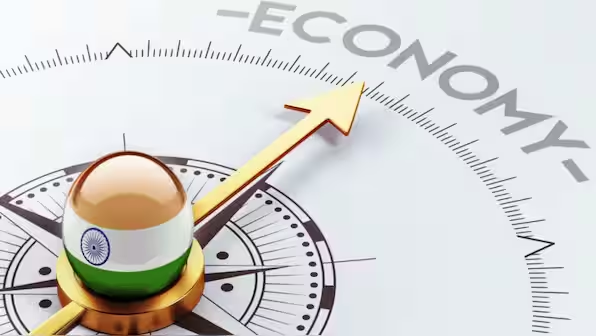
However, the transition will not be easy. Indian companies will face stricter regulations, higher compliance costs, and more complex geopolitical risks. Decisions about markets, partnerships, data handling, and supply chains will increasingly carry political and ethical implications. Boards and leadership teams will need to think beyond quarterly profits and consider long-term strategic positioning in a fragmented world.
There is also a moral dimension to this shift. As countries prioritize national interests, businesses will be pressured to choose sides, follow specific standards, and align with particular blocs. This raises questions about fairness, data privacy, labour practices, environmental responsibility, and sovereignty. Companies that ignore these concerns may face reputational and regulatory risks that directly affect their valuation and growth.
There is also a generational shift underway. Young entrepreneurs and business leaders in India are far more globally aware and digitally connected than previous generations. They understand that innovation, sustainability, and governance are not compliance burdens but competitive advantages. In a world where alliances matter, reputation travels faster than goods. Indian companies that invest in credibility, transparency, and strategic partnerships will find themselves better positioned in this evolving order.
Rubio’s words in Munich reflect a world that is becoming more cautious, more divided, and more strategic. For India, this moment is not a threat, it is a turning point. The global economy is being redesigned, and Indian businesses have the chance to move from being cost-driven participants to trusted strategic partners.
The rules are changing. Those who adapt early will lead. Those who cling to the old model of easy globalization may struggle to survive.
Disclaimer: The views, opinions, and interpretations expressed in this document are solely those of the author and do not necessarily represent the official position or views of the organization.
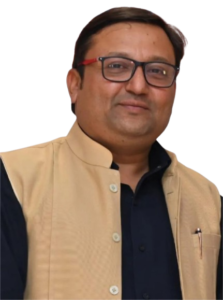
Parikshit Vyas is an Architect-turned Industry and Corporate Strategist with over 26 years of experience across manufacturing, MSMEs, sustainability, supply chains, and corporate strategy. He is also the founder of CORPSKILL.
Clear Cut Research Desk
New Delhi, UPDATED: Feb 19, 2026 01:00 IST
Written By: Parikshit Vyas