
Ethiopia’s $350 million Fayda Digital ID project aims to provide legal identity to millions, enabling access to banking, healthcare, and public services. Inspired by India Stack, it promises faster service delivery and inclusion, especially for women and refugees, while raising concerns around privacy and data governance.
A Huge Bet on Identity
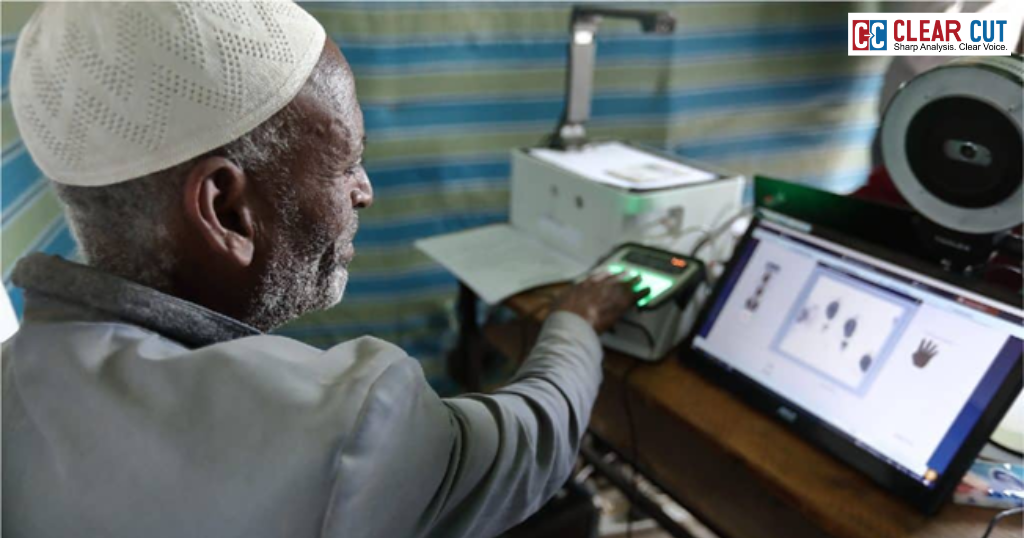
The World Bank approved $350 million for Ethiopia’s Digital ID project in December 2023. The project was considered to be one of its kind in Africa. At the heart of it is Fayda, a biometric ID system whose name literally means “value.”
Why was it important now? The question arises. The answer remains simple. About 40% of Ethiopia’s population, don’t have an official ID. No ID means no bank account. No bank account means no loans, no insurance, no government support. In short; you exist, but the system doesn’t see you.

Fayda is designed to end that.
What Is Fayda? Why Does It Matter?
But Fayda is more than just another plastic card. It is the digital infrastructure that enables citizens to prove themselves and access public services more speedily and conveniently. It is the result of the Digital ID Proclamation passed by the Ethiopian Government in March 2023. It helps citizens access financial services, social programs, employment opportunities, healthcare, and education more conveniently and with greater control over their identity.
It is not just an ID card. It is the digital infrastructure, a shared infrastructure that enables citizens to authenticate themselves with public and private sector organizations alike. Ethiopia’s digital infrastructure now caters to 55 service providers. It has enabled the delivery of public services up to 60 percent faster.
It is not just faster service delivery that is the result of the digital infrastructure. It enables MOSIP (Modular Open-source Identity Platform), which is a technology that prevents vendor lock-in and therefore keeps the infrastructure sovereign, not owned by any foreign technology companies.
The India Stack Blueprint
Fayda did not emerge in a vacuum. The structure is heavily influenced by the Digital Public Infrastructure (DPI) framework popularized by the India Stack. This has been previously employed to bring hundred millions of Indians, into financial services in less than a decade.
India has been a pioneer in building digital public infrastructure through the India Stack. It has opened doors to data empowerment and protection, via platforms that enable individuals to give consent to financial services players to access their personal data with other entities. The DPI framework has tremendous potential to enable other countries in the Global South, to bypass several steps and complex architectures to achieve inclusive financial services.

Ethiopia is following this path too. India has already signed cooperation agreements with 23 countries on building digital public infrastructure, with 6 countries in Africa including Ethiopia. These countries are being given access to 18 Indian digital platforms through India Stack Global. Ethiopia has been the most ambitious adopter of the three-layer structure of the Digital Public Infrastructure stack, as seen in the India Stack.
25 Million Registered. 90 Million to Go.
The rollout of Fayda has been rapid. In September 2025, over 25 million people were registered, with 11.8 million people registered in FY2025 alone. This accounts for 91% of the annual target. The ultimate goal is 90 million people, which is every legal resident in the nation, including refugees. Prime Minister Abiy Ahmed has described Fayda Digital ID, as the 2nd most important national project in the nation, behind the Grand Ethiopian Renaissance Dam (GERD). This is an indication of a political commitment, a significant difference between success and failure in any national-scale digital revolution. Mobile money use grew between 2020 & 2024 to over 60 million people by early 2025, with an estimate of 55% of users being women. Fayda is expected to build on this pace and link ID authentication with financial and social service channels.
Closing the Gender Gap
Another important goal of Fayda remains to bridge the gender gap. In Ethiopia, women are 15% less likely than men to have any kind of identification. In order to bridge this gap, Fayda focuses on women in its registration drive. It mobilizes communities, engaging women’s groups, and training female registration officers. Fayda is enabling women to access social protection benefits, bank accounts and loans; which in turn contribute to the economy in ways that were previously inaccessible to them. Having an ID is not just about being recognized by the state; for a woman in rural Ethiopia, it can mean the beginning of an entirely new world.
Refugees and the Displaced: No One Left Behind
The country has more than a million refugees legally staying in the nation. Some have expired documents, that bar them from accessing basic services. Since a data-sharing agreement was reached in January 2024 by the National ID Program (NIDP), UNHCR, and Refugee & Returnee Service, refugees are being integrated into the Fayda system.
When it comes to internally displaced persons, the situation is just as dire. The open-source system OpenG2P has been able to provide social services directly to vulnerable communities, presenting a transformative solution to individuals without personal documents.
The Road Ahead: Real Impact, Real Risks
The progress is evident, but the mission is far from complete. The World Bank missions have encouraged the National ID Program, to look beyond the mere exercise of registration and instead invest in real cases where digital ID can make a real impact.
The issues of privacy, data governance, and cybersecurity are still major issues of concern. Transparency, citizen engagement, and accountability are key factors in the successful implementation of DPIs, and the internal governance of the system will be the real test of whether the system is inclusive or exclusive in its nature.
Ethiopia has the framework, the funding, the political commitment, and the momentum. What Ethiopia needs to be wary of is the gap between the numbers registered and the life transformed. Fayda is the Arabic word for value. Creating value for 90 million citizens is the real task at hand.
References
- World Bank — The Transformative Power of Ethiopia’s Digital ID (February 2025): worldbank.org
- World Bank Project Document — Ethiopia Digital ID for Inclusion and Services (P179040): documents1.worldbank.org
- World Bank — Empowering Ethiopians: Laying the Digital Foundations (June 2025): worldbank.org
- Shega — Digital Ethiopia 2025: Progress, Challenges, and the Road Ahead (October 2025): shega.co
- Biometric Update — Ethiopia Reveals Strategy Behind Digital ID Progress at ID4Africa 2025 (May 2025): biometricupdate.com
- Identity Week — Ethiopia’s Digital ID Fayda: Paving the Way for Inclusivity (March 2025): identityweek.net
- World Bank Press Release — World Bank Supports Ethiopia’s Digital ID Project (December 2023): worldbank.org
- World Bank Blog — How Digital Public Infrastructure Supports Empowerment, Inclusion, and Resilience: blogs.worldbank.org
- Atlantic Council — Global DPI Models: Lessons from India, Brazil, and Beyond (November 2024): atlanticcouncil.org
- Atlantic Council — How Digital Public Infrastructure Can Support Financial Inclusion (October 2024): atlanticcouncil.org
- World Bank Blog — A More Connected Africa: Zambia and Ethiopia Join Forces on Digital ID (October 2025): blogs.worldbank.org
- Ecofin Agency — Six African Countries Adopt India’s Digital Public Infrastructure Framework: ecofinagency.com
Clear Cut Research Desk
New Delhi, UPDATED: March 20, 2026 09:00 IST
Written By: Tanmay J Urs