

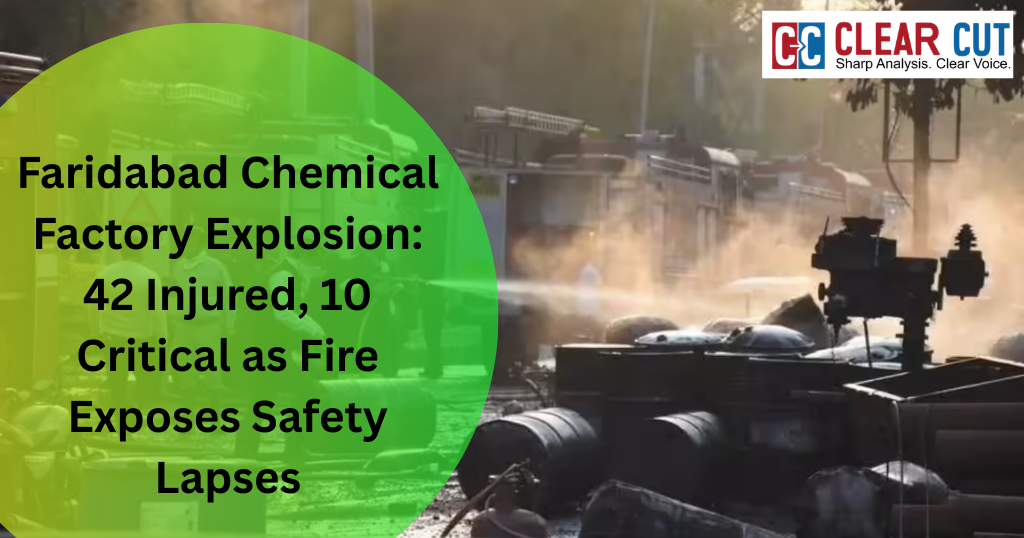
A massive Faridabad chemical factory explosion at Shree Kalkaji Lubricants injured 42 people, with 10 in critical condition, after a suspected electrical short circuit triggered a fire. Authorities have ordered a magisterial inquiry to investigate safety lapses and compliance with industrial safety norms.
At least 42 people were wounded, including 10 in critical condition, when an explosion sparked a fierce fire at a chemical factory in Faridabad’s industrial belt on Monday afternoon. The blast occurred at Shree Kalkaji Lubricants in Sector 24 around 4:15 pm, according to police and emergency officials.
Workers were handling chemical drums when a short circuit reportedly ignited nearby materials, triggering the explosion and rapid spread of flames. The blaze quickly consumed large sections of the unit.

Rescue Efforts and Casualties
Fire brigade teams rushed multiple tenders and emergency personnel to the scene. Many workers were trapped inside as fire erupted. Local hospitals confirmed they admitted nearly 42 injured people with severe burns. Ten of the patients remain in critical condition, medical officials said.
Three police personnel who responded to the emergency were also injured while aiding evacuation efforts.
Administration Response
Authorities launched an immediate investigation into the cause of the explosion. Police said preliminary findings pointed to electrical malfunction and the volatile nature of stored chemicals as likely contributors, but a full forensic probe is ongoing.
Haryana government officials have ordered a detailed magisterial inquiry to examine compliance with safety norms and determine accountability. A senior district magistrate will lead the probe, officials confirmed.
Haryana’s industrial safety framework mandates detailed risk assessments and emergency response plans for hazardous facilities, but enforcement remains uneven. Independent safety experts point to gaps in inspections and poor adherence to fire prevention protocols across many industrial units.
Safety Norms Under Scrutiny
India already has statutory requirements under the Haryana Occupational Safety, Health and Working Conditions Rules and Factories Act that specify emergency planning and fire hazard controls. These frameworks require factories handling combustible or toxic substances to maintain hazard data sheets, risk assessments, and emergency response equipment, along with periodic inspections by industrial safety authorities.

Despite the regulations, enforcement in the industrial belts around Haryana and neighbouring regions has drawn criticism. Industrial safety analysts say many small and medium enterprises struggle to meet mandated safety standards due to lax audits and limited oversight.
Larger Pattern of Industrial Accidents
This incident in Faridabad comes amid a troubling pattern of chemical and factory fires in India. In 2025, a major explosion at Sigachi Industries Ltd in Telangana killed 46 and injured 33 following a dust explosion in a chemical processing plant.
Similarly, the 2024 chemical unit explosion in Thane, Maharashtra, killed 10 and left dozens injured when boilers detonated and fires spread through the facility.
These deadly incidents have prompted calls from labour groups and safety experts for stricter enforcement of industrial fire codes, tougher penalties for non-compliance, and routine emergency drills.
Voices from Safety Experts
Dr. Anita Sharma, an industrial safety consultant based in New Delhi, said in an interview with The Indian Express, “Incidents like these reflect systemic lapses in hazard management and emergency preparedness. Proper safety audits, staff training, and updated fire suppression systems must be non-negotiable in chemical-handling units.” Sharma further stressed that rapid urbanisation near industrial clusters demands urgent upgrades to inspection capacities at state and federal levels.
Government and Industry Reactions
While official statements from the Haryana government over the blast have been limited, authorities assured the public they will implement the magisterial probe recommendations fully. Corporations in the broader industrial region have also expressed willingness to cooperate with investigations and revise safety protocols where needed.
Industry associations have indicated plans to hold emergency response training sessions for workers across chemical units in the region.
Conclusion: Prevention Over Aftermath
The Faridabad explosion has reignited debates on industrial safety and accountability in India. As injured workers recover in hospitals and investigators compile evidence, families and communities await clarity on how such a disaster occurred. Experts urge that learning from past accidents, both in Faridabad and elsewhere will be key to preventing future tragedies.
Clear Cut Health Desk
New Delhi, UPDATED: Feb 19, 2026 09:00 IST
Written By: Ayushman Meena