
The Global Hunger Index (GHI) 2025 was officially launched at the African Union Headquarters in Addis Ababa, Ethiopia, bringing together policymakers, development experts, youth innovators and civil society organisations to address one of the world’s most persistent humanitarian challenges. The event was held under the theme “Time to Recommit to Zero Hunger,” highlighting the urgent need to accelerate progress toward ending hunger and malnutrition worldwide.
The Global Hunger Index is an annual report jointly produced by international development organisations Concern Worldwide and Welthungerhilfe. The index tracks hunger levels across countries by measuring indicators such as undernourishment, child wasting, child stunting and child mortality.
According to the organisers, the 2025 launch emphasises community-driven innovation and stronger cooperation between governments, regional organisations and development partners.
Platform for Youth and Women Innovators
One of the central goals of the Addis Ababa launch was to highlight solutions led by young innovators and women working at the grassroots level to combat food insecurity. Organisers said that empowering communities is essential for building sustainable food systems.
Development organisation Welthungerhilfe noted during the launch discussions that hunger cannot be solved through policy alone. Community-based initiatives must play a major role in transforming food systems and ensuring food access in vulnerable regions.

Youth entrepreneurs and agricultural innovators presented projects focusing on climate-resilient farming, digital agricultural tools and community nutrition programmes. These initiatives aim to improve productivity and food distribution while strengthening local resilience to climate shocks.
Aligning with Africa’s Agricultural Development Framework
The event also focused on aligning national hunger-reduction efforts with the Comprehensive Africa Agriculture Development Programme (CAADP), the African Union’s flagship agricultural development strategy.
CAADP was established to strengthen agricultural productivity and food security across the continent through coordinated investment and policy reforms.
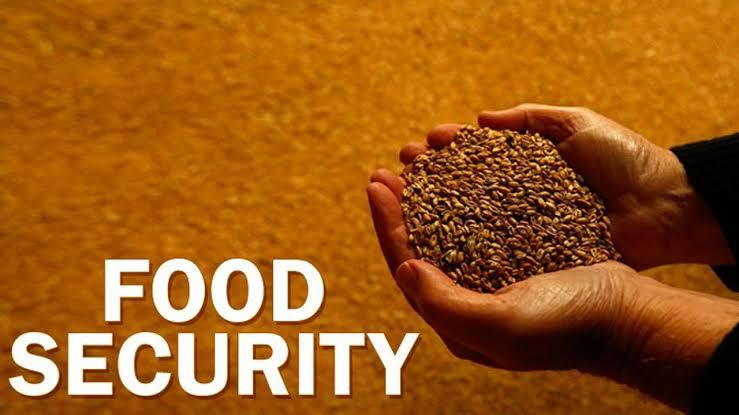
African Union officials emphasised that stronger coordination between national governments and continental programmes is essential to address the scale of the hunger crisis.
During discussions at the launch, development experts stressed that agricultural transformation remains one of the most effective ways to reduce hunger and poverty in Africa. Expanding rural infrastructure, improving market access and investing in climate-smart agriculture were highlighted as critical priorities.
Global Concern Over Rising Hunger
International organisations continue to warn that progress toward ending hunger has slowed in recent years. Conflicts, climate change and economic disruptions have worsened food insecurity in several regions.
United Nations Secretary-General António Guterres has repeatedly warned about the global hunger crisis. In remarks during a global food systems dialogue, he said, “Hunger is a stain on humanity. In a world of plenty, no one should go to bed hungry.” He also emphasised that international cooperation and investment in sustainable agriculture are critical for achieving the Sustainable Development Goal of Zero Hunger by 2030.
Similarly, Qu Dongyu, Director-General of the Food and Agriculture Organization (FAO), has highlighted the need for stronger investment in food systems. In remarks at a global agriculture conference, he said that improving agricultural productivity and supporting smallholder farmers are essential steps toward reducing hunger and malnutrition.
Civil Society Calls for Urgent Policy Action
Civil society organisations involved in the Global Hunger Index report have stressed that the world must accelerate action to reverse rising hunger trends.
Mathias Mogge, Secretary General of Welthungerhilfe, said in previous GHI discussions that global hunger remains at alarming levels and requires stronger political commitment. He warned that without urgent policy action and sustained investment in food systems, progress toward ending hunger could stall.
Concern Worldwide leaders have also emphasised the importance of community-driven solutions. Development experts from the organisation have noted that addressing hunger requires not only food production but also improvements in nutrition education, healthcare and social protection systems.
Youth Innovation as a Key Solution
A distinctive feature of the GHI 2025 launch was its focus on youth leadership and innovation. Organisers highlighted that young entrepreneurs across Africa are developing creative solutions to food insecurity.
These include mobile platforms that connect farmers to markets, climate-resilient seed technologies and digital systems that help farmers track weather patterns and crop conditions.
Experts say these innovations could significantly improve agricultural productivity and reduce food losses, especially in regions where smallholder farmers form the backbone of food production.
Renewed Commitment to the Zero Hunger Goal
The theme of the 2025 launch highlights growing concerns that the world is lagging behind in achieving the Zero Hunger target under the United Nations Sustainable Development Goals. During the event in Addis Ababa, officials emphasised that meeting this goal will require coordinated efforts from governments, development organisations, the private sector, and local communities.
Development leaders also noted that increased investment in agriculture, climate resilience, and nutrition programmes will be critical to addressing hunger and creating more sustainable food systems. As discussions around the Global Hunger Index 2025 progress, policymakers and experts hope that the renewed global focus will lead to concrete actions that move the world closer to eliminating hunger.
Clear Cut Research, Startups Desk
New Delhi, UPDATED: March 13, 2026 04:00 IST
Written By: Ayushman Meena