
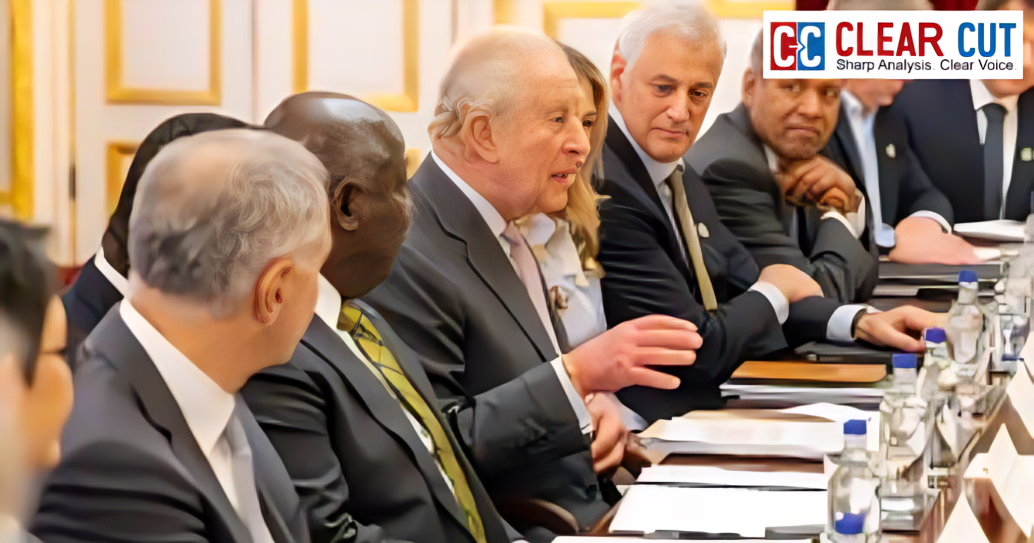
At the Sustainable Markets Initiative summit at Hampton Court, global CEOs and leaders—backed by King Charles III—focused on turning climate commitments into real-world action through partnerships in clean energy, AI, and sustainability. The event highlighted a shift from promises to measurable delivery, driven by private sector collaboration across industries worldwide.
Hampton Court Palace is not normally a boardroom. This week, it was. Over 300 global CEOs, government leaders, innovators, and investors converged at the historic royal site for the Sustainable Markets Initiative (SMI) Roundtables and Exhibition 2026. The message was clear. The world has had enough pledges. It wants proof.
The summit focused on accelerating real-world delivery of the sustainable transition, bringing together hundreds of leaders to move beyond ambition and advance meaningful partnerships, investments, and collaborative action on clean energy, space, artificial intelligence, capital investment, sustainable materials, and advanced manufacturing.
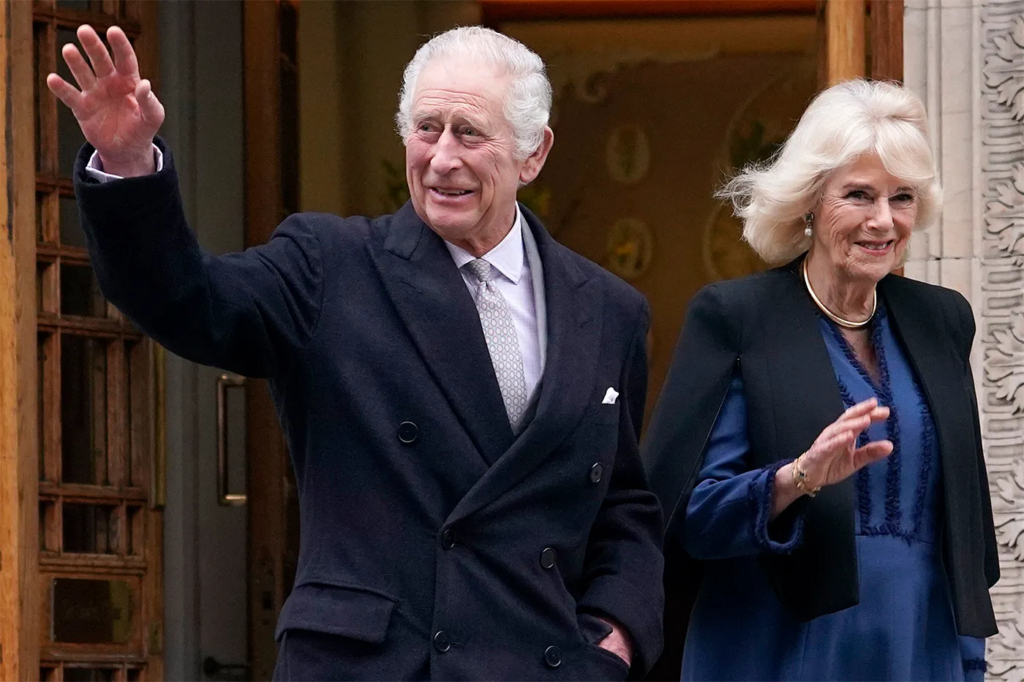
His Majesty King Charles III attended the summit, underscoring the royal founding vision that has shaped SMI since its creation in 2020.
What Is the SMI?
Founded by King Charles III in 2020, the Sustainable Markets Initiative has grown into a unique platform for “private sector diplomacy”, mobilizing global business leaders to place sustainability at the centre of value creation and long-term economic growth.
Its mandate, the Terra Carta, is modeled on the Magna Carta. It gives the private sector a practical roadmap toward the world’s 2030 sustainability targets. The SMI does not just host conversations. It brokers deals.
Jennifer Jordan-Saifi, CEO of the Sustainable Markets Initiative, explained the summit’s core purpose. She said, “The SMI’s annual Roundtables and Exhibition brings together global leaders not just to discuss ambition, but to drive real-world action, forging partnerships, mobilizing investment and scaling the solutions needed to deliver sustainable growth. By working together, the private sector can unlock innovation, create economic opportunity and help build a resilient and sustainable global economy.”
China Takes Centre Stage
The presence of the SMI China Council drew significant attention. Over 50 CEOs from Chinese companies attended, highlighting the growing engagement and leadership of the SMI China Council. Since its establishment in 2021, the Council has developed a strong and pragmatic sustainability agenda reflecting China’s development priorities and its expanding role in global economic and environmental governance.
The Chinese delegation also confirmed a second China Council Forum, scheduled for June 2026, to build on cross-border collaborations.
Glenn Mandziuk, President and CEO of the World Sustainable Hospitality Alliance, spoke about the significance of these cross-border ties. He noted, “It is through this unique brand of private sector diplomacy, inspired by His Majesty King Charles III, that we have forged groundbreaking partnerships, first with a global leader like JA Solar, and now evolving into a deep, strategic alliance with the China Photovoltaic Industry Association. This powerful continuum of collaboration is a testament to the SMI’s unrivalled convening power, opening new opportunities to mobilize our industry’s $200 billion annual investment towards a renewable future.”
Oceans, Space, and Clean Energy
The summit produced a set of headline announcements that ranged from ocean protection to orbital debris removal.
Former US Secretary of State John Kerry was announced as Ocean Champion for the SMI’s Ocean Stewardship Initiative, with a clear purpose of bringing civil societies, governments, and the private sector to pull in the same direction and turn ocean commitments into practical, measurable progress.
In a rare intersection of sustainability and space technology, the European Space Agency announced that the ELSA-M mission, developed by Astroscale UK, Eutelsat/OneWeb, and the UK Space Agency to remove space debris, will carry the SMI’s Astra Carta Seal for its first in-orbit demonstration, symbolising commitment to responsible stewardship of the space environment.
On the clean energy front, energy tech company Mixergy, part of the Barclays Climate Ventures portfolio, has begun working with Historic Royal Palaces to use smart hot water cylinders that can cut hot water energy use by up to 40%. Two units are currently being trialled at Hampton Court Palace itself, with the potential to expand across Historic Royal Palaces’ wider estate.
AI Meets Net Zero
Artificial intelligence featured prominently at this year’s summit. The SMI positioned inclusive and practical AI deployment as a key pillar of the sustainable transition strategy.
Supported by the SMI, ExpectAI and Marylebone Cricket Club have partnered to accelerate MCC’s Net Zero 2040 ambition by transforming how it tackles Scope 3 emissions, which currently account for approximately 90% of its total carbon footprint, through verified supplier-level data and AI-enabled action.
A second AI initiative extended this logic to small businesses. Facilitated by the SMI, ExpectAI is in live collaboration with Barclays to explore how AI-driven sustainability insights can help UK small and medium-sized enterprises improve profitability while strengthening energy resilience and reducing emissions.
Wind Power and Real Zero
China’s Envision Energy has grid-connected an EN182-7.8MW wind turbine prototype, identical to turbines that will be deployed at Fortescue’s Nullagine Wind Project in Western Australia. The Nullagine project will use 17 such turbines, incorporating Nabrawind’s self-erecting base frame technology with a 188-metre hub height, with Fortescue’s AI-enabled management system set to optimize power dispatch across its entire integrated portfolio.
A Global Platform, Not a Western Club
One of the summit’s most deliberate signals was its geographic breadth. Senior delegations attended from Japan, Australia, the UAE, Brazil, and across Africa and the United States, making the event one of the most globally representative sustainability forums of 2026.
The SMI’s model depends on this diversity. Climate finance cannot flow where trust does not exist. By operating as a neutral convening ground, the SMI continues to build the cross-border relationships that governments alone cannot forge at this speed.
The Hampton Court summit showed that private sector diplomacy is no longer a buzzword. It is producing turbines, satellites, AI tools, and ocean strategies. The age of climate ambition is giving way to the age of climate delivery.
Clear Cut Climate Desk
New Delhi, UPDATED: March 17, 2026 02:00 IST
Written By: Ayushman Meena