
India ka child protection system welfare model se rights-based framework tak evolve hua hai, lekin implementation gap, underreporting, aur digital risks ab bhi badi chunautiyan hain. SDG alignment ke bawajood, majboot system strengthening, sahi financing, aur better data insight ke bina bachchon ki suraksha adhuri rahegi.
From Welfare to Rights: India’s Child Protection Journey
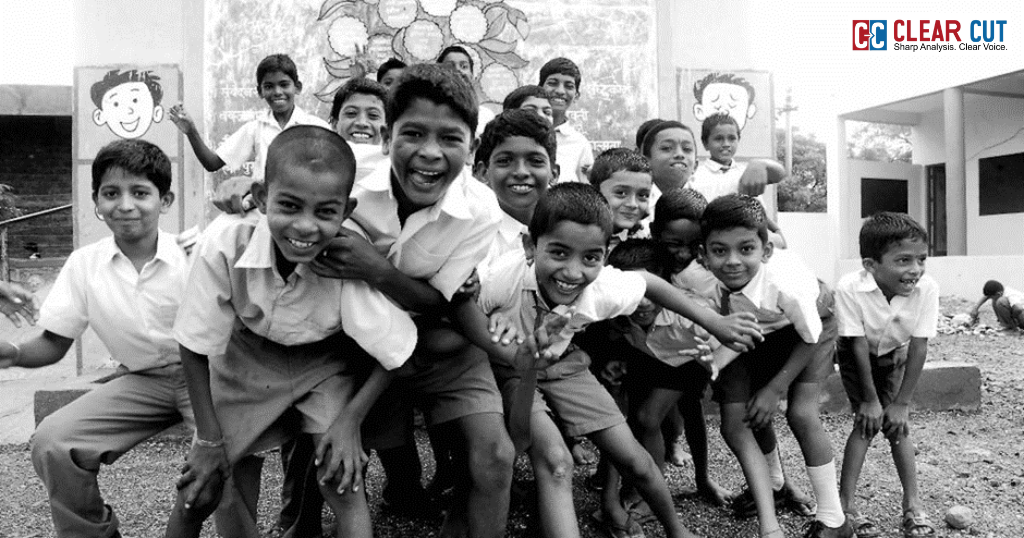
India is currently experiencing a significant population shift. With nearly one-third of the population under 18, child protection is not a niche social concern but central to human capital development, social stability, and long-term economic resilience. Children’s safety and wellbeing influence not only the course of individual lives but also the country’s future. India’s approach to child protection has changed over time in tandem with the country’s overall development.
A rights-based, system-driven framework emphasizing prevention, care, and justice has gradually replaced what was once primarily a welfare-oriented paradigm centered on rescue and relief. A legal and
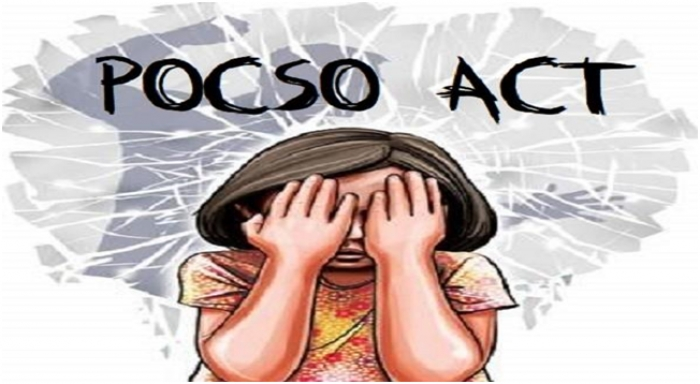
institutional framework, such as the Juvenile Justice Act, the POCSO Act, and related regulations, has supported this change during the last 20 years. There are now district-wide organizations like Childline 1098, District Child Protection Units (DCPUs), Juvenile Justice Boards (JJBs), Child Welfare Committees
(CWCs), and Special Juvenile Police Units.
In-Between Silence: Law – Lived Reality Implementation Challenges Hidden Harm
Although India has some of the most progressive child protection legislation on paper, children’s everyday experiences show a continuing gap between rights that are given and those that are actually
realized. Understanding how overlapping vulnerabilities build a child’s risk profile and why current systems frequently fail to respond equitably or early enough is the fundamental problem as the nation
fortifies its legislative frameworks and broadens institutional coverage. Risks associated with poverty, migration, gender, and digital exposure persist despite these legislative advancements, exposing deeper structural flaws that cannot be fixed by infrastructure and legislation alone. Although there has been
improvement on paper, systemic coherence is brittle, coordination across institutions is poor, and implementation quality is still inconsistent. Only a small portion of children’s actual experiences are
captured by what is visible through crime records, helpline calls, and administrative data. The majority of everyday assault, coercion, internet exploitation, emotional abuse, and neglect go undetected.
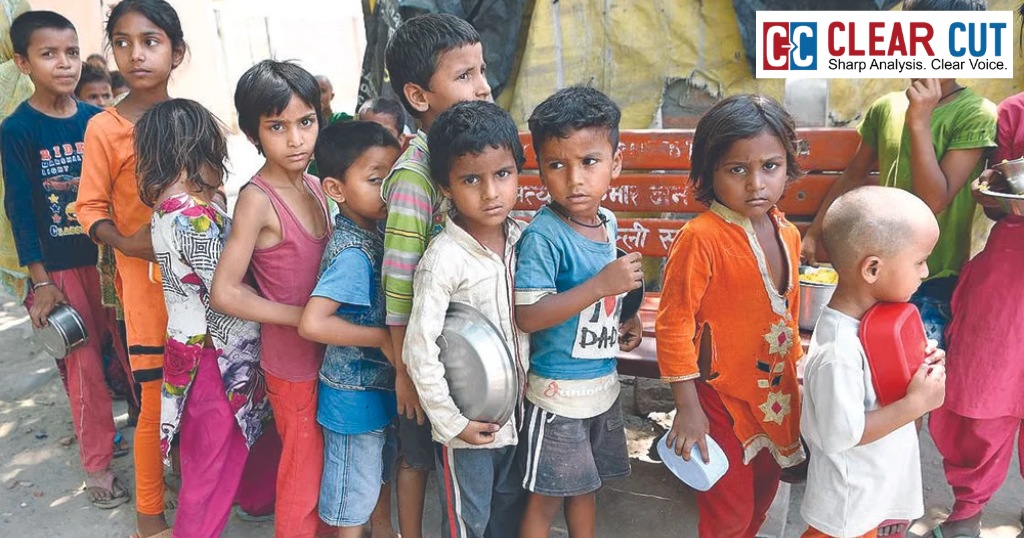
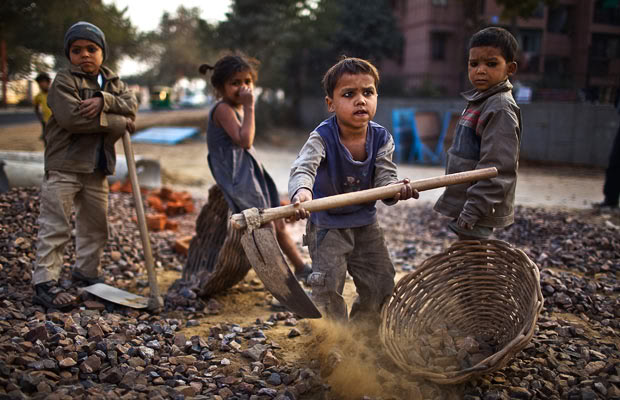
According to data from India’s 2011 Census, there were over 10.12 million working children and child laborers between the ages of 5 and 14. This indicates the number of children who continue to work in jobs that deny them access to education, health care, and a typical childhood. According to the Access to Justice for Children program’s own “Impact on the Ground” data for its End Child Trafficking in India work, over 44,900 children were saved from various forms of exploitation through over 27,000 rescue operations carried out across 24 states and union territories between April 2024 and March 2025. The majority of these children were released from child labor.
The Data Paradox: Plenty of Information, Little Insight
Administrative systems, helplines, and digital platforms in the field of child protection produce enormous amounts of data on “cases,” but these figures frequently conceal more about children’s actual lives than they do. Official statistics document reports, investigations, and institutional reactions, but they seldom account for the reasons behind families’ reluctance to report abuse, the ways in which gender and power dynamics influence risk, or the ways in which children themselves interact with protection initiatives. Because of this, dashboards and indicators can give the impression of control by using charts and
trends to show progress while hiding persistent underreporting, misclassification, and the near-invisibility of the most marginalized children, such as those who are homeless, working informally, or lack identity documents.
Simultaneously, extremely sensitive data about specific children is gathered from disparate databases, frequently without the children’s meaningful involvement or input. Children’s voices and views are lost
when lived experiences are reduced to decontextualized statistical pieces that are shared throughout agencies. This results in the well-known dilemma of “plenty of information, little insight,” when
decisions are made based on what is easy to count rather than what most urgently needs to change, and data is plentiful but comprehension remains superficial.
The ongoing conflict over child protection statistics is also fueled by this dichotomy. Advocates utilize statistics on missing, trafficked, or mistreated children as both authoritative evidence and known
underestimates to mobilize resources and attention, but they are often questioned for not accurately reflecting the extent of the harm. According to Bachpan Bachao Andolan’s “Missing Children in India – A Pioneering Study,” which included data from the NCRB, NHRC, and RTI, approximately 11 children disappear every hour. When governments dispute civil society leaders and civil society criticizes official data as downplaying the issue, these inconsistencies can undermine trust.
Invisible Both Ways: Built for Children, Lost Between Systems
The fact that children themselves frequently are unaware that there are institutions in place to safeguard them is one of the most basic, yet least recognized, weaknesses in India’s child protection ecosystem. There is little consistent effort to make protection knowledge age-appropriate, accessible, or integrated
into the regular settings where children live, study, and play. Instead, laws, programs, helplines, and protocols function primarily around children rather than with them.
Public data compilations of the NCRB “ Crime in India” tables for serious POCSO offences ( section 4 and 6 ) for 2023 show that approximately 96.6 % of case involved perpetrators who were known to the child, and only about 3.4 % involved strangers or offenders not identified. These “known person” categories include family members, relatives, neighbours, family friends, employers, teachers, caregivers, and other acquaintances “Records Bureau”
Despite their shortcomings, schools provide a crucial point of entry for safety reporting and instruction, but millions of kids never get there. Even basic awareness and prevention measures do not include those who are not in school because of poverty, migration, child labour, domestic employment, or relocation.
The fact that the majority of violence against children is committed by people they know, such as family members, relatives, neighbours, or employers, rather than by strangers, makes this omission particularly risky. Even when harm happens within a child’s own circle of trust, the protection system still mostly
depends on these same adults to identify abuse, report infractions, and start the help-seeking process. When taken as a whole, these gaps show a systemic failing that leaves the most vulnerable children
least able to seek protection rather than an inadvertent error.
In a peri-urban government school, a 12-year-old boy regularly faced physical abuse by an older neighbour while returning from tuition. He believed the violence was his fault and ought to report it would get him “into trouble” for roaming alone. When asked months later whether he knew he could seek help, he replied, “If something bad happens, adults handle it. Children are supposed to stay
quiet.” He had never heard of Childline 1098, did not know what a Child Welfare Committee was, and had not been told by school, family, or community that safety was his right, not a favour The abuse stopped only when a teacher noticed his declining attendance and intervened.
Digital Acceleration, New Risks
The digital age exacerbates these weaknesses while simultaneously making the paradox more intense. Opportunities for learning and connection have increased due to the rapid acceptance of digital technology, broad mobile use, inexpensive internet, and early access to online platforms. In addition, it has exposed kids to hazardous materials, grooming, cyber exploitation, and online sexual abuse, frequently with no protection. The majority of digital harms are still mostly undetectable to present child
protection systems because current data only includes reported and recorded incidents, even though research on online abuse has started to influence policy discourse. Simultaneously, digital platforms produce enormous volumes of behavioral data about children’s online.
activities, yet the majority of this data is still locked within private business systems. The data required to identify risk patterns, emergent harms, or systemic failures is not readily available to child protection organizations and regulators tasked with preventing online abuse and exploitation. As a result, there is a glaring disparity between the abundance of data contained within corporate silos and the lack of morally sound, practical intelligence where children’s rights are supposed to be upheld.
Many children today are digitally fluent: they know how to use apps, platforms, and devices with ease, but they often do not know that helplines, reporting tools, or child protection services exist, or that these protections apply to online harm. Safety awareness is rarely embedded into the everyday digital spaces
where children spend their time. As a result, child protection systems remain out of step with children’s digital lives; they are largely designed to respond to visible crises rather than to support children in navigating daily online risks, leaving a critical gap between digital access and digital safety.
Financing Child Protection: Misaligned Priorities
Financial prioritisation presents another constraint. At the central level, child protection is primarily funded through umbrella welfare schemes focused on care, safety, and rehabilitation. These programmes are designed for population- level service delivery, where success is measured by coverage and outputs. Child protection, however, is inherently individual, rights-based, and crisis-driven requiring mandatory state intervention in hidden, high-risk situations.
A similar pattern is visible in Corporate Social Responsibility (CSR) spending, where Ministry of Corporate Affairs data analysed by DevInsights indicate that total CSR outlays have now crossed ₹ 34,000 crore annually across india. Whereas, sector-wise reviews by Protean and other national CSR outlook studies show that most CSR funds continue to flow into education, health,
or “women and child development,” which means system-strengthening elements like child helplines, case management systems, legal aid, shelters, and aftercare remain significantly underfunded and under-recognised despite being highlighted as critical gaps in CSR and child rights assessments.
Child Protection and the SDGs
A key component of India’s goals under the 2030 Sustainable Development Agenda is bolstering child protection services. The Sustainable Development Goals (SDGs) acknowledge that safeguarding children from abuse and exploitation is not a secondary welfare concern but rather a necessary condition for sustainable development. Ending violence against children is explicitly stated in SDG 16.2, however risk factors are included in many other goals, such as poverty (SDG 1), hunger (SDG 2), education (SDG 4), gender inequality (SDG 5), and low labour standards (SDG 8). In addition to directly advancing SDG 16.2, preventing abuse, exploitation, trafficking, and violence also supports SDGs 3 (Good Health and Well-Being), 4 (Quality Education), 5 (Gender Equality), and 10 (Reduced Inequalities). Child protection
is not a standalone concern it is a cross-cutting enabler of sustainable development.
What Must Change: Three Priority Actions
A deliberate and well-rounded strategy that acknowledges child protection as a separate system while maintaining tight ties to welfare platforms that facilitate early detection and prevention is required. System-level strengthening: Child protection needs a specialized workforce of case workers, counselors, and attorneys, as well as clear legal ownership and allocated budgets. Welfare programs can aid in prevention, but they cannot take the place of an independent protective system.
Sustained capacity building: The foundation of protection is made up of educators, first responders, law enforcement, judges, medical personnel, administrators, and members of civil society. Instead of one-time orientations, their efficacy depends on ongoing sensitization, training, mentoring, and skill development.
Service integration and coordination: Only when supported by unambiguous referral channels, shared data systems, ongoing learning, and robust accountability mechanisms can schools, anganwadis, and health institutions serve as early warning points.
Through long-term support for infrastructure, case management, helplines, shelters, aftercare, and capacity building, CSR plays a crucial role in protecting children from violence.
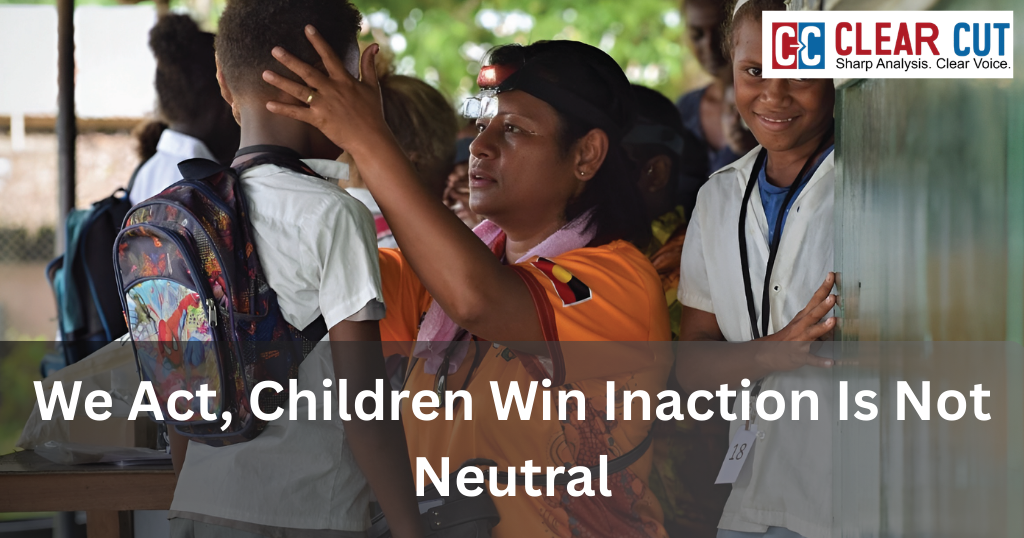
Conclusion: Inaction Is a Choice
Integrating child protection within welfare schemes can improve reach and prevention. But without standalone accountability, adequate budgets, and sustained expertise, such integration risks making abuse and exploitation less visible but not less prevalent. Protecting children requires more than intent; it requires systems that are equipped, accountable, and ready to act when it matters most.
About the writer: Sonali Maheshwari is a senior social development professional with over two decades of experience designing and leading large-scale, multi-stakeholder programmes in India and South Asia. She specialises in behaviour change, policy engagement, and systems strengthening across child protection and safety, women’s empowerment, adolescent and youth development, public health, social inclusion, and workforce wellbeing. Her work aligns closely with ESG priorities and the Sustainable Development Goals, with a strong emphasis on measurable impact, institutional accountability, and long-term sustainability.
Sonali Maheshwari is a senior social development professional with over two decades of experience designing and leading large-scale, multi-stakeholder programmes in India and South Asia. She specialises in behaviour change, policy engagement, and systems strengthening across child protection and safety, women’s empowerment, adolescent and youth development, public health, social inclusion, and workforce wellbeing. Her work aligns closely with ESG priorities and the Sustainable Development Goals, with a strong emphasis on measurable impact, institutional accountability, and long-term sustainability.
Clear Cut Child Protection Desk
New Delhi, UPDATED: Feb 24, 2026 09:00 IST
Written By: Sonali Maheshwari