

As climate negotiations enter a new decade, COP30 in Belém, Brazil, has emerged as a defining moment for global climate governance. India presented a strong and forward-thinking climate position at the High-Level Segment, one that combines local resilience, global equity, and national ambition. Three reinforcing pillars- implementation, justice, and decentralised climate leadership can be used to understand India’s position this year. This is based on government pronouncements, recent advancements in climate financing and grassroots urban creativity displayed at COP30. These three stated priorities are distilled from three different trends in this analysis as stated by Union Environment Minister Shri Bhupender Yadav. The discussions also underscored the importance of strengthening climate resilience in urban poor settlements in India and worldwide.
Additionally, India’s involvement in establishing the Green Climate Fund (GCF), a global platform for climate and nature finance. When taken as a whole, these threads show the structure of India’s COP30 narrative: the demand for inclusive climate governance that acknowledges the agency of cities and vulnerable communities, the assertion of India’s own responsible climate trajectory, and the necessity for developed nations to fulfil their commitments.
“COP of Implementation” and “COP of Delivery on Promises”
India’s primary message at COP30 is clear: global climate action must now shift from pledges to delivery. COP30 should be regarded as “a COP of Implementation and a COP of Delivery on Promises,” according to Shri Bhupender Yadav’s national declaration. This underscores long-standing worries among poor economies that, despite an increase in climate ambition, the necessary resources, finance, technology, and capacity support remain limited and uneven. Climate justice is the cornerstone of India’s stance. Yadav argued that the concept of common but differentiated duties necessitates higher ambition from those historically responsible for the climate crisis, emphasising that rich nations must achieve net-zero significantly earlier than their existing deadlines. In a sharp criticism of the ongoing discrepancy between promised and actualised cash flows, he urged for climate finance of “trillions, not billions.” The New Collective Quantified Goal (NCQG) on climate funding is anticipated to be negotiated during this time, making this call crucial. The developing world’s cohesive bargaining posture is defined by India’s articulation of trillions and demands for accessible and concessional monies. Additionally, India reaffirmed the need for climate technology to be free from onerous intellectual property barriers, a demand commonly made by developing countries that view high licensing costs as a hindrance to the scaling of adaptation and renewable energy technologies.
Demonstrating India’s Domestic Climate Progress
Demonstrating its own internal accomplishments is essential to India’s credibility at COP30. Since 2005, India’s emissions intensity has decreased by more than 36%, and non-fossil sources currently account for “more than half of our total electric power installed capacity (around 256 GW)”; this is five years ahead of the 2030 target. India also declared that it would submit updated NDCs through 2035, and it released its first Biennial Transparency Report on schedule. These forward-thinking pledges present India as a nation that respects ambition and openness, two fundamental requirements for the implementation stage of the Paris Agreement.
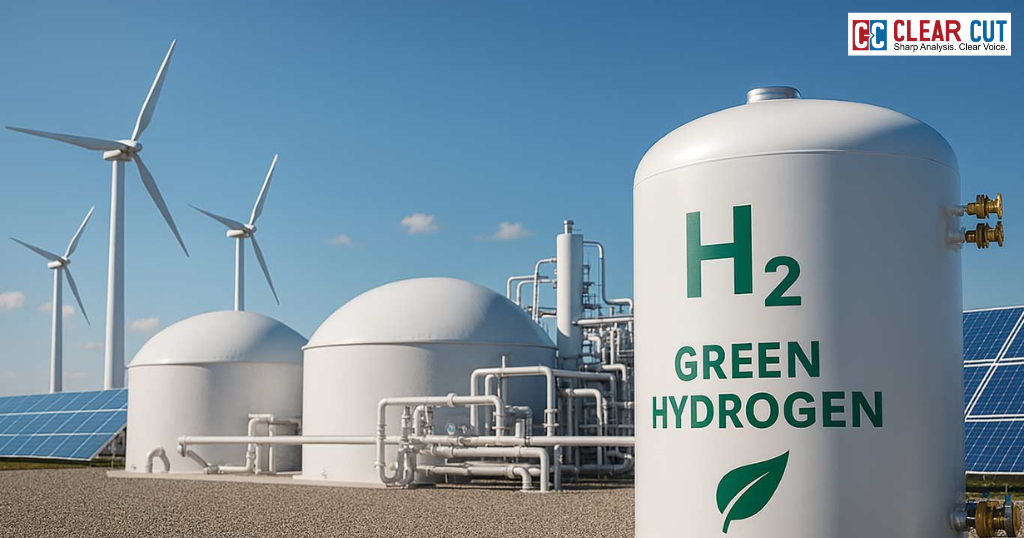
A narrative of transition based on energy diversification and long-term net-zero planning is reinforced by highlighting India’s global leadership through the International Solar Alliance, the Worldwide Biofuel Alliance, the Nuclear Mission, and the Green Hydrogen Mission.
The plantation of “over 2 billion plants under a community-led initiative in just sixteen months” was one startling statistic in the national declaration that highlights India’s emphasis on natural solutions and community involvement in carbon sink development.
Urban Poor Communities and the Push for Local Climate Leadership
The crucial role that cities, especially vulnerable urban communities, play in climate resilience is a major theme that emerged from COP30’s Local Leaders Forum. Urban adaptation is crucial to the global climate agenda because, according to a statistic presented at COP30, “seven out of ten people will live in cities” by the time a child reaches adulthood. In India, where 34% of the population resides in cities, informality, inequality, and unrecognised settlements exacerbate the problems. Despite being at the forefront of climate impacts, many of these communities are left out of climate planning.
India’s civil society involvement at COP30 highlights grassroots innovations that support the nation’s broader need for equitable and inclusive climate action. For example, Youth for Unity and Voluntary Action (YUVA), located in Mumbai, is leading the way in participatory procedures, including youth-led risk identification, hazard mapping, and Community Climate Action Planning. “If local governments and communities are trusted to lead, climate action can become fair and grounded in people’s realities,” says Dulari Parmar of YUVA.
Similar ideas were mirrored in the larger international conversation. Together, the Secretariat for Peripheries in Brazil and the Transformative Urban Coalitions (TUC) project in Latin America serve as examples of how decentralised, community-led initiatives, such as urban labs, favela upgrading, and climate adaptation programs, can form the fundamental framework for sustainability transformations. This strikes a deep chord with India’s priorities. India’s demand for implementation-driven COP outcomes aligns with the emphasis on multilevel governance, as demonstrated by UN-Habitat’s analysis, which shows that urban content in NDCs has doubled.
Climate Finance and India’s Role in Building a National Platform for “Climate and Nature Finance”
India is one of the leading nations at COP30, creating national “climate and nature finance” platforms organised by the Green Climate Fund (GCF). India’s involvement is indicative of a calculated move away from dispersed access to climate funding and toward a mainstreamed, organised strategy. Although India already participates in the GCF, creating a national platform is anticipated to:
- simplify the process of obtaining climate money,
- enhance cooperation between states, ministries, and private entities,
- encourage investments aimed toward adaptability, and
- strengthen India’s ability to design long-term resilience strategies.
This is an especially timely development. Only 25% of GCF’s $19 billion obligations have been properly allocated. Furthermore, 11 projects totalling $782 million have been awarded to India thus far, mostly through concessional loans. The establishment of country platforms aims to address bottlenecks and support developing countries in developing more robust, nation-driven project pipelines. India’s outspoken leadership in the Article 9.1 talks, which requires rich nations to provide funding, highlights the fact that climate finance is not just a technical problem but also a main political point of contention in international climate negotiations.
India’s Core Stand at COP30: A Synthesis
India’s stance at COP30 can be summed up as follows in terms of global negotiations, urban climate resilience, and climate finance:
First, Equity in Climate Action, India, is adamant that industrialised nations meet their financial obligations, eliminate technological obstacles, and reach net-zero sooner. The demand for “trillions, not billions” refers to a legitimate, larger-scale climate finance framework.
Second, Ambition and Accountability together position India as a responsible climate actor by demonstrating significant domestic accomplishments, including a 36% reduction in emission intensity, 256 GW of non-fossil capacity, and on-time reporting commitments.
Third, Climate Governance Localisation, where India emphasises that communities, urban local bodies, and civil society are the most powerful sources of climate resilience. Climate action must be co-produced with people most impacted, as demonstrated by YUVA and international Urban Labs. This is an emerging global norm.
Fourth, Fortifying the Architecture of Adaptation Finance aligns India’s participation in the GCF country platform project with its long-term financial strategy. The goal is to secure predictable and easily accessible financing for adaptation. This is particularly crucial for urban poor populations vulnerable to climate shocks.
Photo Credit: UNIDO
Conclusion: A Decade of Delivery and Shared Responsibility
India is adamantly forward-looking in its COP30 policy message. “Let the next decade be one of implementation, resilience, and shared responsibility,” said Minister Yadav. India’s position emphasises both national leadership and international accountability. India presents itself not only as a negotiator but also as a link between local climate realities and global climate governance by combining national ambition, community-led adaptation, and climate finance reform. India’s determination for justice, inclusivity, and delivery sets the stage for a decade that prioritises practical results over rhetorical aspirations as COP30 ushers in a new era of global climate action.
Clear Cut Climate Desk
New Delhi, UPDATED: Nov 21, 2025 03:38 IST
Written By: Nidhi Chandrikapure