
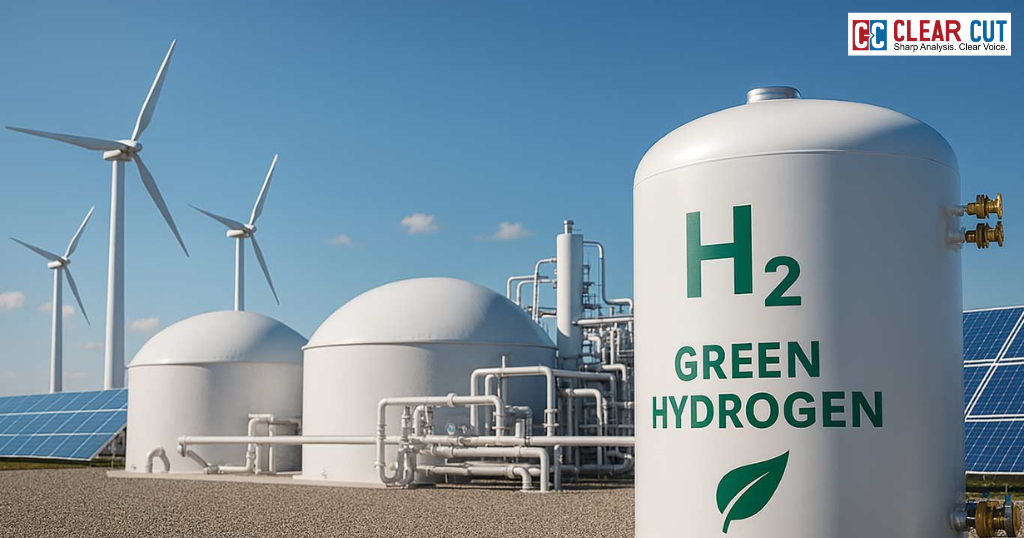
India’s Green Hydrogen Mission is rapidly scaling with record-low production costs, strong government incentives, and major projects like NTPC’s hydrogen hub driving growth. With expanding export infrastructure and a $60B+ ecosystem, India is positioning itself as a global leader in clean hydrogen production by 2030.
India’s National Green Hydrogen Mission is no longer a policy document. It is a live market. The most telling evidence: the government has awarded incentives for 4,50,000 tonnes per annum of green hydrogen production under its SIGHT programme, with a weighted average incentive price of Rs. 53.27 per kg for green ammonia, among the lowest ever recorded globally for a government-backed green hydrogen derivative auction.
Mode 2A was operationalized through guidelines issued on 16 January 2024, resulting in the award of 7.24 lakh TPA of green ammonia at a weighted mean reference price of Rs 53.27 per kg, supported by Rs 1,534 crore in subsidies. These prices significantly undercut comparable international green ammonia benchmarks across global markets.
Abhay Bakre, Director of the National Green Hydrogen Mission, put the trajectory plainly. The production cost of green hydrogen has been progressively coming down and it will eventually hit $2 per kilogram by 2032, paving the way for decarbonisation of the steel sector in India, he said.
SIGHT: The Engine Driving the Numbers
At the heart of the Mission is the Strategic Interventions for Green Hydrogen Transition programme, or SIGHT, funded with an outlay of ₹17,490 crore through FY 2029-30. It runs two financial mechanisms: one for electrolyser manufacturing, and one for green hydrogen production itself.
The results speak clearly. Incentives for 3,000 MW per annum of domestic electrolyser manufacturing and 862,000 metric tons per annum of green hydrogen production have been awarded under SIGHT.
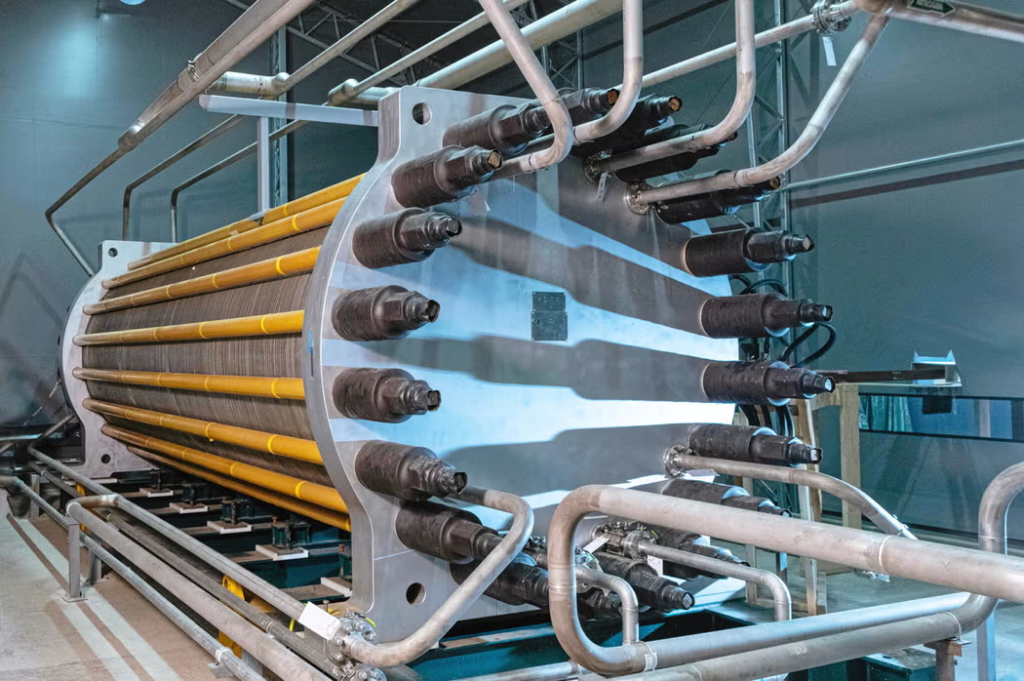
The latest auction under SIGHT Tranche II drew fierce competition. The bid opened in December 2024 and saw strong industry participation, with 14 players submitting bids totalling 6,26,500 metric tonnes per annum, far exceeding the tendered capacity of 4,50,000 MT per annum. Bucket 1, the technology-agnostic pathway, attracted bids of 6,20,000 MT per annum alone.
Winners across the earlier Tranche I auctions included Reliance, Greenko, ACME Cleantech, Hygenco, BPCL, Welspun New Energy, Torrent Power, UPL, and JSW Neo Energy, demonstrating that the entire spectrum of Indian conglomerates and pure-play green energy companies now see hydrogen as a core business.
The World’s Lowest Green Ammonia Price
India has now delivered a benchmark that has drawn global attention. India now records the world’s lowest green ammonia price at Rs 49.75 per kg for 7.24 lakh MTPA production, the Minister for New and Renewable Energy, Pralhad Joshi, announced at the 3rd International Conference on Green Hydrogen at Bharat Mandapam.
To put this in perspective, comparable international prices in Europe remain in the €5–8 per kg range, and even advanced markets like the United States hover around $3–6 per kg. India’s ability to achieve sub-$3.1 per kg firmly establishes its cost leadership. This outcome reflects cheap solar and wind energy, competitive bidding design, and waiver of interstate transmission charges for renewable energy used in hydrogen production.
Union Minister Pralhad Joshi framed this not as an energy experiment but as economic inevitability. “With global economies adopting carbon-border adjustments, green hydrogen is no longer an option but an economic necessity,” Joshi said, emphasising India’s goal to lead in climate-resilient, competitive clean value chains.
Prof. Ajay K. Sood, Principal Scientific Adviser to the Government of India, pointed to a structural advantage. He noted India’s low-cost advantage in hydrogen production could make it a major exporter to the EU, Japan, and South Korea.
NTPC’s Visakhapatnam Hub: India’s First and the World’s Most Ambitious
If SIGHT provides the financial scaffolding, NTPC’s Pudimadaka project near Visakhapatnam is the physical proof of concept.
Prime Minister Narendra Modi laid the foundation stone on January 8, 2025, for what is India’s first Green Hydrogen Hub under the National Green Hydrogen Mission. NTPC Green Energy Ltd, the clean energy arm of thermal power producer NTPC Ltd, is developing a $21 billion green hydrogen hub in Pudimadaka, near the port city of Visakhapatnam. Once operational, the hub will produce 1,500 tons per day of green hydrogen and 7,500 tons per day of derivatives, including green methanol, green urea and sustainable aviation fuel, primarily targeting the export market.
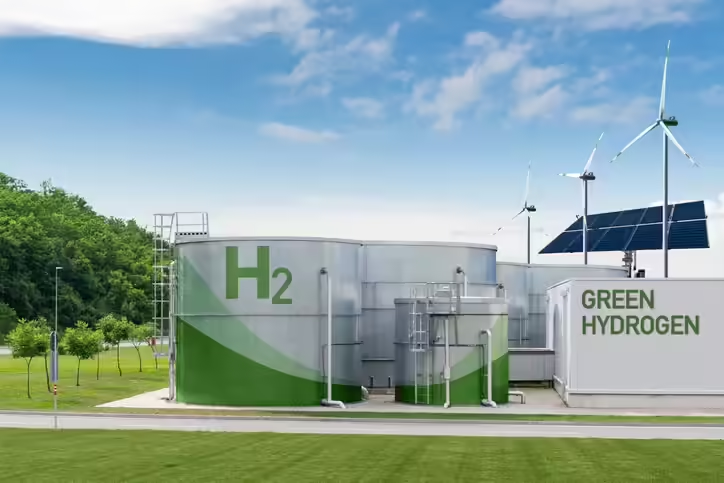
NGEL and New and Renewable Energy Development Corporation of AP Ltd have already signed a joint venture agreement for development of 20 GW renewable energy projects, 1,500 TPD green hydrogen, and 7,500 TPD green hydrogen derivatives, making it one of India’s largest integrated green hydrogen production facilities.
The site itself carries symbolic weight. Pudimadaka, earlier the site for an imported coal-fired power station, is now being transformed into a clean energy hub, reflecting the thermal power producer’s shift towards green energy. Phase I of the project is scheduled for completion by 2026, with the hub eventually expected to create approximately 57,000 jobs during construction alone.
Hubs, Ports, and the Export Architecture
India is not building hydrogen production in isolation. It is building the export infrastructure to match.
In October 2025, the Ministry of New and Renewable Energy announced the recognition of three major ports as Green Hydrogen Hubs under the NGHM: Deendayal Port Authority in Gujarat, V.O. Chidambaranar Port Authority in Tamil Nadu, and Paradip Port Authority in Odisha. These coastal gateways will serve as integrated centres for production, consumption, and future export.
On the ground, activity is already happening. A port-based Green Hydrogen Pilot Project was commissioned at V.O. Chidambaranar Port in September 2025. Deendayal Port at Kandla has commissioned a megawatt-scale indigenous facility with an annual production capacity of nearly 140 metric tonnes. A ₹42 crore Green Methanol Bunkering Facility is under development to establish a Coastal Green Shipping Corridor between Kandla and Tuticorin.
NTPC also commissioned the world’s highest altitude green hydrogen mobility project in Leh in November 2024 at 3,650 metres, running five hydrogen intra-city buses with a dedicated fuelling station, demonstrating the fuel’s reliability across extreme Indian conditions.
The Combined Incentive Stack: $60 Billion and Counting
The ₹19,744 crore allocation under the National Green Hydrogen Mission represents only the starting point of a much larger transformation. India’s green hydrogen ecosystem is expanding rapidly, with potential policy support estimated at more than USD 60 billion. A recent study by the Council on Energy, Environment and Water estimates that combined state and central policies embed nearly ₹5.05 lakh crore in incentives. This figure is roughly twenty six times the core budget of the mission and reflects the scale of policy commitment behind India’s hydrogen ambitions.
Much of this momentum is concentrated in seven states including Odisha, Maharashtra, Tamil Nadu, Uttar Pradesh, Rajasthan, Andhra Pradesh, and Gujarat. Together these states account for more than ninety percent of the incentive ecosystem. Odisha stands out as a major driver with incentives estimated at around ₹1.25 lakh crore. These incentives are supported by measures such as power tariff rebates and capital subsidies aimed at attracting large scale green hydrogen investments.
Globally, the green hydrogen sector is entering a decisive decade. The Hydrogen Council estimates that more than $300 billion will be invested in the sector worldwide over the next ten years. With its evolving pricing trajectory, emerging certification framework, port based export hubs, and anchor projects such as Pudimadaka, India is positioning itself to capture a significant share of both production and export opportunities from this growing global market.
Since its launch in 2023, the National Green Hydrogen Mission has progressed faster than many analysts initially expected. Within three years, India has crossed price benchmarks that were once projected to take nearly a decade. The target of producing five million tonnes by 2030 remains ambitious, but the trajectory is becoming clearer. With the world’s lowest green ammonia price, a twenty one billion dollar hydrogen hub under development, and an incentive ecosystem exceeding sixty billion dollars, India is moving from ambition to execution.
The debate is no longer about whether green hydrogen can be produced at competitive costs. India is demonstrating that large scale production is possible and is steadily positioning itself as a key player in the future global clean energy economy.
Clear Cut Climate Desk
New Delhi, UPDATED: March 25, 2026 01:10 IST
Written By: Ayushman Meena