
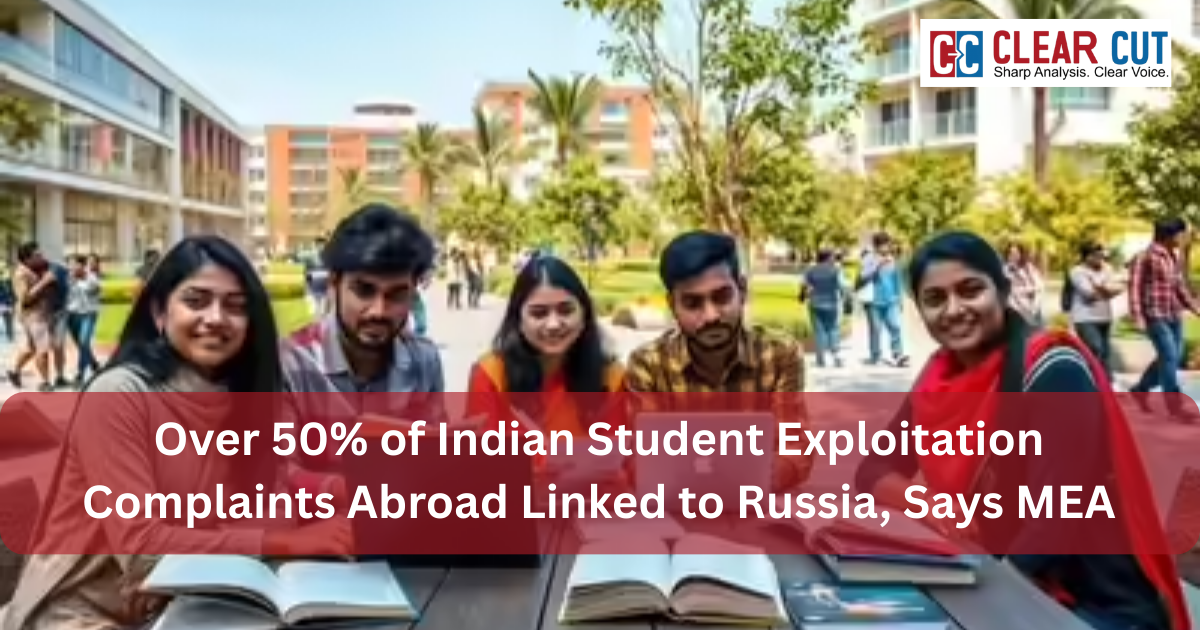
In 2025, over half of complaints from Indian students abroad—around 200 of 350 cases—came from Russia, highlighting issues like harassment, discrimination, and unfair expulsions. The Indian government, through MEA and the MADAD portal, is enhancing support and monitoring, while students increasingly seek safer alternatives for overseas education.
New data from the Indian government reveals a sharp rise in complaints from Indian students studying overseas, with more than half of all grievances in 2025 coming from Russia, according to the Ministry of External Affairs (MEA).
The figures, released by the MEA this week, indicate that Indian students across 196 countries registered around 350 complaints related to exploitation, harassment and racial discrimination last year. Over 200 of these cases originated in Russia alone.
The trend marks a significant increase from earlier years. In 2023, only 68 complaints were registered globally, rising modestly to 78 in 2024. The surge to over 200 cases in 2025 has alarmed authorities and student groups alike.
Safety and Discrimination Concerns
The spike comes amid broader safety concerns for Indian students in Russia. Last week, the Indian Embassy in Moscow confirmed that four Indian students were injured in a knife attack in Ufa, a city in western Russia.
Student leaders describe a climate of fear and discrimination on some campuses.
“During my sixth year, a group of foreign students attacked Indian students in the hostel kitchen,” said Kanishka K, a graduate from Bashkir State Medical University in Moscow, speaking to media. He claimed that many incidents go unreported due to fear of retaliation from both peers and university authorities.
Members of Foreign Medical Graduates (FMG) associations have also pointed to issues such as racial profiling, verbal abuse and lack of institutional support. D Kaushal, coordinator of the All FMGs Association, said complaints often “fail to reach serious attention,” leaving students feeling neglected.
Academic and Financial Strain
Some students report problems beyond discrimination. They allege that certain universities admit more foreign students than legally permitted and later expel them without due process. These expulsions can lead to financial loss and psychological distress for Indian families who paid years of tuition fees.
Manoj Kumar, president of the FMGs Association of India, said the Russia-Ukraine war and rising anxieties over student safety have also dampened interest in pursuing medical courses in Russia. “Many Indian students are now choosing alternatives like Kazakhstan and Kyrgyzstan,” Kumar told media.

Government Response and Safety Measures
In response to parliamentary queries earlier this month, Minister of State for External Affairs Kirti Vardhan Singh outlined steps the government has taken to protect students and workers abroad. He noted that Indian missions now have dedicated officers focused on education and student welfare matters.
Singh said Indian embassies are engaging regularly with universities and student associations to monitor issues faced by Indian nationals, and to provide timely guidance, consular support and grievance redressal options.
The government has also promoted the MADAD (Consular, Passport & Visa, Overseas Indian Welfare Services) portal, a platform for students and migrants to lodge complaints and seek assistance. Foreign missions encourage students to use the portal to report exploitation or harassment.
Wider Context of Indian Students Abroad
Experts highlight that Russia remains one of the top destinations for Indian students, especially for medical education, because of affordable fees and accessible admission requirements. According to recent data, over 16,000 Indian students are enrolled in Russian institutions.
Despite this, the latest MEA data illustrates rising challenges. Student welfare advocates argue the government needs stronger bilateral mechanisms to protect Indian students and migrant workers from exploitation abroad.
Looking Ahead
Student leaders and experts say enhanced monitoring mechanisms are critical. They also call for routine safety audits at foreign institutions where Indian students are enrolled.
“Students need clarity on their rights and reliable channels to seek help without fear of retaliation,” said educational consultant Arjun Mehta, in an interview with the media.
As concerns grow, policy makers may consider revisiting bilateral education agreements and expanding welfare networks in countries with large Indian student populations.
Clear Cut Education Desk
New Delhi, UPDATED: Feb 11, 2026 09:00 IST
Written By: Ayushman Meena