
India has extended the Jal Jeevan Mission till 2028 with a ₹8.69 lakh crore budget to ensure reliable tap water access in rural areas through a new digital water grid. The focus now shifts from just building infrastructure to delivering consistent, real-time water supply to every household.
The Union Cabinet has approved one of the largest restructuring decisions in India’s rural welfare history. The Jal Jeevan Mission gets an extension until December 2028. It also gets a drastically enhanced budget of ₹8.69 lakh crore. And it gets a new mandate. The mission is no longer just about laying pipes. It is now about making sure water actually reaches people reliably, every single day.
The Cabinet, chaired by Prime Minister Narendra Modi, approved the Ministry of Jal Shakti’s proposal to transform the programme from infrastructure creation to a citizen-centric service delivery model. The central government’s share of funding rises from ₹2.08 lakh crore approved in 2019 to ₹3.59 lakh crore, an additional central commitment of ₹1.51 lakh crore.
Why the Extension Was Needed
The original deadline was 2024. The mission fell short. The programme was stuck at around 81% rural household coverage since 2025, and covering the remaining 20% requires nearly as much money as was spent achieving the first 80%. That is the uncomfortable math that forced the government’s hand. Delays, state-level irregularities, and quality concerns in implementation slowed progress significantly.
The Budget 2026-27 allocated ₹67,600 crore for the mission, marginally higher than the ₹67,000 crore in the previous year. However, the actual revised spending for the current financial year dropped sharply to ₹17,000 crore after irregularities surfaced from various states. The government sent over 100 inspection teams across the country in 2025 to assess ground realities before unlocking funds.
The restructuring addresses this directly. States must now sign separate MoUs with the Centre. Gram Panchayats can only declare themselves “Har Ghar Jal” certified after confirming that operation and maintenance systems are in place. Completion claims must be verifiable, not just reported.
Sujalam Bharat: A Digital Grid for Water
The most significant structural innovation is the “Sujalam Bharat” framework. Under this national digital system, every village will be assigned a unique Sujal Gaon or Service Area ID, digitally mapping the complete drinking water supply system from source to tap. This means for the first time, India will have a real-time, end-to-end view of where water is flowing, where it is not, and why.
Two new community programmes accompany this: “Jal Arpan” for the formal handover of water schemes to Gram Panchayats, and “Jal Utsav”, an annual community-led maintenance event designed to build local ownership of water infrastructure.
PM Modi posted on X that the Cabinet decision would “strengthen water security, improve health outcomes and empower rural communities, especially our Nari Shakti.”
The Human Case for JJM
The numbers make the strongest argument for urgency. The World Health Organisation estimated that the mission’s goals, when fully achieved, will save 5.5 crore hours daily for women, prevent 400,000 diarrheal deaths, and save 14 million Disability Adjusted Life Years.
Jal Shakti Minister C.R. Patil, speaking at the State Water Ministers’ Conference, stated that water security is a fundamental pillar of Viksit Bharat 2047, and called the Jal Jeevan Mission its key driver. He also confirmed that 25 lakh women have been trained to test water quality using field testing kits, making communities their own monitors.
SBI Research reported that JJM has already freed 9 crore women from daily water-fetching, enabling greater participation in other economic activities. Meanwhile, research by Nobel laureate Professor Michael Kremer estimates that safe water coverage could reduce under-five mortality by nearly 30%, saving over 1.36 lakh lives annually.
IIM Bangalore and the International Labour Organisation together estimated that the mission will generate 59.9 lakh direct and 2.2 crore indirect person-years of employment during its capital expenditure phase.
The Unfinished 19%
JJM 2.0 targets tap water connections for all 19.36 crore rural households by December 2028, with 24×7 supply as the goal rather than just functional connections. As of March 2026, more than 15.82 crore households have been covered. The remaining 3.5 crore households represent India’s most remote and hardest-to-reach communities.
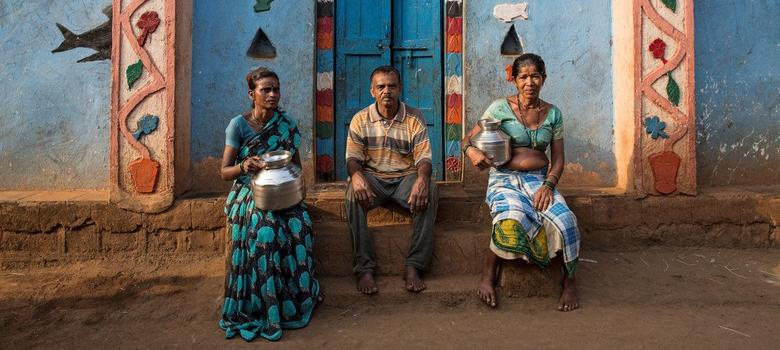
The government has the money, the digital framework, and the political will. The question now is execution. India has built the pipes. The next two years will decide whether water actually flows through them.
Clear Cut WASH Desk
New Delhi, UPDATED: March 24, 2026 09:00 IST
Written By: Ayushman Meena