
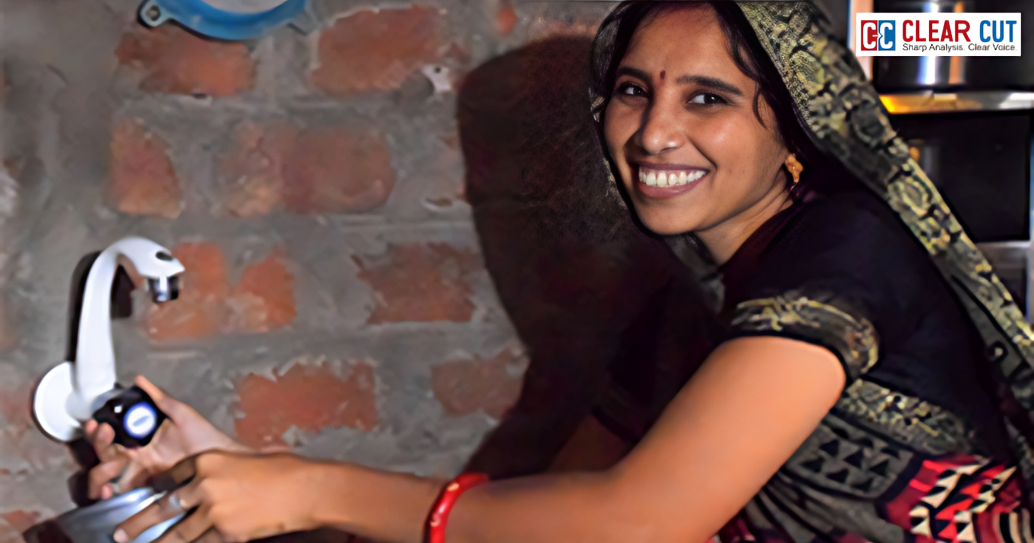
Jal Jeevan Mission has significantly improved rural India by providing tap water connections to millions of households, reducing the burden on women and improving health outcomes. It also promotes sustainability and community participation to ensure long-term water access and quality.
The Walk That Defined a Morning
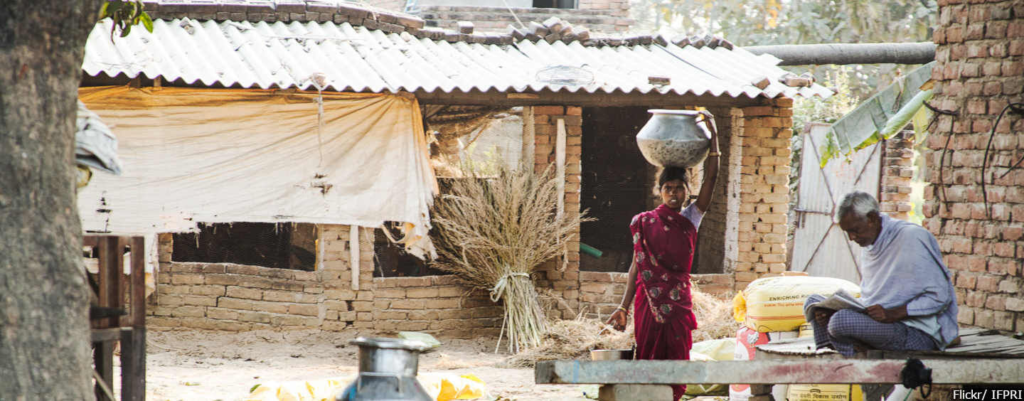
For women in rural India, the day began before sunrise. Not with breakfast or rest, but with the walk to fetch water.
Sometimes the source was a kilometre away. Sometimes more. Wells dried up seasonally. Rivers were shared with livestock. Hand pumps broke down and stayed broken for months.
This was daily life for the majority of India’s rural population. In 2019, only about 3.23 crore rural households, 17 percent of the total had a functional tap water connection at home.
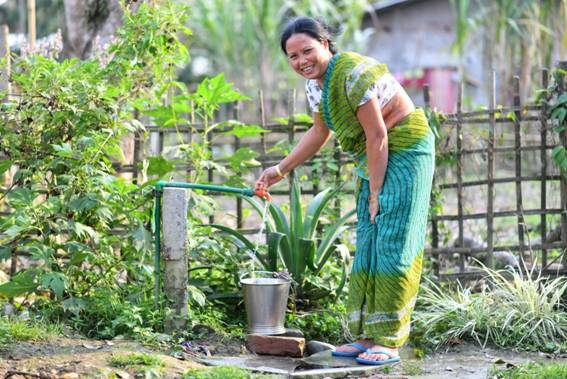
A Mission With a Clear Target
In August 2019, the Government of India launched Jal Jeevan Mission (JJM) with one measurable goal: provide every rural household in India with a functional tap water connection by 2024.
India has approximately 19 crore rural households. Connecting 83 percent of them, 15 crore homes, in under five years was an infrastructure challenge of extraordinary scale.
It required more than pipes and pumps. It required coordination between central and state governments, district administrations, gram panchayats, and local communities, all working toward the same outcome simultaneously.
What Has Been Achieved
By early 2024, Jal Jeevan Mission had enabled over 14 crore new household tap connections. The percentage of rural homes with piped water supply rose from 17 percent in 2019 to over 75 percent.
Goa, Telangana, Haryana, Gujarat, and several union territories have been declared Har Ghar Jal certified, meaning every rural household in those regions now has a functional connection.
The North-East and hilly states, which faced significant terrain and organisation challenges, also recorded substantial progress. A result that needed special technical and financial provisions beyond the standard programme framework.
Women at the Centre
JJM is not just a plumbing project. Its design explicitly centres women — both as beneficiaries and as decision-makers.
Village-level Paani Samitis, water and sanitation committees are mandated to have at least 50 percent women members. They plan, implement, and manage local water supply systems, bringing accountability directly to the community level.
The impact on women’s daily lives is direct and measurable. Hours once spent walking to fetch water are freed. Girls stay in school. Women can take up income-generating work. The health outcomes for children improve when clean water is available at home.
Water Quality and Long-Term Sustainability
Access is one challenge. Keeping that access clean, consistent, and sustainable is another.
JJM distributes community-level water quality testing kits to villages and trains women to use them. This is not just technical support; it transfers ownership of water quality to the people most affected by it.
The mission also integrates with watershed development and groundwater recharge efforts, recognising that pipes connected to depleted aquifers will eventually run dry. Sustainability is designed into the framework, not treated as an afterthought.
The Bigger Picture
Waterborne diseases such as diarrhoea, cholera, typhoid cause thousands of preventable deaths in India every year, disproportionately affecting children under five. Clean household water directly reduces this burden.
Improved sanitation reduced physical labour for women, and better school attendance for girls are all downstream outcomes of a single policy decision: to treat piped water as a basic right, not a privilege.
Jal Jeevan Mission is not finished. Last-mile connectivity, water quality monitoring, and maintenance of infrastructure remain ongoing work. But the scale of what has already been achieved is difficult to overstate.
References
https://ceerapub.nls.ac.in/wp-content/uploads/2021/08/NJJM-Vision-Mission-and-Challenges.pdf
Clear Cut WASH, Health Desk
New Delhi, UPDATED: April 04, 2026 05:00 IST
Written By: Jay