
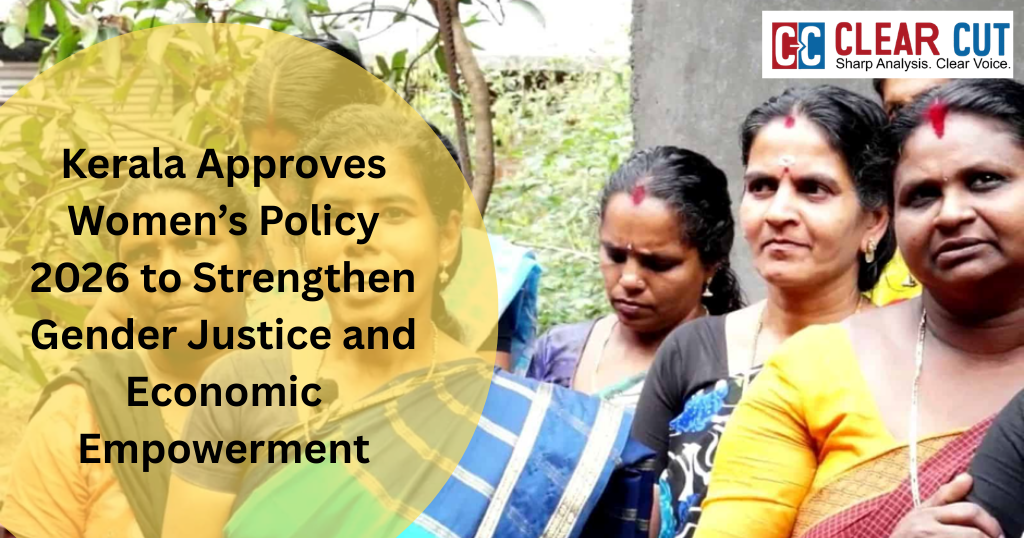
Kerala has approved its Women’s Policy 2026, shifting to a rights-based approach that strengthens gender justice, economic empowerment, digital safety, and leadership opportunities. The policy focuses on boosting women’s workforce participation, improving legal protections against gender-based violence, and ensuring inclusive support for marginalized women through stronger monitoring and gender budgeting.
Kerala has approved a new Women’s Policy 2026 aimed at strengthening gender justice, safety, and economic participation. The State Cabinet cleared the policy as part of a broader social reform framework that also includes a policy for elderly welfare. The new women’s policy replaces the earlier 2009 framework and seeks to address emerging challenges such as digital safety, economic inclusion, workplace equality, and gender-based violence.
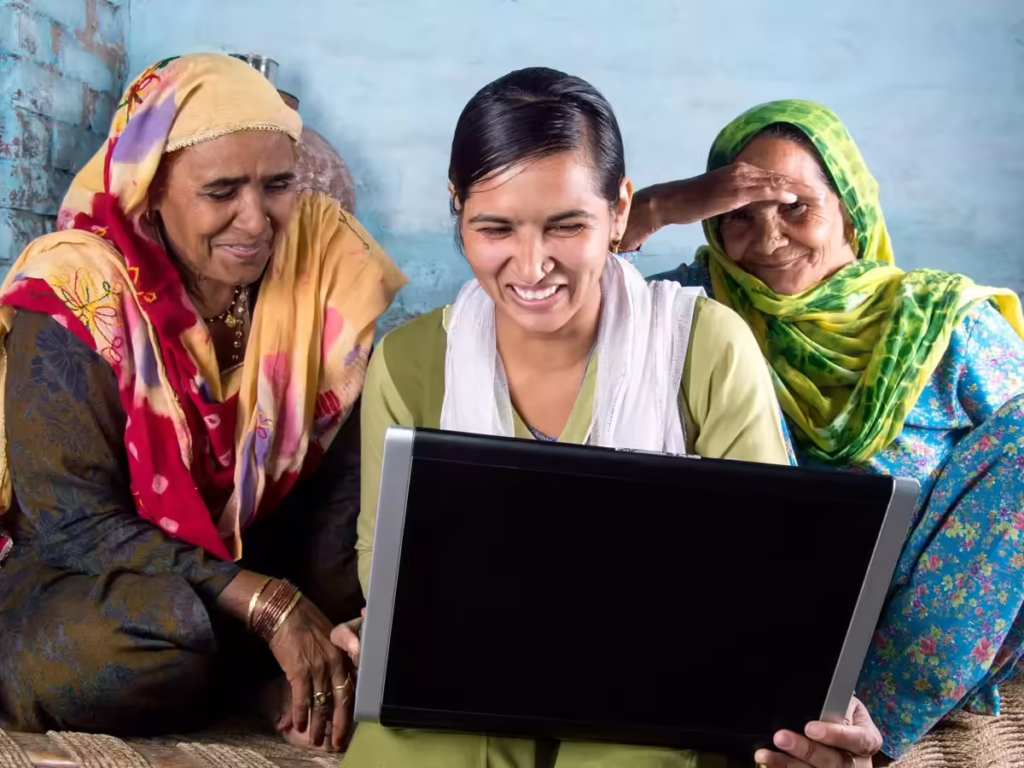
The government wants to update how it supports women in Kerala. The policy focuses on ensuring safety, improving access to education and jobs, strengthening legal protection, and expanding leadership opportunities for women. Officials say the goal is to move beyond welfare and toward structural equality.
A Shift from Welfare to Rights-Based Governance
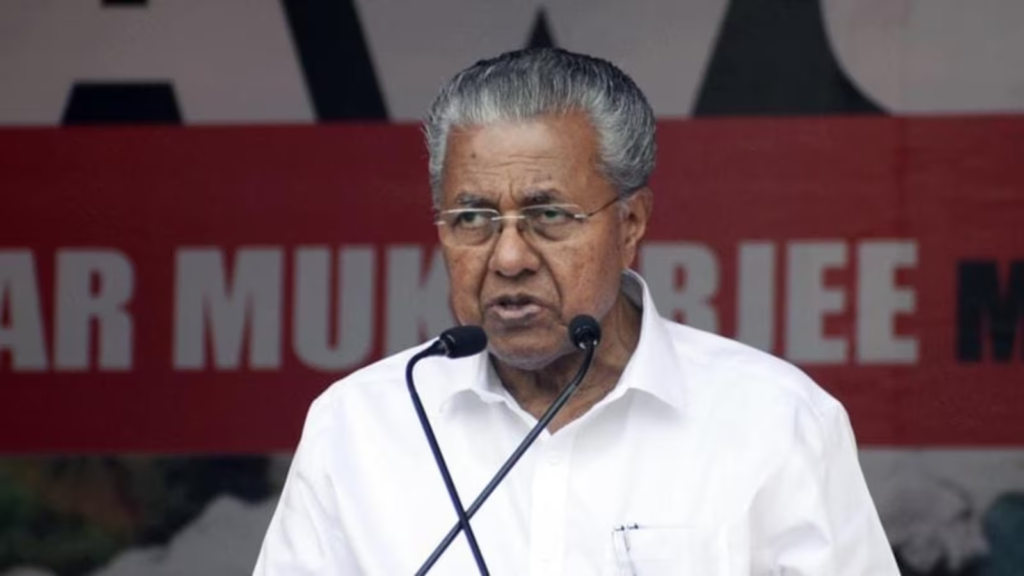
The Women’s Policy 2026 adopts a rights-based approach. Instead of viewing women only as beneficiaries of schemes, it recognises them as equal citizens with decision-making power. According to Cabinet decisions chaired by Chief Minister Pinarayi Vijayan, the policy aims to integrate gender equality into all departments, including education, labour, health, and local governance.
The Department of Women and Child Development prepared the policy after consultations with gender experts, social workers, and civil society groups. Officials involved in drafting said the new framework aligns with constitutional guarantees under Articles 14, 15, and 21, which ensure equality, non-discrimination, and the right to life with dignity.
Kerala has historically performed well on gender development indicators. According to the National Family Health Survey (NFHS-5), female literacy in Kerala stands above 95%, one of the highest in India. However, despite this progress, the Periodic Labour Force Survey (PLFS) shows that female labour force participation in Kerala remains significantly lower than male participation, reflecting a structural gap between education and employment.
The policy also responds to new realities. Data from the National Crime Records Bureau (NCRB) indicates that crimes against women and cyber harassment cases have risen nationally in recent years. The government has recognised that laws alone are not enough. Institutions must also change how they function.
Economic Empowerment at the Core
One of the most significant aspects of the policy is its focus on women’s economic participation. Kerala has high female literacy but relatively low female workforce participation compared to global standards. As per PLFS 2023–24 estimates, female workforce participation in Kerala remains below 30%, while male participation exceeds 70%. The policy addresses this gap directly.
It proposes skill development programs tailored to emerging sectors such as technology, green energy, digital services, and entrepreneurship. Officials from the Labour Department have indicated that the government will integrate gender budgeting more strictly to ensure funds reach women-led enterprises.
Self-help groups under Kudumbashree, Kerala’s flagship poverty eradication mission, are expected to play a major role in implementation. Kudumbashree already supports over 4.5 million women across the state, making it one of the largest women’s community networks in Asia. The policy aims to expand access to credit, digital literacy, and market linkages for these women.
The Cabinet also emphasised financial inclusion. Banks and cooperative institutions will coordinate to provide easier credit access to women entrepreneurs. According to state finance data, women-led microenterprises supported through self-help groups have shown higher repayment rates compared to general microcredit schemes.
Safety, Legal Protection, and Digital Rights
The Women’s Policy 2026 strengthens measures against gender-based violence. NCRB data shows that India recorded over 4 lakh cases of crimes against women in recent years, with domestic violence and harassment forming a significant portion. Kerala has maintained relatively higher reporting rates, which experts interpret as greater access to complaint mechanisms.
Officials confirmed that the state will improve coordination between police, legal services authorities, and social justice departments. The policy promotes faster response mechanisms for domestic violence, sexual harassment, and trafficking cases.
The State Police Department has been instructed to expand gender desks and strengthen training for officers handling crimes against women. Digital safety has also received attention. With increasing internet penetration, cybercrime targeting women, including morphing, stalking, and online abuse, has grown steadily. The policy encourages awareness campaigns about cybercrime, especially targeting young women and students.
Kerala State Legal Services Authority is expected to assist in legal literacy programs. Authorities aim to ensure that women understand their rights and have access to free legal aid when required.
Political Participation and Leadership
The policy recognises that representation matters. Kerala already reserves 50% of seats for women in local self-government institutions. As a result, thousands of women currently serve in panchayats and municipalities. However, leadership roles in higher administrative, political, and corporate sectors remain limited.
The new framework encourages mentoring programs for young women leaders. It also proposes capacity-building initiatives for elected women representatives. Officials have stated that leadership training modules will be developed in partnership with academic institutions and governance institutes.
By linking education, employment, and governance, the policy aims to create a pipeline of women leaders across sectors.
Intersectional Focus: Marginalised Women at the Centre
The policy acknowledges that women do not experience inequality in the same way. Dalit women, Adivasi women, migrant women, elderly women, and women with disabilities face layered challenges. According to census and social justice department data, Scheduled Tribe communities in Kerala continue to show lower income and health indicators compared to the state average.
Officials from the Social Justice Department have confirmed that special provisions will target vulnerable groups. For example, tribal women in remote areas will receive focused livelihood and healthcare support. Migrant women workers will be included in welfare registration systems to prevent exclusion.
The Cabinet has also linked the women’s policy with the newly approved Elderly Policy. This approach recognises the burden of unpaid care work carried by middle-aged women, especially in households caring for elderly members.
Monitoring and Accountability
Implementation will determine the policy’s success. The government has proposed creating a monitoring mechanism involving district-level gender committees. These committees will review progress, track budget allocations, and assess outcomes.
Gender budgeting will become mandatory across departments. Officials confirmed that annual reports will measure indicators such as workforce participation, crime reporting, access to healthcare, and educational attainment.
Experts involved in consultation processes emphasised that transparency is critical. Public dashboards and citizen participation mechanisms may be introduced to track implementation.
The Social Dimension of the Policy
Kerala has long ranked high on human development indicators. However, social change requires continuous effort. Gender equality influences economic growth, social stability, and democratic participation.
When women enter the workforce, household incomes rise and poverty rates decline. Studies by international development agencies suggest that increasing female labour participation can significantly boost state GDP. When girls stay in school, early marriage rates decline and maternal health improves. When legal systems respond swiftly to violence, public trust increases.
The Women’s Policy 2026 recognises these interconnected impacts. Social activists have welcomed the comprehensive scope of the policy but stress that implementation must reach rural and marginalised communities. Policy experts also argue that behavioural change campaigns must accompany legal reforms.
Key Highlights
• Cabinet approval of Women’s Policy 2026 under Chief Minister Pinarayi Vijayan
• Rights-based framework replacing 2009 policy
• Focus on economic participation, digital safety, and leadership
• Stronger legal coordination for gender-based violence cases
• Gender budgeting and monitoring mechanisms
• Special attention to marginalised and vulnerable women
A Policy That Looks Ahead
Kerala’s Women’s Policy 2026 reflects a shift toward institutional reform rather than symbolic measures. By linking economic empowerment, safety, leadership, and digital rights, the state aims to create systemic change.
The policy signals that gender justice is not a standalone welfare issue. It is central to governance, development, and democracy. If implemented effectively, Kerala could once again set a benchmark for inclusive state policy in India.
Clear Cut Education Desk
New Delhi, UPDATED: Feb 17, 2026 01:00 IST
Written By: Samiksha Shambharkar