


Toilet: Ek Prem Katha uses a simple love story to expose how lack of sanitation affects dignity, especially for women, turning a personal issue into a social conversation. It highlights that true love and progress begin when basic respect and dignity are no longer negotiable within the home.
Toilet: Ek Prem Katha, released in 2017 as a film that looked harmless on the surface, a small-town love story with colour, h umour, and wedding songs, but very quickly it revealed what it really wanted to talk about, dignity inside the home and the quiet humiliations people learn to normalise.
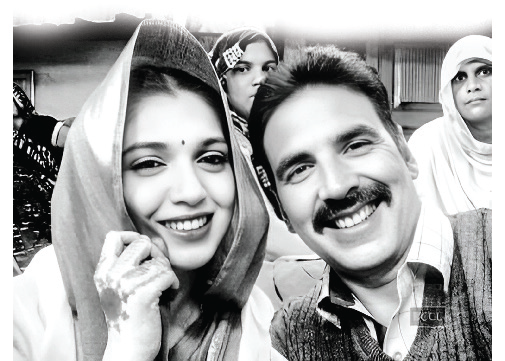
Starring Akshay Kumar and Bhumi Pednekar, the film used romance as its entry point but refused to stay there, pushing the audience to confront an everyday reality most families preferred to laugh away or ignore. Akshay Kumar later told in an interview that the film made him uneasy in ways commercial cinema rarely does, because it forced him to play a man who believes he is loving and progressive, only to realise that love means very little when basic dignity is missing.
When a Marriage Collapses Over Dignity
Keshav loves Jaya, there is no doubt about that, but love in this film is tested not by betrayal or fate, but by something far more ordinary, the absence of a toilet. What the family calls tradition, Jaya experiences
as daily humiliation, and the film does not dramatise this with excessive emotion, it simply lets her walk away, calmly and firmly.
One line from the film captures the moment perfectly, “Aapko lagta hai main zidd kar rahi hoon? Mujhe lagta hai main sirf normal jeena chahti hoon.”(Do you think I’m being stubborn? I think I just want to live a normal life.) It is not a speech; it is a boundary. In an interview, Akshay Kumar explained why Keshav had to be dismissive at first, saying that change never begins with awareness, it begins with denial, and the character reflects that uncomfortable truth.
Comedy That Carries Discomfort
The film makes people laugh, but the laughter is uneasy, because every joke carries recognition.The line that stayed with audiences long after the screening,“Aashiqon ne Taj Mahal bana diya, aur hum ek sandas bhi nahi bana paaye,” (Lovers built the Taj Mahal, and we couldn’t even build a toilet.) worked because it was not exaggeration, it was observation.
The media noted that the humour never distracts from the issue, instead it draws viewers in before forcing them to confront their own contradictions, a strategy that made the message harder to dismiss.
Bhumi Pednekar and the Power of Refusal
Bhumi Pednekar’s character Jaya does not argue endlessly, she does not negotiate her self-respect, she
simply refuses to live without dignity, and that refusal becomes the most radical act in the film. Speaking to media, Bhumi said that Jaya’s strength comes from clarity, not aggression, and that many women she met after the film told her they had lived the same story but never felt allowed to question it. Later, in an interview, she spoke about how the role reshaped her understanding of feminism, not as slogans or speeches, but as the right to say no without apology.
Choosing Risk Over Comfort
Akshay Kumar has often spoken about the risks attached to the film, especially when friends warned him that a movie about toilets might damage his image. He said that cinema cannot keep pretending that romance exists separately from reality, because issues like sanitation affect health, safety, and dignity every single day, whether people like talking about them or not. That honesty gave the film credibility beyond the screen.
Recognition That Went Beyond Applause
The film’s commercial success was undeniable, with reporting that it crossed ₹300 crore worldwide, but its most significant validation came a year later. In 2018, Toilet: Ek Prem Katha won the National Film Award for Best Film on Social Issues, with the Press Information Bureau highlighting its role in creating awareness and influencing social behaviour. It was a rare moment when mainstream cinema was acknowledged not just for entertainment, but for impact.
When Cinema Entered Public Policy Conversations
Prime Minister Narendra Modi publicly praised the film’s trailer, calling it a meaningful contribution to the Swachh Bharat Mission. Following the release, government departments and district administrations organised screenings, while NGOs referenced scenes from the film during sanitation awareness programmes, a development later reported by media. The film did not just reflect a campaign, it amplified it, even as critics debated the closeness between cinema and policy.
Redefining Love Without Compromise
One of the film’s most important moments comes when Keshav finally understands that adjustment cannot be demanded from only one side. “Agar meri biwi khush nahi, toh yeh shaadi kis kaam ki”, he says, not as a grand declaration, but as a realisation. The relationship survives not because Jaya returns quietly, but because Keshav changes visibly, a shift that media described as rare in mainstream Hindi cinema,
where women are often asked to endure rather than be heard.
What the Film Ultimately Leaves Behind
Toilet: Ek Prem Katha is not without flaws, it simplifies complex realities and chooses optimism where life is harsher, but it also achieves something few films manage. It turns a daily humiliation into a question
of love, it tells women that dignity is not negotiable, and it tells men that responsibility begins at home.
As Akshay Kumar later said in an interview, if even a handful of families built a toilet after watching the film, then the story had already done its job, and judging by the conversations it sparked across
homes, villages, and policy rooms, it clearly did much more than that.
Clear Cut Health WASH Desk
New Delhi, UPDATED: March 11, 2026 05:00 IST
Written By: Ayushman Meena