

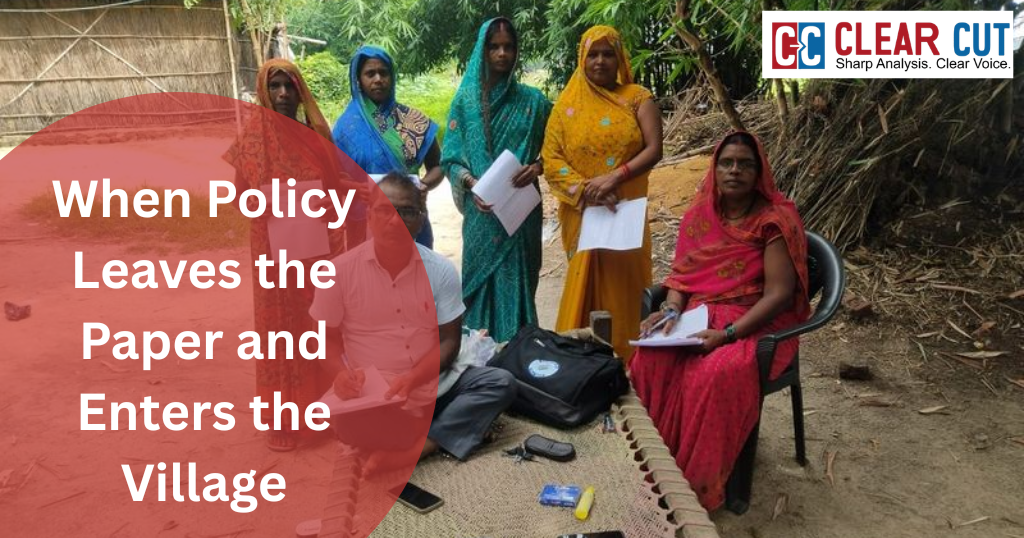
Maharashtra government partners with Tata Trusts and Naam Foundation to enhance rural healthcare, water security, and public service delivery through a collaborative CSR model, focusing on sustainable development and last-mile impact.
A new partnership in Maharashtra is quietly showing how development work in India is evolving. The state government has signed multiple Memorandums of Understanding (MOUs) with Tata Trusts and Naam Foundation to improve rural healthcare, nutrition, water security, and public service delivery. As reported by Hindustan Times, the collaboration aims to strengthen welfare programs and help them reach communities more effectively.
This initiative reflects a larger shift in how social change is being approached in India. Instead of working in silos, governments, corporate foundations, and non-profits are increasingly coming together to tackle complex social challenges. The idea is simple but powerful: when different sectors combine their strengths, the impact can be far greater than what any one organization could achieve alone.
Making Public Services Work on the Ground
One of the biggest challenges in development is not designing policies but making sure they reach the people they are meant to serve. Many welfare programs exist, yet gaps in infrastructure and access often prevent them from reaching remote communities. The new partnership aims to improve last-mile delivery through initiatives such as telemedicine, maternal and child health programs, emergency response systems, and nutrition interventions (Hindustan Times).
Reports suggest that the collaboration is meant to accelerate transformation and strengthen implementation of government schemes across key sectors (Economic Times Health). This reflects a growing recognition that effective development depends not only on good policy but also on strong systems and consistent execution.
Focusing on Regions That Need It Most
The partnership is expected to prioritize underdeveloped areas such as Vidarbha and Marathwada—regions that have long faced drought, farmer distress, and limited access to services (Fortune India). By focusing on these areas, the initiative hopes to reduce regional disparities and ensure that development efforts reach communities that need them most. Strengthening these regions is nationally significant because their agricultural output and rural livelihoods play a vital role in India’s food security and economic stability.
Technology and digital innovation are expected to play an important role in improving transparency and efficiency. This blend of social programs and modern tools shows how development partnerships are evolving to become more responsive and effective.
Water Security at the Centre of Rural Resilience
Water scarcity remains one of Maharashtra’s most pressing concerns. As part of the collaboration, Naam Foundation will focus on water conservation and support for drought-prone communities (Economic Times Health).
Addressing water challenges alongside health and livelihood initiatives highlights a more holistic view of development. Rural challenges rarely exist in isolation; water shortages affect agriculture, health, income, and migration. Tackling these issues together can help communities become more resilient in the long run.
A New Direction for CSR in India
This collaboration marks a decisive shift in how Corporate Social Responsibility is being practiced in India. The Tata Trusts have emphasized that the partnership aims to strengthen sustainable delivery of welfare schemes using technology and innovation (Tata Trusts Press Release).
In the past, CSR initiatives often focused on one-time projects or donations. Today, the focus is shifting toward building stronger systems, improving governance, and creating long-term impact. This evolution reflects a more mature approach to social responsibility, one that prioritizes sustainability over short-term results.

Why Collaboration Matters More Than Ever
Public–private partnerships bring together different strengths. Governments offer scale and policy support, corporate foundations bring funding and innovation, and non-profits provide grassroots knowledge and community trust. This collaborative model also makes successful solutions easier to replicate and expand across regions. When these strengths work together, the chances of creating lasting change increase significantly.
Conclusion
The partnership between the Maharashtra government, Tata Trusts, and Naam Foundation offers a hopeful example of what collaborative development can look like. By combining resources, expertise, and shared responsibility, the initiative points toward a future where social progress is driven by cooperation rather than isolated efforts. As India continues to address complex development challenges, such partnerships may play a defining role in shaping inclusive and sustainable growth.
Clear Cut CSR, Health Desk
New Delhi, UPDATED: Feb 14, 2026 05:00 IST
Written By: Priyanka Thakur