
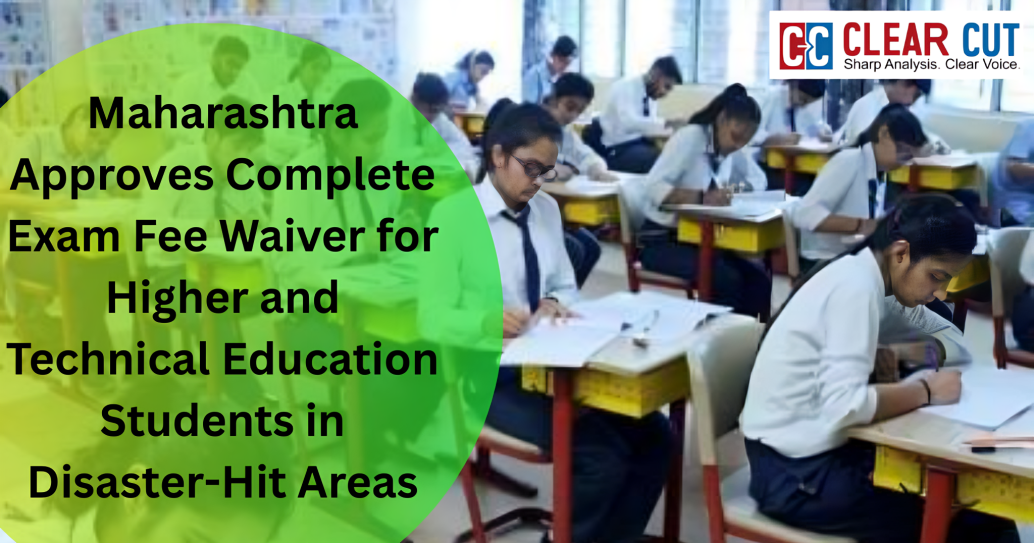
Maharashtra government approves a full exam fee waiver for higher and technical education students in 282 disaster-hit talukas for 2025–26, benefiting 1.5–2 lakh students and ensuring uninterrupted education despite floods and natural calamities.
Key Highlights
• Maharashtra Cabinet approved a complete examination fee waiver for higher and technical education students in disaster-hit talukas.
• The waiver applies to the academic year 2025–26.
• Students in 282 talukas declared disaster-affected by the Maharashtra Revenue and Relief & Rehabilitation Department are eligible.
• An estimated 1.5 to 2 lakh students are expected to benefit, based on Higher and Technical Education Department projections.
• The state government will reimburse institutions directly.
• The move aims to prevent student dropouts and ensure academic continuity.
• District authorities will monitor implementation for transparency.
Introduction
The Maharashtra government has approved a complete waiver of examination fees for students enrolled in higher and technical education institutions located in disaster-affected regions of the state. The decision aims to support students whose families suffered financial losses due to heavy rainfall, floods, and other natural calamities during the recent monsoon season.
Students studying in colleges and technical institutes across officially declared disaster-hit talukas — as notified by the Maharashtra Revenue Department under state disaster relief norms — will not have to pay their examination fees for the current academic year. The state government will bear the cost. The move ensures that students do not drop out or delay their academic progress due to financial distress caused by natural disasters.
Cabinet Decision
The Maharashtra State Cabinet approved the proposal after the Higher and Technical Education Department submitted a detailed note outlining the financial burden faced by students in affected districts. The Finance Department examined the fiscal implications before granting approval.
The relief covers students across 282 talukas that the Revenue and Relief & Rehabilitation Department officially declared disaster-affected due to excessive rainfall and flooding. These regions experienced significant crop damage, property loss, and income disruption.
Senior officials confirmed that the waiver applies for the academic year 2025–26. The government will directly reimburse universities and institutions so that students are not required to make any upfront payments.
Beneficiaries
The waiver benefits students enrolled in engineering, pharmacy, management, polytechnic, and other technical and professional courses. It also covers students in government, aided, and approved private institutions located in the notified talukas.
According to internal estimates shared during Cabinet deliberations, approximately 1.5 to 2 lakh students may benefit from the scheme. The final number will depend on verified enrollment data submitted by universities.
Officials clarified that the waiver applies only to examination fees and does not include tuition or other academic charges. However, examination fees often create immediate financial stress during crisis periods.
By removing this financial burden, the government aims to ensure uninterrupted academic progression for affected students.
Financial Framework
The Higher and Technical Education Department will coordinate with universities to calculate the total reimbursement amount. Institutions will submit verified student lists, including proof of enrollment and confirmation that the student resides in a notified disaster-hit taluka.
The state will allocate funds from its disaster relief and education support provisions. After verification, the government will transfer funds directly to universities to prevent administrative delays.
Officials emphasized that the waiver will not disrupt university finances because the state will compensate institutions fully and within defined timelines.
Social Context
Natural disasters affect more than infrastructure. They directly damage livelihoods, especially in rural Maharashtra where families depend on agriculture and seasonal labour.
Flood-affected districts reported crop losses, damaged homes, and income instability. In such conditions, education expenses often become secondary. Examination fees, though smaller compared to tuition, can become an immediate obstacle.
Education policy experts argue that even short-term disruptions can have long-term consequences for students from economically vulnerable backgrounds. The Cabinet’s decision reflects recognition that disaster recovery must include educational protection.
Dropout Risk
Disaster-hit talukas include several rural and semi-urban areas where first-generation learners form a significant portion of higher education enrollment.
Financial shocks increase dropout risks, particularly among students from farming families and daily wage households. Research from state education bodies shows that crisis periods widen inequality. Students from stable financial backgrounds continue their education, while vulnerable students struggle.
By approving the waiver, the government aims to reduce dropout rates and maintain enrollment levels during recovery phases. Officials stressed that safeguarding education strengthens long-term economic resilience.
Governance and Accountability
District-level education officers will monitor implementation to ensure transparency. Universities must maintain detailed records of beneficiaries and submit compliance reports to the Higher and Technical Education Department.
Eligibility will be determined strictly based on the official disaster notification list issued by the Revenue Department. Authorities also confirmed that grievance mechanisms will be available for students facing administrative errors or delays.
Officials stated that transparency in reimbursement and monitoring will remain central to implementation.
Education and Recovery
Maharashtra has faced recurring climate-related disruptions in recent years. Policymakers increasingly view education support as part of disaster response planning.
When students continue their studies without interruption, communities recover faster. Education creates economic stability and reduces long-term vulnerability.
The examination fee waiver reflects a broader policy understanding that disaster relief must include human capital investment. Supporting students today strengthens the workforce of tomorrow.
Conclusion
The Maharashtra government’s decision to waive examination fees for students in 282 disaster-affected talukas represents a targeted and practical relief measure. It addresses immediate financial stress while protecting long-term educational outcomes.
Although the waiver covers only one component of academic expenses, it plays a crucial role in preventing disruption during recovery. Its success will depend on timely reimbursement, accurate beneficiary identification, and transparent administration.
For lakhs of students in affected districts, this initiative offers more than financial relief. It reassures them that their education remains a priority even in times of crisis.
Clear Cut Gender Desk
New Delhi, UPDATED: Feb 17, 2026 01:00 IST
Written By: Samiksha Shambharkar