

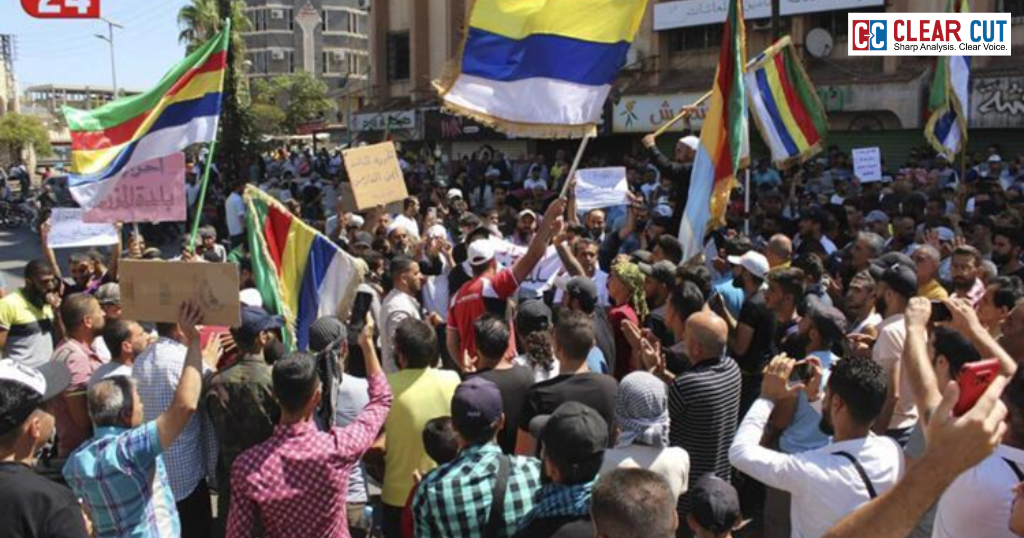
Ongoing conflict in the Middle East could push 3.3 million more people into poverty, according to the United Nations Development Programme. Economic disruptions, rising energy costs, and trade breakdowns are reversing development gains and deepening the humanitarian crisis.
NA Warning From the Numbers
The missiles and air strikes are the images that dominate the news. But behind the visible destruction of conflict in the Middle East, a slower, quieter catastrophe is building, and its effects will be felt long after the fighting stops.
A new assessment from the United Nations Development Programme (UNDP) puts a number to that quiet crisis: 3.3 million people. That is how many additional people could be pushed into poverty if military escalation in the region continues. It is not an abstraction. It is families losing livelihoods, households unable to afford food, and communities watching years of hard-won economic progress disappear.
What the UNDP Report Says
The UNDP’s analysis is blunt. Continued conflict is projected to cause GDP losses of up to 6% across affected parts of the region. The losses come from two main directions: disruption to trade routes, and shocks to energy markets. Both are deeply interconnected with the global economy, which means the damage does not stay within borders.
Trade disruptions affect imports and exports, raise the cost of goods, and destabilise supply chains. Energy shocks such as price spikes, supply uncertainty, production shutdowns, hit household budgets first and hit them hardest in countries that are already struggling. When energy becomes expensive or unreliable, everything else follows: food, transport, manufacturing, employment.
The report warns that lower-income Arab nations face the sharpest edge of this impact. These are countries that cannot absorb economic shocks the way wealthier states can, countries where a 6% GDP loss is not a bad quarter but a genuine humanitarian event.
A Year of Progress, Erased
The most striking framing in the UNDP’s assessment is this: the damage from continued conflict could reverse a full year’s worth of developmental gains in the region’s most vulnerable countries.
Development progress un terms of education, healthcare, income, and infrastructure is slow to build and fast to lose. A year of gains represents vaccinations administered, schools kept open, jobs created, and poverty rates nudged downward. Conflict does not just halt that progress. It destroys the conditions that made it possible.
When hospitals are damaged, when teachers flee, when small businesses collapse under economic pressure, the path back to where things were is not simply a matter of restoring what existed. The human cost compounds year by year.
The Poverty Trap That Conflict Creates
Poverty and conflict feed each other in ways that are well proved in development economics. Conflict does not merely affect the economy. It restructures it, often permanently. Capital flees. Skilled workers emigrate. Investment dries up. The informal economy, which sustains a large portion of the population in many Middle Eastern countries, collapses when physical security is uncertain.
The 3.3 million people the UNDP flags are not an evenly distributed group. They are disproportionately women, children, and those already close to the poverty line, people with the least cushion against economic shocks and the fewest options when systems break down.
For these communities, poverty is not just about income. It means reduced access to food, healthcare, and education. It means children being pulled out of school to help support households. It means health conditions going untreated. It means futures quietly foreclosed.
What the UNDP Is Calling For
The report is not only a warning; it is also a call to action. The UNDP is urging governments, international institutions, and regional actors to invest urgently in what it calls “resilience-building” measures. The language is deliberate. Resilience here means building the structural capacity of economies and communities to absorb shocks without catastrophic collapse.
That involves diversifying economies away from energy dependency, strengthening social protection systems, investing in food security, and creating political conditions that allow development programmes to function even in unstable environments.
None of this is cheap, fast, or easy. But the alternative of waiting until the conflict ends to begin rebuilding means accepting that millions more will fall into poverty in the interim. That recovery, when it comes, will have to travel a much longer road.
Why This Matters Beyond the Region
The Middle East does not exist in economic isolation. It sits at the intersection of major global trade routes. Its energy production shapes prices worldwide. Its instability generates refugee flows that reshape the politics of Europe and beyond.
When a UNDP report warns about 3.3 million more people entering poverty in the Middle East, it is also warning the rest of the world about the ripple effects: higher food prices, energy insecurity, migration pressures, and the long-term cost of a region unable to rebuild.
The global economy is woven tightly enough that no region’s crisis stays local for long.
The Human Cost Behind the Statistics
It is easy to read reports like this one and get lost in the percentages and projections. But underneath the numbers, are real and immediate choices being made by real people.
A shop owner in a conflict-adjacent city deciding whether to stay open. A family rationing meal. A mother choosing between medicine and food. A young person leaving a country they love because the economic floor has disappeared beneath them.
The UNDP’s warning deserves to be heard not as a forecast about GDP, but as a report about people. And people, unlike GDP figures, cannot simply be adjusted in the next quarter’s projections.
The call for resilience-building is ultimately a call for something simpler: the recognition that development is fragile, poverty is fast, and the cost of doing nothing measured in human lives and lost futures, is always higher than it first appears.
References
https://www.aljazeera.com/news/2026/3/31/one-month-of-war-in-middle-east-cost-arab-states-up-to-194bn-undp
https://www.ipsnews.net/2026/04/escalation-in-middle-east-reverses-more-than-a-year-of-economic-growth-in-the-region/
Clear Cut Livelihood Desk
New Delhi, UPDATED: April 02, 2026 09:00 IST
Written By: Tanmay J Urs