
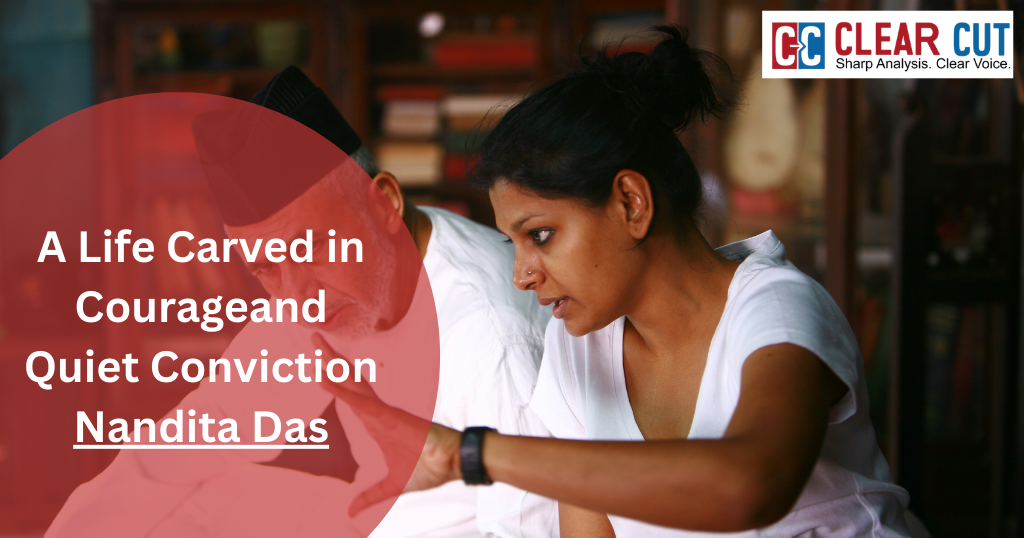
Nandita Das is an actor-filmmaker and activist whose career is defined by integrity, empathy, and purposeful storytelling, choosing meaning over stardom. Through bold films and grounded activism, she consistently sparks thoughtful conversations on identity, justice, and humanity.
Indian cinema has some personalities who do not follow the limelight the limelight just turns to them because of their nature. Nandita Das is one such of very few people. She has navigated the spheres of film, art and activism with a kind of faithful genuineness which is somewhat like an antique in today’s time. However, her journey has been far from being ordinary. Her narrative is not about stardom. It is about faith. It is about making such choices that may not be greeted with an assured of the applause but almost always spark the thought. Moreover, it is essentially about hearing the world with the heart before
trying to change it.
Roots That Shaped Her Ways
Nandita grew up in a house where one creative thing was not a weekend hobby but the language everyone spoke. Her dad, the painter Jatin Das, made everyday Life colourful and abstract. Her mom, the
writer Varsha Das, made it full of depth and insight. So, with such influences, her childhood was more about questioning the world than following rules, why are things the way they are, why do people
act the way they do, why does society choose to be silent most of the time?
These childhood impressions made her very different from other people even before the filming lights ever touched her face. You can also witness it today: the way she talks softly but with authority, the way she listens without preparing the reply in her mind, the way she prefers to utter subtle words rather than loud ones. Basically, she is someone who, according to her nature, has been very much concerned with the real lives of other people.
Stepping Into Cinema, and Into Difficult Conversations
When Nandita started her career movies in the 1990s, one could describe the mainstream Bollywood of that time as full of glitz and following a certain formula. She took a turn completely different from that. Her first association with the likes of Deepa Mehta and Govind Nihalani was not to show off her career but it was an obvious and instinctive choice of stories which had more substance in them.
Her performance in Fire went on to become one of the very few landmark moments of contemporary Indian cinema. The film was a brave one in the way it dealt with desire, repression and companionship of women. These themes in the cinema space were far ahead of their time. The controversy surrounding it might have scared a newcomer. However, Nandita chose to support the film with herown grace and therefore, she did not compromise the film’s message or distance herself for convenience. She did
something quietly and revolutionary, “choosing integrity over acceptance”. In subsequent years, she starred in movies such as Earth, Bawandar, Hazaaron Khwaishein Aisi, and Before the Rains, the roles being complex, agonizing and politically inclined most of the time. Every movie presented a different
emotional landscape, starting with the trauma of the Partition and going to the strength of the village women rising against the injustice.
A Shift Behind the Camera: Storytelling with Purpose
As Nandita went on with her art journey, she started feeling that certain tales deserved to be presented in a different way. Through acting, she got to be a part of the strong stories, but with directing, she had the power to make them. The change was not influenced by her ambition but by the necessity, the necessity to express what she thought the world needed to face.
Her first film as a director, Firaaq, came at a time when the communal violence related conversations were painful, polarising and generally people chose to avoid them. The movie didn’t show the riots. It dealt with the aftermath of the riots – how terror stays, how the past becomes a heavy load, how the common
people become the victims of the extreme side of human nature. It was a movie of quiet times, uneasiness and being very accurate with the emotions.
The accomplishment of Firaaq was documented neither by figures nor by its reach. It rather went to festivals, came into the education system and became the part of the talks relating to identity and
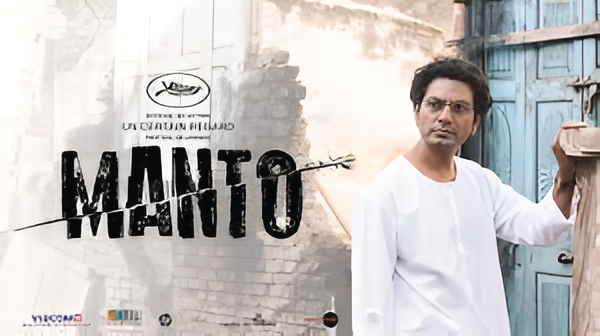
humanity. People, in fact, praised not the making of the film, but the giving of the film. Nandita, when she later directed Manto, moved into even more challenging area. Saadat Hasan Manto’s works were daring, disquieting, and made painfully of the truth, all these characteristics Nandita strongly identified with. In the film, she depicted a community very much like Manto’s, grappling with separation, censorship and moral judgement, by holding a mirror to it. Manto was beyond a biographical drama of an artist’s life. It was an indication that, frequently, the opposite of the truth brings the retaliation.
Beyond Cinema: The Advocate Within
Parallel to her creative work, Nandita has been a loud and clear advocate of social issues, but her activism was never a show. She is not the kind of a celebrity who makes use of her influence, rather she decides to be with the people whose lives she talks about. Her fight against colourism, “India’s Got Colour,” was just a straightforward and strong reaction to an obsession that spreads to millions of people going from children in schools who are bullied because of their skin colour to grown-ups who are kept back.
The campaign did not blame the society. It let the people think. And it has always been Nandita’s way, bringing the change through knowing, not by fighting.She has championed child rights, gender justice, education reform and mental health awareness. What makes her advocacy impactful is that she does not arrive as an expert but as a learner. She spends time in communities, listens to testimonies and acknowledges complexi-ty. That humility makes her stand apart in a landscape where activism often leans on slogans rather than substance.
Through her voice she has been the strongest supporter of children rights, gender equality, education system reform and mental health awareness. The thing that makes her advocacy so powerful is the fact that she is not coming as an expert but as a learner. She really gets involved in communities, hears different people’s experiences and realizes the intricacies. This humility is what differentiates her in a world of activists who normally rely on catchy phrases rather than the actual facts.
A Career Defined By Meaning, Not Momentum
While most actors navigate success through visibility, Nandita has taken long pauses in her career, devoting time to writing, travelling, reading, and living life beyond film sets. These pauses are not gaps; they are grounding moments that enrich her perspective. In recent years, with films like Zwigato, she has shifted her lens towards the everyday struggles of India’s working class. The film follows a delivery worker in the gig economy, a world defined by unstable income, invisible labour, and silent resilience. Instead of dramatising hardship, Nandita captured the fragility and dignity of an ordinary family.

The Path Ahead: Influence Rooted in Integrity
Nandita Das keeps carving her own path, not just up in the stardom, but in the plethora of thoughtful films. Her impact nowadays is more of a soft, complex and lasting one. She is very often asked to be on the panels, juries, academies and other such venues of a global town, not for the flash but for the sparkle of her mind. Her leadership style is such that even if she were to whisper, her voice would still carry far.
When she moves to different roles, a mentor, a writer, a public thinker, the biggest problem for her will be the same one she has always accepted, being truthful in a world that is always forcing compromises. However, if only her life so far is a signal, she will keep on making the difficult choice of being honest rather than going the easy way.
Nandita Das is not just a filmmaker or an actor. She is the keeper of significant narratives. She makes us remember that cinema is the most powerful medium when it listens, when it asks, when it helps.
In that respect, her work is not a play. It is a gesture of empathy, made through art.
Clear Cut Review Desk
New Delhi, UPDATED: Feb 14, 2026 01:00 IST
Written By: Ayushman Meena