
NEP 2020 is transforming India’s education system by focusing on foundational learning, flexible structures, and mother-tongue instruction. With digital platforms like DIKSHA and PM e-VIDYA, it is making quality education more accessible, inclusive, and future-ready.
A System Built for a Different Era
India’s education system was built for scale, not depth. Millions of children were put through school, but many emerged without the ability to read a simple sentence or solve basic arithmetic.
The curriculum was rigid, the medium of instruction often unfamiliar, and the approach heavily reliant on memorisation. Children who fell behind early rarely caught up.
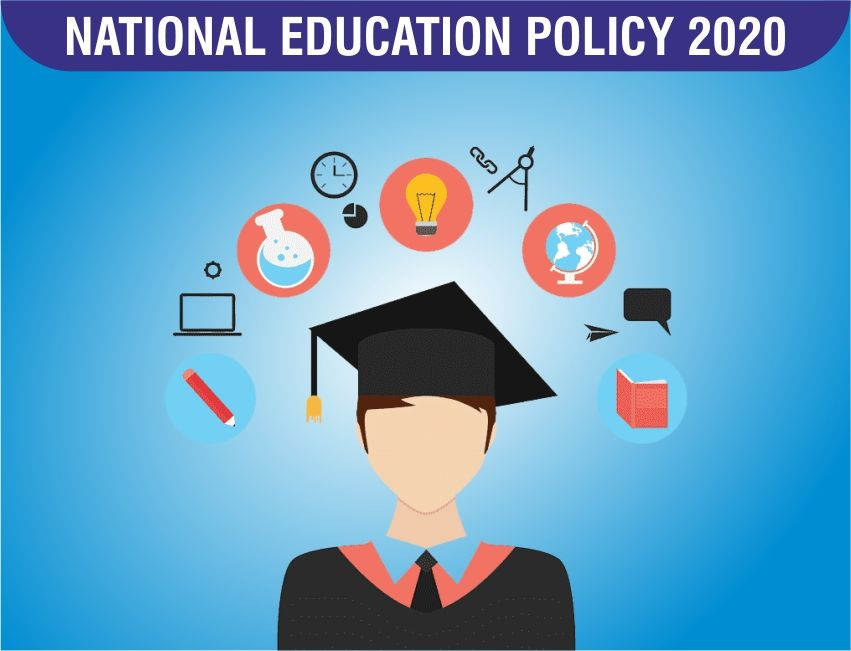
In July 2020, the Government of India released the National Education Policy, NEP 2020 — the most sweeping overhaul of Indian education in 34 years. It replaced the 1986 policy and proposed structural change at every level.
A Different Structure for Learning
NEP replaces the standard 10+2 schooling framework with a 5+3+3+4 model that aligns with how children develop cognitively and emotionally. The four stages foundational (ages 3–8), preparatory (8–11), middle (11–14), and secondary (14–18), each have distinct learning goals, teaching approaches, and assessment frameworks. Critically, NEP mandates that children be taught in their mother tongue up to at least Grade 5, preferably Grade 8. Decades of research show that children learn foundational skills faster and more durably in the language they think in. The policy finally acts on that evidence.
NIPUN Bharat: Fixing the Foundation
In 2021, the government launched NIPUN Bharat, the National Initiative for Proficiency in Reading with Understanding and Numeracy.
Its target is straightforward: every child in India should be able to read with understanding and perform basic numeracy by the end of Grade 3. This focus on the foundational years is essential. A child who cannot read by age 8 faces compounding disadvantage through every later year of school. NIPUN Bharat treats that early window as the highest educational priority.
DIKSHA and PM e-VIDYA: Education on Every Screen
The Digital Infrastructure for Knowledge Sharing, DIKSHA, is the government’s national platform for educational content. It supports teachers, students, and parents with curriculum-aligned material in 36 Indian languages.
As of 2024, DIKSHA has seen over 6,400 crore learning sessions. That scale reflects both the platform’s reach and the genuine demand for free, accessible, multilingual learning content.
PM e-VIDYA, launched in 2020, brought all digital education efforts under one umbrella. It includes DIKSHA, the One Class One Channel DTH television initiative (one dedicated channel per grade from 1 to 12), radio-based learning, podcasts, and content adapted for students with visual and hearing impairments.
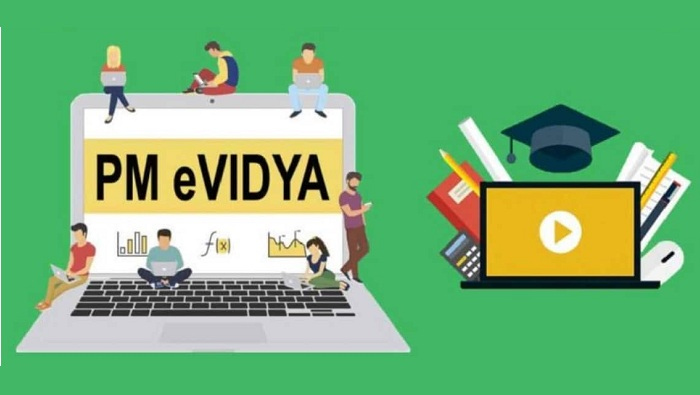
During the COVID-19 school closures, PM e-VIDYA became a critical lifeline offering free, offline-accessible content to millions of students who could not afford private edtech platforms.
Reforming Higher Education
NEP 2020 sets an ambitious target: raise the gross enrolment ratio in higher education from 27 percent in 2019 to 50 percent by 2035.
To get there, it proposes multidisciplinary universities, flexible four-year undergraduate programmes with multiple entry and exit points, and credit transfer systems that allow students to move between institutions and disciplines.
The National Research Foundation (NRF), with a proposed outlay of Rs 50,000 crore over five years, is designed to build a research culture across institutions, not just at elite universities, but at colleges and smaller institutions that have historically had no research infrastructure at all.
The Work of Implementation
NEP 2020 is a policy framework. Its quality depends entirely on how state governments, school administrators, and teachers implement it. Teacher training is the most critical variable. A policy that changes how children learn must also change how teachers teach. The government’s push to reform teacher education programmes and build continuous professional development pipelines is a necessary part of making NEP real. Progress is uneven across states. But the direction is clear, and the commitment, in both policy design and investment is the most serious India has made to public education in a generation.
References
https://www.education.gov.in/sites/upload_files/mhrd/files/NEP_Final_English_0.pdf
https://www.eoibucharest.gov.in/docs/1596447766SalientFeatures.pdf
https://www.education.gov.in/en/nep/about-nep
Clear Cut Education Desk
New Delhi, UPDATED: April 05, 2026 09:00 IST
Written By: Jay