
OceanaGold’s record P569 million social investment in the Philippines links mining profits to community development through a structured CSR model. It raises a key question: can such participatory investments create lasting impact beyond the life of the mine?
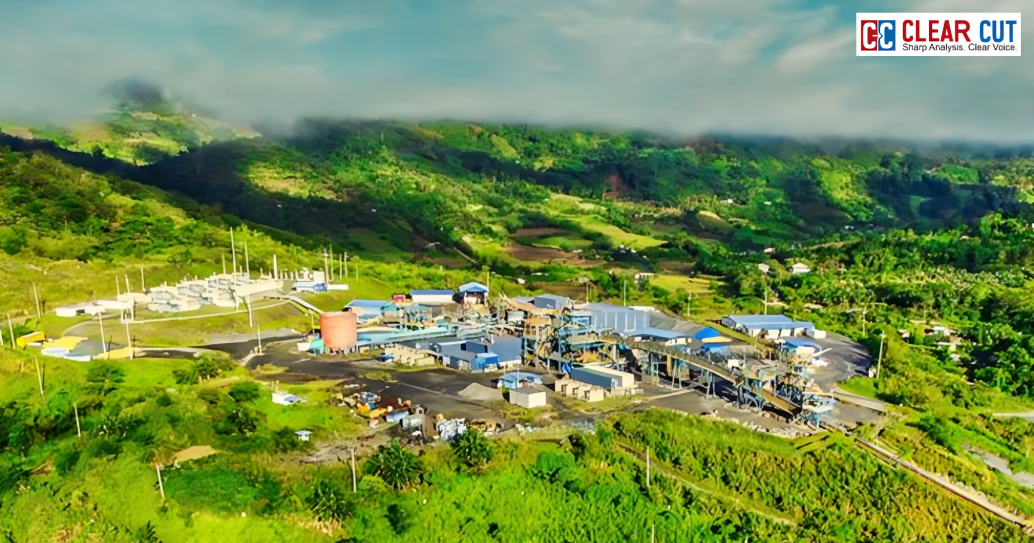
There have been reports from the gold-copper mines in the mountainous areas of Nueva Vizcaya and Quirino provinces about their social investments, which have sparked some level of interest owing to the social investments involved. In its 2026 social investment budget, OceanaGold Philippines (OGP) distributed P569 million worth, or $10 million, which stands for a growth of 29% from last year. Moreover, it marks the largest investment into the community from the company’s start.
In a country where the debate surrounding the benefits or drawbacks of large-scale mining has been ongoing, the statement carries more weight than merely the financial numbers.
The Budget Allocation
A total of P569 million was allocated among 3 regulatory funds. The Community Development Fund (CDF) has received P250.24 million, the Provincial Development Fund (PDF) P125.12 million, while the Social Development and Management Program (SDMP) has received P195.75 million. Out of these, the allocation towards the CDF and PDF account for 1% and 0.5% of the gross income from the Didipio gold-copper mine in 2025, according to the FTAA agreement between the company and the Philippine government.
The SDMP allocation is set at a minimum of 1.5% of the company’s annual operating costs, under the Philippine Mining Act of 1995. While the formula is not new, the increase in the denominator is. OGP’s excellent performance in 2025, coupled with high global gold prices, has pushed these percentages into record peso amounts. In simpler terms, when the mine earns profits, the community’s share increases accordingly. This mechanism functions as intended.
More Than 400 Villages, Seven Priority Pillars
These funds are neither granted in one-time payments nor to a single recipient. Some 400 barangays in both Nueva Vizcaya and Quirino provinces receive support from the SDMP. While the SDMP primarily targets Barangay Didipio and the surrounding ten villages where the mines work, the CDF covers some 200 barangays spread across eight municipalities in Nueva Vizcaya and six in Quirino province.
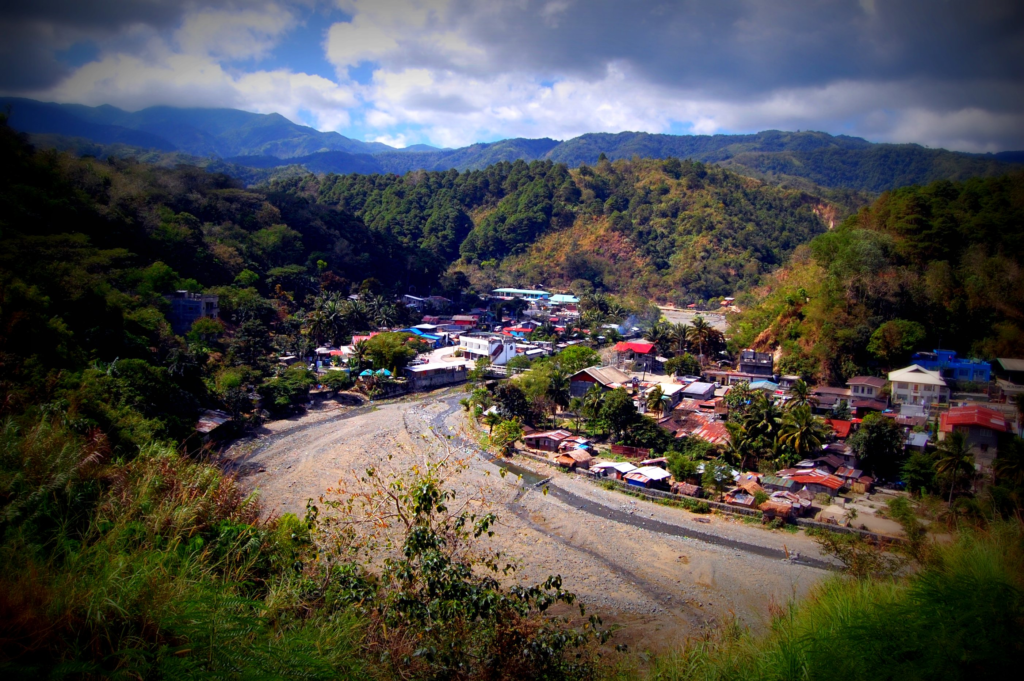
The projects that will be implemented pertain to seven development areas, namely infrastructure development, enterprise development, sociocultural/indigenous programming, capacity development, disaster response, environmental programming, and health/education programming. Examples of such projects include irrigation systems, farm-to-market roads, water facilities, child development centers, and livelihood/scholarship programming.
On the other hand, the Provincial Development Fund works under a completely different principle. Provincial authorities decide on which development projects to implement following their own development plan; the OGP then finances those projects chosen. This change can be seen as part of responsible mining philosophy.
The Participatory Model: Promise and Scrutiny
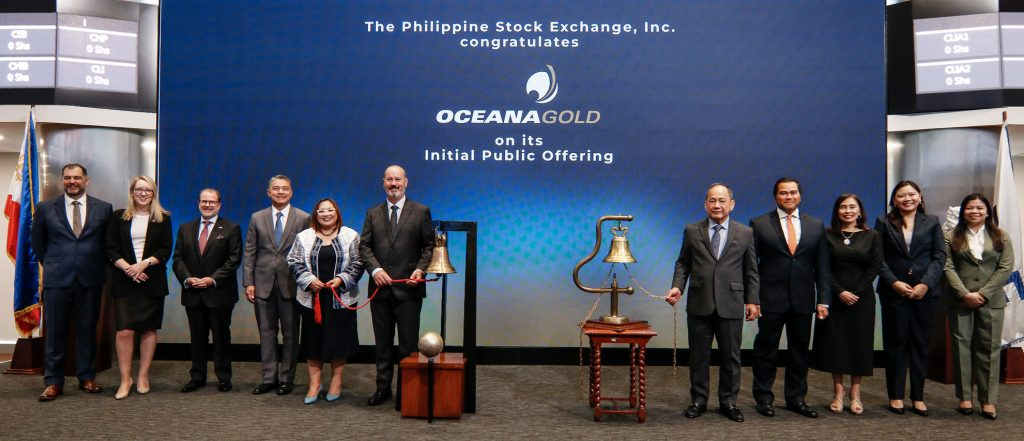
Joan Adaci-Cattiling, president of OGP, elaborated: “As we grow, our host municipalities grow with us.” This describes what the mining industry calls a community-driven process wherein the community members and the local government units, and not only the mining corporation, choose which projects will be funded.
The Mines and Geosciences Bureau (MGB) Region 2 monitors this process, with help from such national government offices as the Commission on Human Rights, the National Commission on Indigenous Peoples, and the Department of Interior and Local Government in the implementation of the CDF. At the very least, there appears to be accountability within the governance process.
It is up to the communities themselves to say whether this leads to community control. Barangay Captain Henry Guay of Didipio welcomed the programs, citing the enhancement of roads, schools, and healthcare services. Nonetheless, the endorsement of mining corporation projects by the communities would not resolve the more general issues relating to mining and its agreement with the mining company.
A Model worth Watching
The 2026 budget of OGP highlights how regulated corporate social responsibility works – the more the revenues, the greater the mandatory community contributions. This is different from voluntary corporate charity where companies decide what amount to distribute based on their reputation or goodwill. The formula decides all the results here.
The question that should be considered here by policy makers and members of civil society is whether the formula will provide results beyond the mining cycle. The infrastructure constructed currently could help the communities even after the exhaustion of the mine. Otherwise, lack of funds for maintenance once the mining operations are no longer in operation.
OGP has also contributed P506.9 million in local business taxes to its three hosting municipalities in 2026, up by 20% from last year. Added together with the social investment budget, this creates quite a substantial impact on local governance. But whether this is enough or justified, there is much to discuss for this province, as well as for other provinces in the Philippines.
References
1. Manila Standard. (2026, April 7). OceanaGold Philippines boosts 2026 social investment to P569 million. https://manilastandard.net/business/314723754/oceanagold-philippines-boosts-2026-social-investment-to-p569-million.html
2. The Manila Times. (2026, April 7). OGP increases community investments. https://www.manilatimes.net/2026/04/07/regions/ogp-increases-community-investments/2314809
3. The Manila Times. (2026, April 6). OceanaGold hikes social investments. https://www.manilatimes.net/2026/04/06/business/corporate-news/oceanagold-hikes-social-investments/2314476
4. The Manila Times. (2026, April 1). OceanaGold: P506.9M in local business taxes remitted. https://www.manilatimes.net/2026/04/01/business/top-business/oceanagold-p5069m-in-local-business-taxes-remitted/2311786
Clear Cut CSR, Livelihood Desk
New Delhi, UPDATED: April 09, 2026 01:00 IST
Written By: Tanmay J Urs