
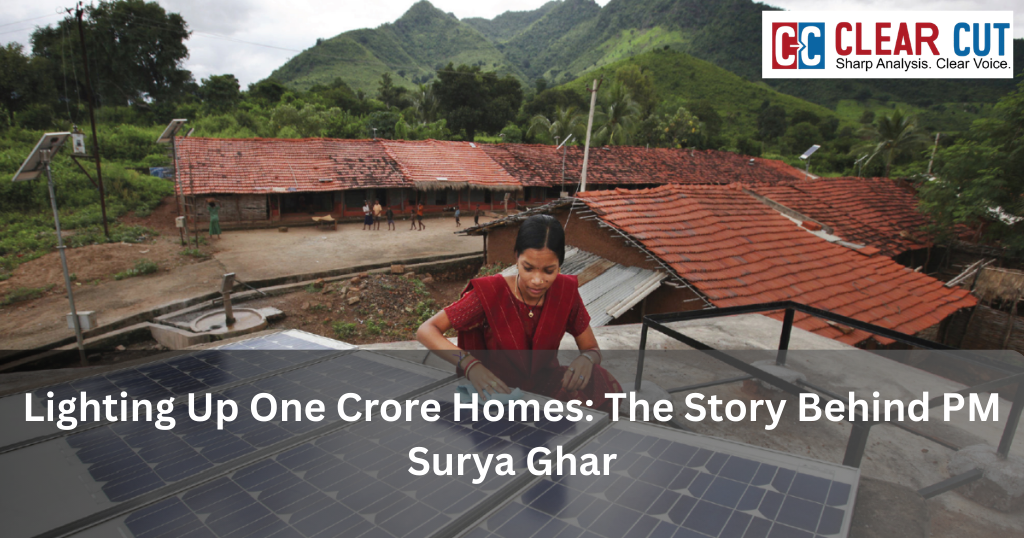
The PM Surya Ghar Muft Bijli Yojana aims to provide rooftop solar systems to 1 crore households by 2027, making clean energy affordable through up to 40% subsidy. The scheme promotes renewable energy, reduces electricity costs, creates jobs, and supports Model Solar Villages across India.
What if your rooftop could do more than just protect your home from the sun and rain? What if it could power your house?
That is the idea behind PM Surya Ghar Muft Bijli Yojana, a national initiative that aims to bring solar energy directly to homes across India. The program has set a clear goal to provide solar power to one crore households by March 2027, as shared in the official Press Information Bureau release.
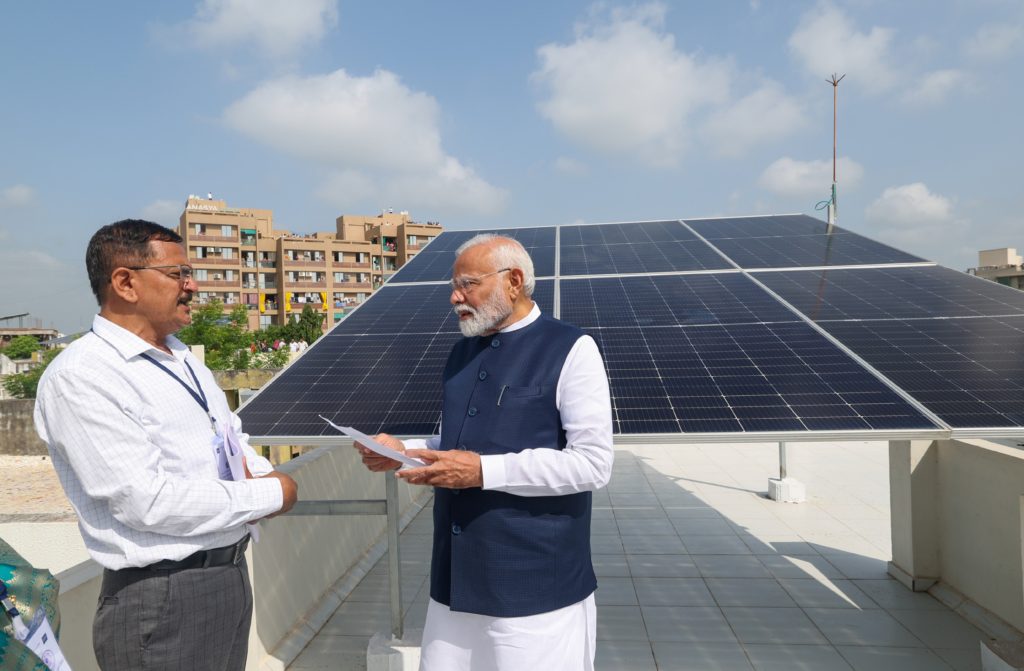
At its heart, the scheme changes the way we think about electricity. Instead of depending only on large power plants, individual homes can generate their own power. For this shift to happen, solar energy must be affordable and accessible to families across the country.
Making solar affordable
To help households install rooftop solar panels, the scheme offers a subsidy of up to 40 percent, as outlined in the same PIB release. This reduces the initial cost and makes solar systems easier to afford.
The level of support depends on how much electricity a household uses each month. Families using up to 150 units can receive between ₹30,000 and ₹60,000. Those using up to 300 units are eligible for support between ₹60,000 and ₹78,000. For higher consumption levels, the subsidy is capped at ₹78,000.
Households can apply through the National Portal, where they can select approved vendors and understand what system size suits their needs. In addition, collateral free loans at around 7 percent interest are available for systems up to 3 kW, as mentioned in the official PIB communication. With financial support in place, the shift to solar becomes more practical.
Growing interest across the country
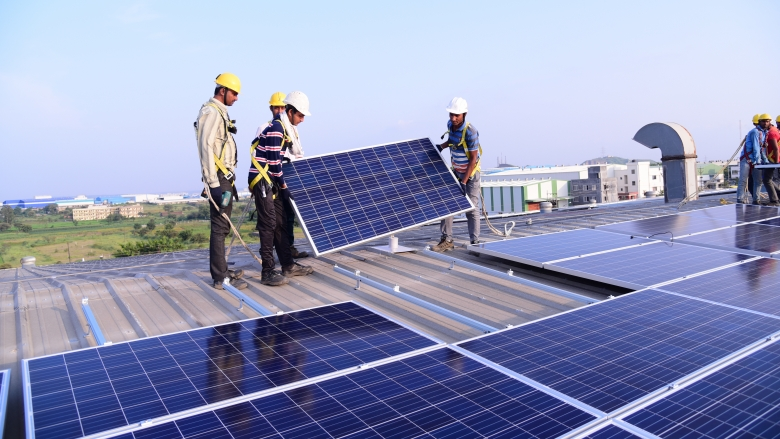
The response to the scheme has been encouraging. Within nine months, 6.3 lakh rooftop installations were completed, according to the PIB release.
By early December 2024, the National Portal had recorded 1.45 crore registrations. The scheme is also expected to reduce electricity costs for the government by ₹75,000 crore annually, as noted in the same official release.
As more households adopt rooftop solar, the wider impact of the program becomes clearer.
What Benefits people will have ?
The expansion of rooftop solar is expected to add 30 GW of capacity in the residential sector, strengthening India’s renewable energy efforts, as stated in the PIB announcement.
Over time, this is projected to reduce carbon emissions. The initiative is also expected to create around 17 lakh direct jobs in installation, manufacturing, and maintenance services.
The impact is not limited to urban areas.
Solar villages
The program also includes a Model Solar Village component. Under this initiative, one village in each district will be selected as a model for renewable energy adoption. An allocation of ₹800 crore has been set aside for this effort, as mentioned in the same PIB release.
By encouraging villages to adopt solar energy, the scheme ensures that rural communities are included in the transition toward clean energy.
A broader transition
When viewed together, the different parts of the scheme form a connected pathway. Financial assistance encourages households to adopt solar systems. Increased installations contribute to cleaner energy production. Cleaner energy supports environmental goals and creates employment. The benefits gradually extend from individual homes to entire communities.
With a target of one crore installations by 2027, PM Surya Ghar represents a steady move toward decentralized and sustainable energy.
In this transition, rooftops are no longer just structures. They become part of India’s larger journey toward clean and self-reliant power generation.
Reference
https://pib.gov.in/PressReleasePage.aspx?PRID=2080833
Clear Cut Climate Desk
New Delhi, UPDATED: Feb 21, 2026 09:00 IST
Written By: Priyanka Thakur