
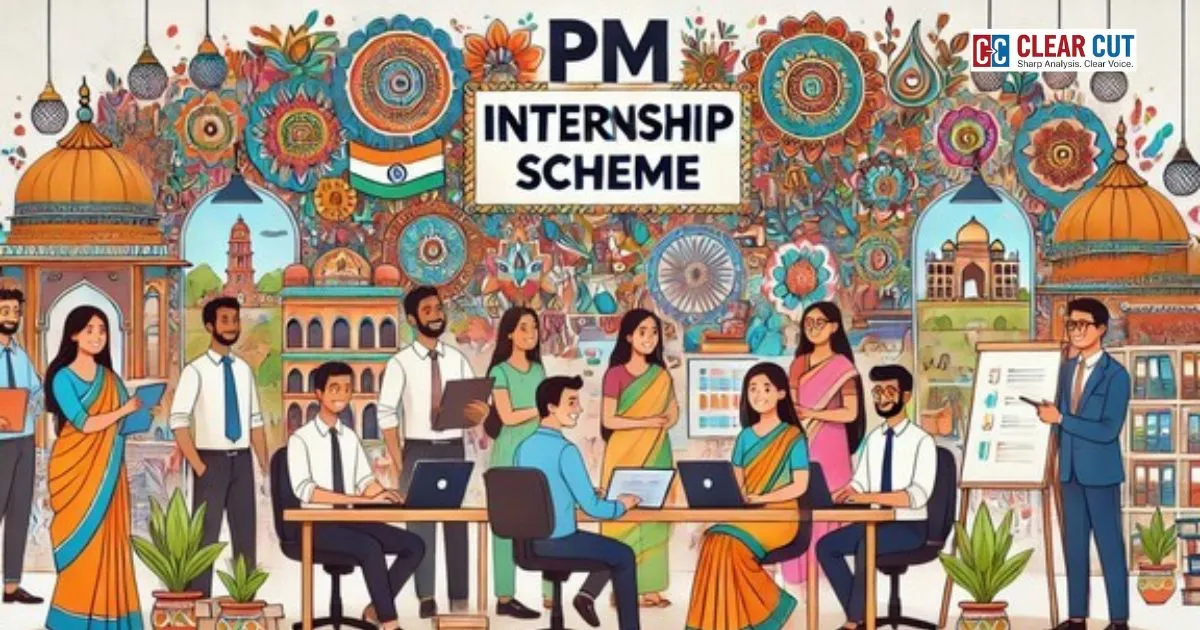
Launched with promise, the Prime Minister Internship Scheme (PMIS) was announced by the Ministry of Corporate Affairs, it carried the weight of a bold ambition: to skill and place 10 million young Indians especially those from economically weaker and rural backgrounds into structured internships with companies carrying out Corporate Social Responsibility (CSR) activities.
The concept was clear and, on paper, quite revolutionary. Targeted at 21–24-year- olds with annual family incomes under ₹8 lakh, the scheme excluded students from premier institutes like IITs and IIMs, aiming to democratize access to corporate exposure for state university and lesser-known college students often left behind in elite-driven pipelines.
The Ground Reality: Wins and Warnings
In its first phase, the scheme saw over 280 companies register 1.27 lakh internship positions. The second round saw even more 310 companies, 1.18 lakh offers, and participation across 700 districts.
Top firms like TCS, Infosys, L&T, Titan, and ONGC joined in, offering tens of thousands of internships. States like Punjab outshone others, recording a 41% offer acceptance rate. Participating companies gained cost-effective manpower for CSR projects while interns got hands-on exposure in education, health, and skilling sectors.
It worked for some. For many others, cracks appeared early.
The incentives?
A one-year internship, a monthly stipend of ₹5,000, insurance coverage, and a one-time grant. Internships would reach beyond metros, into district-level and rural regions, with companies footing just ₹500 of the stipend. At a time when youth unemployment and skill mismatch plague India’s demographic dividend, the PMIS offered hope of a structured bridge between education and employability.
Only 8,700 of the 28,000 students who received offers in Round 2 actually joined. A ₹5,000 stipend, though well-intentioned, barely covered food and travel in cities. Delays in disbursing funds due to Aadhaar-bank linkage issues and lack of job-role transparency eroded trust. For aspirants preparing for competitive exams, a year-long, non-credit internship without assured placement seemed a risky trade-off.
Why It Stalled: Systemic Gaps and Structural Silos
Several factors undercut the scheme’s momentum:
- Affordability Gaps: For economically vulnerable students, the low stipend and hidden living costs were deterrents.
- Poor Communication: Unclear job roles and company lists created confusion and skepticism.
- SME Absence: Small and Medium Enterprises crucial for jobs in Tier 2/3 cities stayed away, citing cumbersome processes and little incentive.
- Limited Outreach: In rural areas, where the scheme hoped to shine, awareness was patchy and access to digital infrastructure was weak.
- Administrative Delays: Integration with Public Financial Management System (PFMS) and other payment systems led to payment lags.
Despite its equitable vision, PMIS couldn’t yet overcome the very barriers it sought to break.
A Pause or a Premature End?
Officially, the scheme hasn’t been scrapped but it’s been stalled. For those tracking India’s youth employment and skill development ecosystem, this comes as a missed opportunity wrapped in a teachable moment.
And yet, the feedback wasn’t all critical. Many participating firms acknowledged that PMIS enhanced their CSR efficiency and helped scout talent for future hiring 10–15% of interns were considered for long-term roles. Several state governments saw potential in replicating elements of the scheme independently.
If Reimagined Right:
The idea behind PMIS deserves a second chance with sharper implementation. A redesigned version could include:
- Academic Credits for Internships, aligning the program with university curricula.
- Tiered Stipends, adjusted for city category or cost of living.
- Greater Involvement of SMEs, supported by simplified compliance processes.
- Digital Marketplace, where students and companies can transparently match skills and roles.
- Stronger Rural Outreach, leveraging panchayats, colleges, and digital campaigns.
If stitched into existing skilling missions like Skill India or integrated with Make in India and Start-Up India, PMIS could still become a flagship model for equitable, employability-linked CSR.
Note: Views expressed are personal and do not reflect the official position or policy of the Clear Cut Magazine.
Clear Cut Research Desk
New Delhi, UPDATED: Dec 12, 2025 10:58 IST
Written By: Clear Cut Team