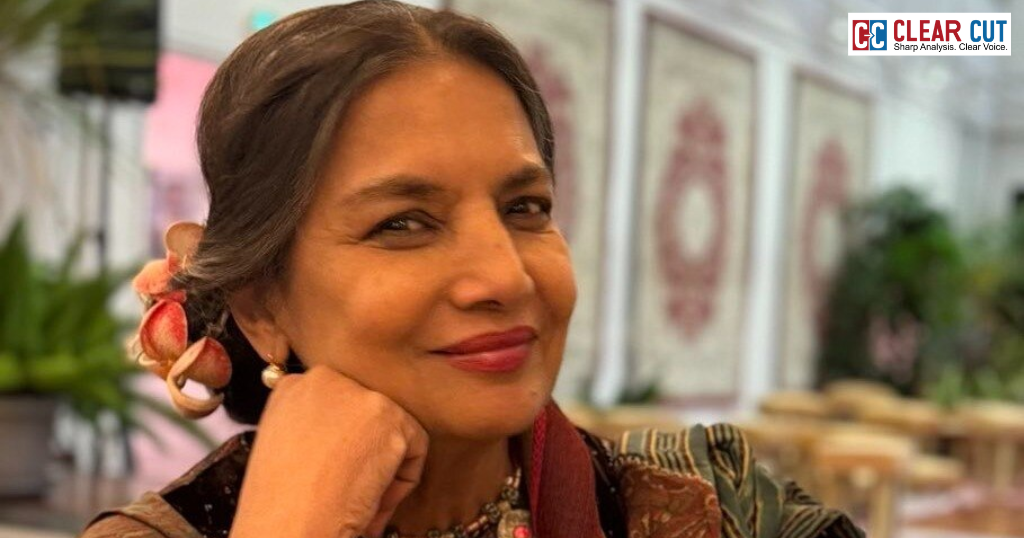


Ruchi Kalra built OfBusiness and Oxyzo into profitable, scalable businesses by focusing on financial discipline and real industry needs. Her leadership is redefining women’s role in India’s capital-intensive startup ecosystem.
In an ecosystem that often celebrates speed over substance, Ruchi Kalra built patiently. She did not chase visibility. She chased viability. As the co-founder of OfBusiness and the chief executive of its financial arm Oxyzo, Kalra has spent the last decade working in parts of the economy that leave little room for error. Industrial procurement. Supply chains. Balance-sheet lending. These are sectors defined by thin margins, high capital requirements, and constant scrutiny. They are also sectors where women leaders are still rare.
Kalra’s significance does not come from symbolism or narrative positioning. It comes from the scale she has built and the discipline with which she has built it. In a country where many startups chase valuation
before profitability, her companies grew by embedding financial control into the core of their operations.
That choice has shaped not just two successful businesses, but a larger conversation about women’s leadership in Indian enterprise.
From structural insight to institutional scale
The origins of OfBusiness lie in a structural inefficiency. Small and mid-sized manufacturers in India faced fragmented procurement markets, volatile pricing, and limited bargaining power. Raw material sourcing
was unpredictable and expensive, directly affecting margins and planning. OfBusiness addressed this by
aggregating demand, negotiating pricing, and digitising procurement across industrial inputs such as metals, chemicals, and construction materials. As transaction volumes grew, the platform began enerating deep, transaction- level data on buyer behaviour, supplier reliability, and cash cycles. That data revealed a second constraint. Even profitable SMEs struggled to access timely credit. Traditional lenders relied heavily on collateral and rigid repayment structures that did not match how industrial businesses
actually earned and spent money. This gap led to the creation of Oxyzo, a fintech lender designed to align
credit with real operating cash flows. The integration between commerce and finance proved critical. Procurement data enabled sharper underwriting. Lending strengthened supplier relationships. Over time, the ecosystem became self-reinforcing. By FY24, Oxyzo reported operating revenue of approximately
₹903 crore and net profit of around ₹290 crore, according to company disclosures. Its total assets
crossed ₹9,200 crore, reflecting rapid expansion combined with profitability. In a fintech environment
where many lenders struggled with rising defaults, Oxyzo’s performance stood out for its consistency.
OfBusiness, meanwhile, scaled its core commerce operations to multi-billion-dollar gross transaction
volumes. Publicly reported figures and investor briefings indicated operating profitability and readiness for public markets, with reported IPO fundraising targets reaching up to $1 billion. These developments placed the group among the most institutionally mature startups in the country.
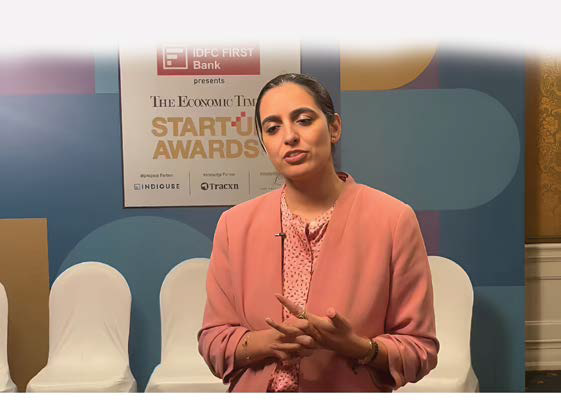
None of this came easily. Industrial procurement and lending are unforgiving businesses. Mistakes
compound quickly. Growth exposes weaknesses. Regulatory oversight intensifies as scale increases.
Kalra’s leadership has been defined by an insistence on systems, governance, and predictability rather
than headline-driven expansion.
Capital, partnerships, and credibility
In lending, capital is both fuel and test. It follows trust. Oxyzo’s funding journey reflects this reality. In 2022, the company raised $200 million in equity, crossing the $1 billion valuation mark. The round was backed by a mix of global and domestic investors known for their focus on scale and governance
rather than short-term speculation. Beyond equity, Oxyzo secured large structured debt facilities from banks and institutional lenders, with cumulative borrowing running into several thousand crores. These facilities were used to expand the loan book while maintaining regulatory capital buffers and asset quality discipline. Investor interest was driven by fundamentals. Journalist-led analyses repeatedly pointed to Oxyzo’s cashflow- aligned lending model, conservative risk frameworks, and profitability as reasons for sustained confidence. In a sector where aggressive growth often masked weak underwriting, Oxyzo’s numbers told a different story. OfBusiness also built extensive partnerships across the industrial ecosystem. It worked with large suppliers, distributors, logistics players, and manufacturers across
sectors such as steel, chemicals, cement, and in frastructure-linked materials. These partnerships deepened network effects and strengthened pricing power for SMEs.
Kalra’s role in building and sustaining these relationships has been central. Negotiating with industrial suppliers, lenders, and institutional investors requires credibility that is earned over time. Her presence in
These rooms challenged deeply ingrained assumptions about who leads capital-heavy businesses.
Leadership that quietly rewrites norms
Kalra’s success disrupts long-standing expectations in Indian business. Capital-intensive companies have
traditionally been associated with aggressive, male-dominated leadership styles. Fintech lending, in particular, has been viewed as a space where authority must conform to a narrow archetype to reassure investors. Her leadership offers a counter-model.
files describe her as deeply involved in financial controls, risk management, and unit economics. Growth
is pursued deliberately. Profitability is non-negotiable. Governance is treated as infrastructure, not overhead. This approach has allowed her companies to scale while remaining resilient through market cycles. For women in leadership, this matters deeply. Kalra’s journey expands the definition of credibility.
It shows that authority in finance does not come from fitting a stereotype, but from building systems
that perform under pressure. She does not frame herself as a disruptor of gender norms. She simply leads serious businesses seriously.
Women empowerment through access, not rhetori
Kalra’s work extends far beyond her personal role. A meaningful share of enterprises financed through Oxyzo include women-run or women-managed SMEs. For these businesses, access to structured working capital replaces informal borrowing and personal guarantees. It enables bulk procurement, smoother
inventory cycles, and expansion without constant liquidity stress. When credit aligns with cash flow, women entrepreneurs gain predictability. Predictability allows planning. Planning enables growth. This shift from survival to strategy is often the difference between stagnation and scale.
Within the organisation, Kalra has spoken consistently about building systems that allow women to sustain long-term careers. Not through symbolic gestures, but through clear performance frameworks, leadership pipelines, and realistic support structures. In India, where women frequently exit the workforce
mid-career due to structural barriers, such systems are critical.
Empowerment, in this model, is not about exceptional treatment. It is about equal acess
to serious opportunity.
Recognition through out comes
Kalra has not been defined by awards or ceremonial recognition. Instead, her credibility has been built through outcomes that are hard to ignore. Her journey has been profiled by journalists examining rare examples of women leading unicorn-scale enterprises in capital-heavy sectors. The OfBusiness–
Oxyzo group has featured consistently in high-growth, profitability, and IPO-readiness discussions.
This form of recognition is quieter, but more durable. It reflects trust earned in markets that punish failure.
What her story ultimately represents
India’s startup ecosystem produces many founders. It produces far fewer institution builders. Ruchi Kalra belongs to the latter category. She has helped build businesses that move thousands of crores annually,
manage large balance sheets, serve tens of thousands of industrial clients, and operate under increasing
regulatory and investor scrutiny. Her journey reframes women’s empowerment away from inspiration and
towards infrastructure. Away from motivation and towards measurement. She shows that women can lead
where pressure is highest, margins are tight, and accountability is constant. She did not arrive with
applause. She arrived with control. And in the long run, that is how power is built and shared.
Clear Cut Startups, Gender Desk
New Delhi, UPDATED: April 01, 2026 05:00 IST
Written By: Priyanka Thakur