
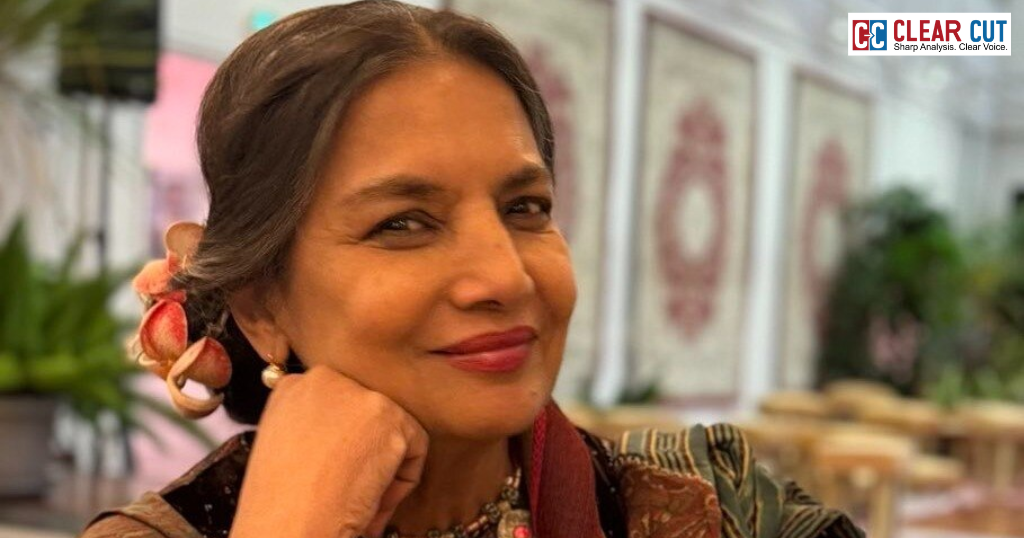
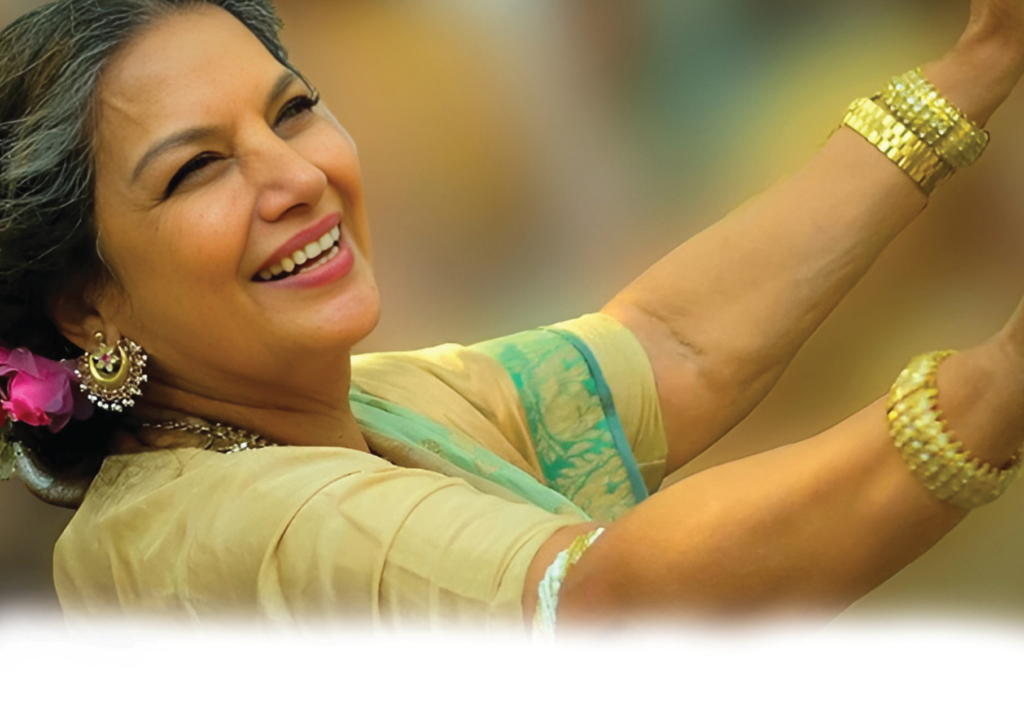
Shabana Azmi exemplifies how art and activism can work together, using her influence to drive women’s empowerment, child rights, and grassroots social change. Her lifelong philanthropy reflects a deep belief that privilege and creativity must serve society, creating lasting impact beyond the screen.
Despite five National Film Awards for Best Actress, over fifty years of Indian film, and a multi-continental career, Shabana Azmi is uninspired by spectacle. Her life, both on and off screen, is still anchored by the conviction she was instilled with at a young age and never let go of: art must benefit society.
For Azmi, philanthropy is a moral extension of her artistic work rather than a side endeavor. She was taught quite early that privilege comes with responsibility because she was raised in a home that was influenced by progressive ideals, democratic discourse, and intellectual independence. She has frequently remarked, “You owe it back to the world when you receive love, equality, and opportunity.”
When Art Becomes a Moral Practice
Shabana Azmi’s work stands out for its depth, consistency, and ethical clarity in a time when charity is frequently reduced to photo ops and hashtags. After a global body of work and innumerable honors, Azmi’s most lasting legacy may not be found in her filmography, but rather in the way she has continuously used her cultural capital to subvert structural inequality in a quiet and spectacle-free manner. Social responsibility was never an afterthought to Azmi’s success as an artist. It was fundamental. She was raised in a politically aware home that was influenced by the modern beliefs of her parents, theater actor Shaukat Kaifi and poet and activist Kaifi Azmi. She was indoctrinated at a young age with the notion that privilege necessitates responsibility and that art must speak to society. She has frequently stated that “my work is an extension of what I learned as a child.” Decades of action centered on women’s empowerment, children’s rights, social harmony, and the dignity of marginalized communities have resulted from that concept; these efforts frequently overlap with her acting career.
Mijwan: A Village, A Vision, A Model
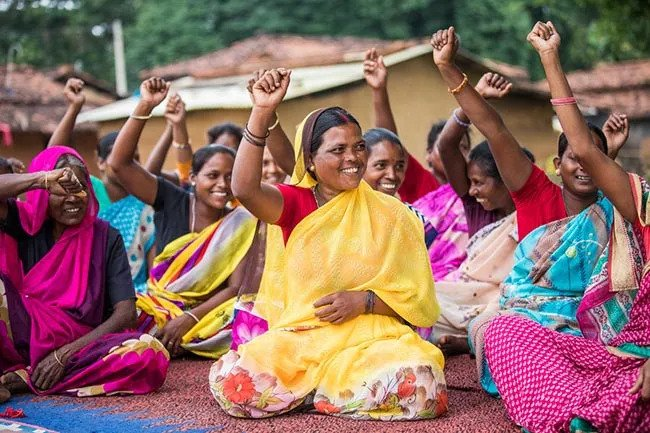
Mijwan, Shabana Azmi’s hometown in the Azamgarh district of Uttar Pradesh, is at the center of her charitable legacy. Mijwan, which was formerly notorious for its poverty and high rate of child marriage, is now frequently used as a case study in grassroots development spearheaded by women. Kaifi and Shabana Azmi founded the Mijwan Welfare Society, but it was never intended to be a charity in the conventional sense. As Azmi says, its emphasis has been on long-term empowerment as opposed to temporary alleviation. “Empowerment entails imparting long-term skills,” she says. “Building self-worth is the goal.”

Women’s and girls’ economic independence and education have been at the heart of this effort. The NGO has made significant investments in vocational training, especially in the areas of embroidery and tailoring, allowing women to generate steady incomes. Women are now actively involved in household decision-making, and their labor is valued rather than seen as a burden as a result of this economic transformation.
There has been a noticeable social influence. Once common, child marriage has been eradicated in the village. Education for girls has significantly improved. Power dynamics as well as income were altered. According to Azmi, “women are viewed as assets, not liabilities, when they earn.” The prevailing development narra-tives are challenged by Mijwan’s metamorphosis. It shows that community-based interventions based on dignity and agency are more important for social change than large infrastructure alone.
Children at the Centre of Social Justice
Azmi’s longstanding affiliation with CRY (Child Rights and You) is another pillar of her generosity. She characterizes her own upbringing as democratic, caring, and intellectually free, which has greatly influenced her support for children’s rights. She has stated, “I was given equal opportunity with my brother.” “We were urged to express our opinions.” Her conviction that every child deserves not only an education but also an environment that supports their growth is influenced by that experience.
Azmi has repeatedly emphasized that progress cannot be made in fragments. If issues like poverty, discrimination, dangerous housing, or exploitative labor persist, sending a child to school is not enough. Her systems-oriented approach is consistent with CRY’s concept, which involves collaborating with government agencies, educators, parents, and community leaders.
Another aspect of this way of thinking is seen in her interactions with the Indian diaspora, especially in the US and the UK. Azmi frequently pushes diaspora groups to see the structural effects of their contributions and go beyond symbolic giving. She contends that science, education, healthcare, and the arts are necessities that enable kids to see more than just survival.
Activism Beyond the Stage and Screen
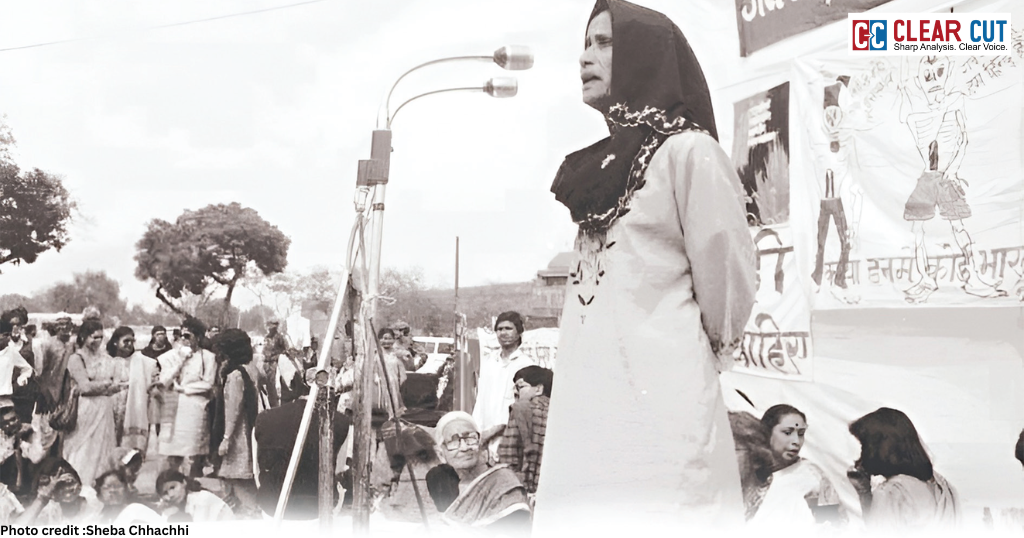
Institutions have never been the exclusive focus of Shabana Azmi’s activism. It has been frequently viewed as an awkward intervention. Her involvement has been embodied rather than theatrical, ranging from advocating for the rights of slum people to taking part in a five-day hunger strike to highlight housing inequities. Her inability to discern between the political and personal is what sets her advocacy apart. She frequently discusses the ordinary hierarchies present in Indian homes, such as the inequity and intimacy that coexist in interactions with domestic workers. “Asking where their child is studying is the least you can do,” she advises. These small acts, in her view, are not trivial. They are the building blocks of ethical citizenship. Change, she insists, does not always come from grand gestures, but from consistent moral choices.
Feminism as Structure, Not Slogan
Azmi has a very uncompromising view of feminism. According to her, feminism is about inclusive decision-making and fair opportunity rather than ideological purity or theatrical revolt. She accepts diversity without letting it serve as an excuse for exclusion. She asserts that although men and women are different, they are neither superior nor inferior.
Azmi maintains that feminism is essential, not only for women, but for society at large, in public conversation, where it is sometimes mocked or watered down. She feels irritated when young women reject the term without acknowledging its history and attributes the modern freedoms to prior generations of feminists.
Importantly, she locates feminism within institutions as much as identities. Whether discussing cinema, governance, or philanthropy, she argues that progress requires dismantling male-centric frameworks and including women’s perspectives at every level of decision-making.
Representation, Responsibility, and the Global Stage
Azmi’s generosity also touches on issues of cultural power and representation. She has continuously campaigned for stories that represent complexity rather than caricature, from opposing the condescending term “Bollywood” to supporting color-blind casting in Western films. An uncommon instance of true inclusion is her experience working.
on Steven Spielberg’s Halo, when she was not asked to change her appearance or accent. According to Azmi, representation determines whose lives are considered visible and whose experiences are conveyed; it is not merely a cosmetic issue.
Her involvement in diaspora storytelling reflects this belief. She encourages filmmakers to go beyond cliches and investigate more general social issues, even as she acknowledges the significance of identity narratives. She contends that identity should enhance narrative rather than limit it.
Philanthropy as Ethical Continuity
Continuity is what eventually characterizes Shabana Azmi’s charitable endeavors. It is persistent and spans decades, causes, and settings rather than being reactive or episodic. It has its roots in inherited values, is honed in life experience, and manifested via deeds.
Azmi consistently operates under the moral tenet that privilege, art, and influence must serve justice, whether she is speaking to Members of Parliament at the House of Lords, to grassroots women’s forums like Asmita-Woman, or to silently support community initiatives.
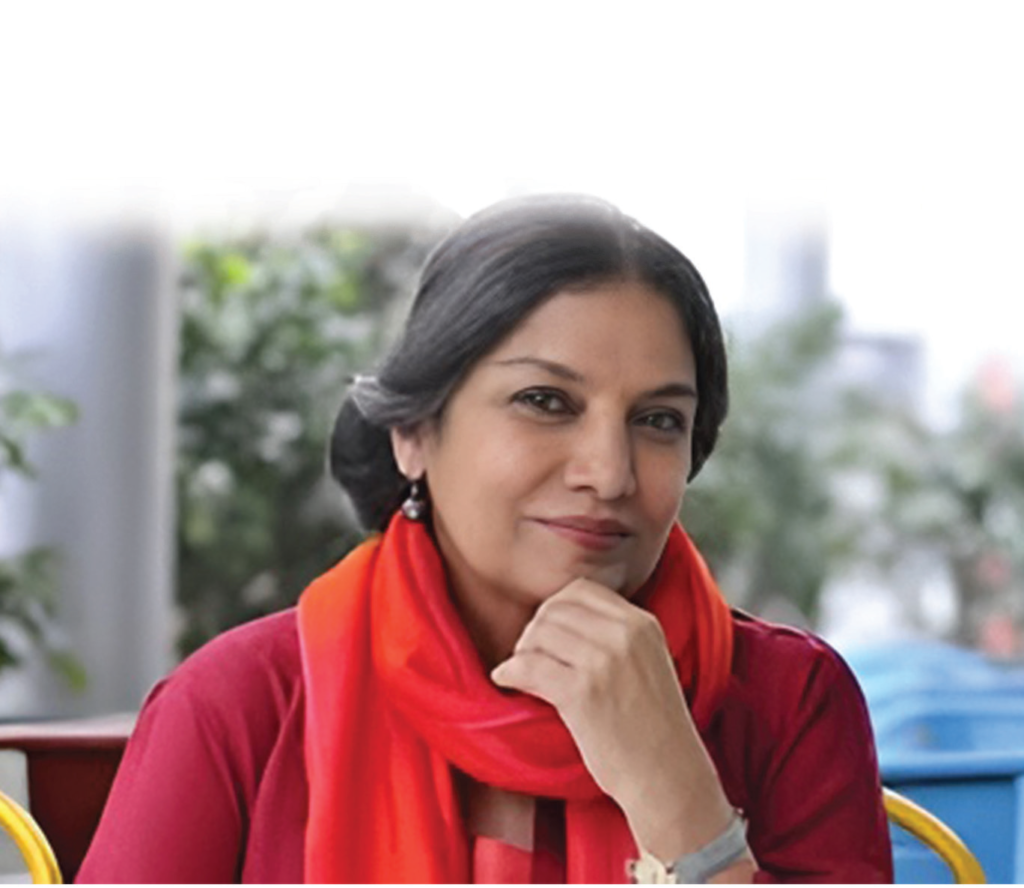
Her art provides a counter-narrative in a society where exposure and analytics are becoming more and more important. It emphasizes effect over image and depth over presentation. Shabana Azmi reminds us that true philanthropy is a practice of solidarity over time rather than charity given from above.
Her story serves as a potent example of what it means to lead a public life while maintaining one’s integrity and to steadfastly believe that social change is not only feasible but also essential.
Clear Cut CSR, Gender Desk
New Delhi, UPDATED: March 29, 2026 9:00 IST
Written By: Nidhi Chandrikapure