
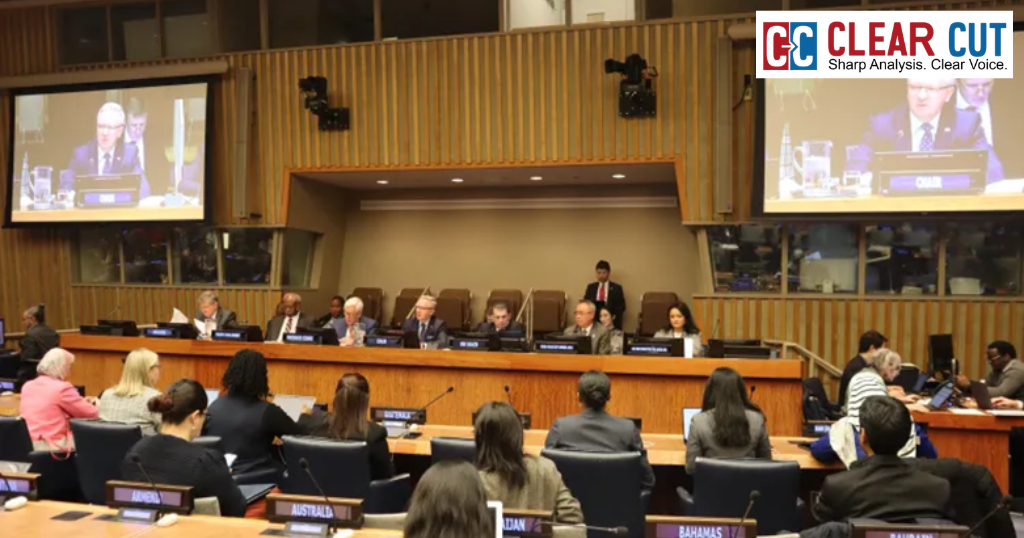
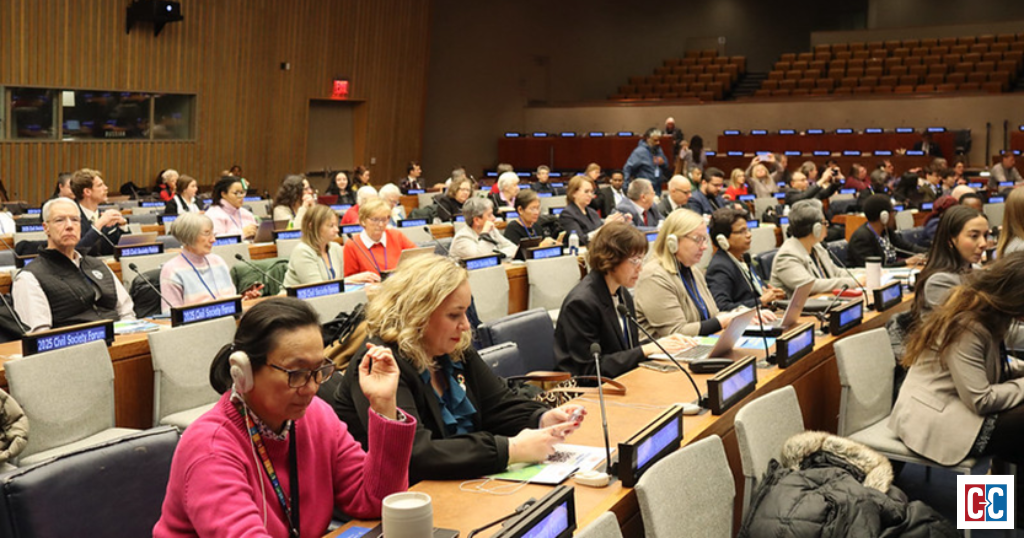
For decades, the global development narrative has been anchored around a single, blunt instrument: Gross Domestic Product (GDP). However, at the recently concluded 64th Session of the United Nations Commission for Social Development (CSocD64), there were strong calls to look beyond economic output and place greater emphasis on social cohesion as a foundation for sustainable growth.
At the heart of this shift is an urgent mission to address the “Informality Trap” that continues to keep billions of workers in a state of economic vulnerability.
The Daily Hustle
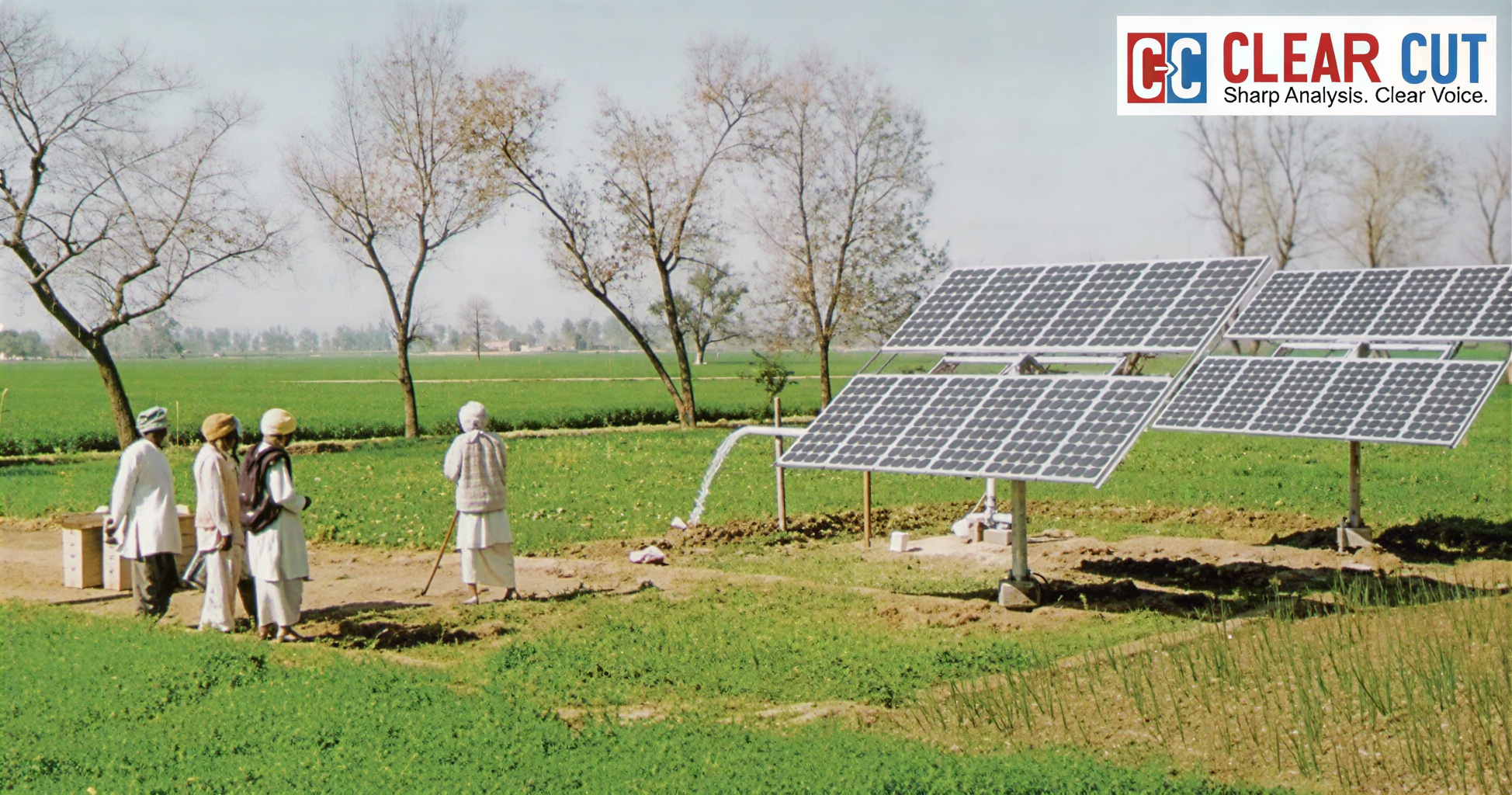
For most people across the Global South, work isn’t a contract. It’s a daily act of survival. It’s the street vendor in Delhi who wakes up before sunrise to set up their stall, and the small-scale farmer in sub-Saharan Africa whose entire year depends on a single rain cycle.
For them, there is no such thing as a ‘sick day’, a health insurance card, or a retirement plan. They are the backbone of the economy, yet they walk a tightrope every day without a safety net.
According to the International Labour Organization (ILO), more than 60% of the world’s workforce is engaged in informal employment. This form of work is often linked to “working poverty”, where individuals are employed but unable to move out of poverty due to low and unstable incomes, and lack of social protection.
Discussions at CSocD64 reinforced that high levels of informality remain a major barrier to achieving the United Nations 2030 Agenda for Sustainable Development.
From ‘Jobs’ to ‘Decent Work’
A key theme emerging from the discussions was the need to move beyond simply creating jobs, toward ensuring “Decent Work” — a framework led by the International Labour Organization. This includes fair income, workplace security, and access to social protection.
The broader message was clear: economic growth alone is not enough. It must translate into stability, dignity, and protection for workers.
This also ties into the idea of a “New Social Contract”, where governments expand social protection systems and ensure that workers are not left behind in the ongoing digital and green transitions.
Regional Realities: Aging and Housing
While informality remains a dominant challenge in the Global South, regional discussions brought out additional concerns.
The United Nations Economic Commission for Europe(ECE) and United Nations Economic and Social Commission for Asia and the Pacific (ESCAP) highlighted growing demographic pressures due to ageing populations. This has increased the need for a stronger and more formalised care economy — a sector where a large share of work is still unpaid or underpaid, and largely carried out by women.
Formalising this sector could improve social protection while also increasing labour force participation.
Housing was also discussed as a critical pillar of social stability. Without access to safe and affordable housing, it is difficult to build a stable and productive workforce.
The “Safety Net” Perspective
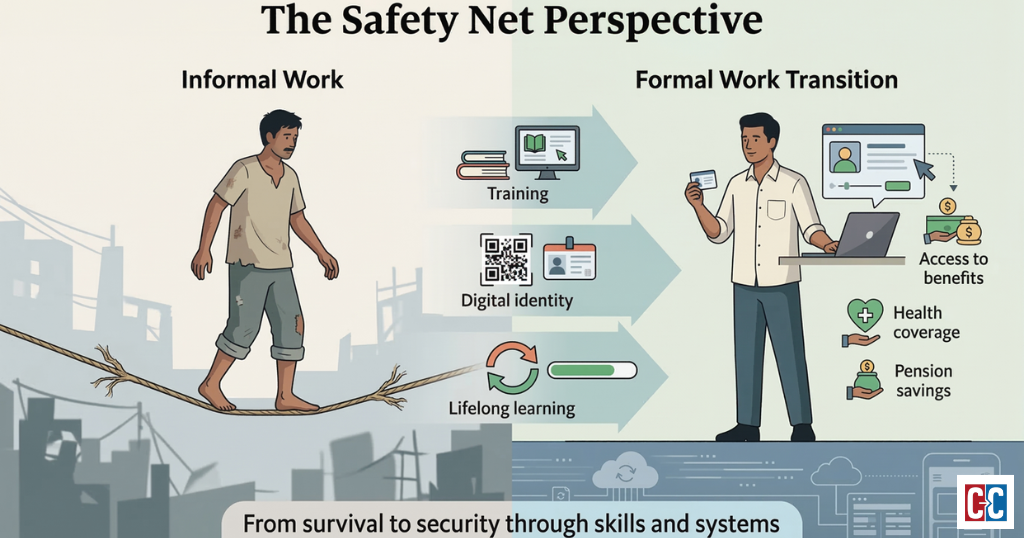
Moving from informal to formal work is not automatic. It requires workers to gain skills that are recognised in the labour market.
This makes skill development and lifelong learning essential. In an AI-driven world, one-time education is no longer sufficient. Workers need continuous opportunities to upgrade their skills to remain relevant.
For countries like India, this presents a significant opportunity. With the expansion of digital public infrastructure, there is potential to better identify informal workers, connect them to social protection systems, and enable more secure livelihoods.
Clear Cut Take
Economic growth that does not translate into social security is incomplete. The growing emphasis on decent work, social protection, and cohesion reflects a broader shift in how development is being understood.
Social cohesion may not replace GDP, but it is increasingly being recognised as essential to sustaining it.
Clear Cut Livelihood Desk
New Delhi, UPDATED: March 17, 2026 05:00 IST
Written By: Paresh Kumar