
Sometimes tragedy does not arrive with noise. It comes quietly, like rising water that first touches your feet and then slowly climbs until it enters every corner of life. This is what happened across Southeast Asia, where severe floods and landslides have taken over fifteen hundred lives and are forcing millions to leave their homes. The numbers sound big, but behind each number stands a family that has lost something precious.
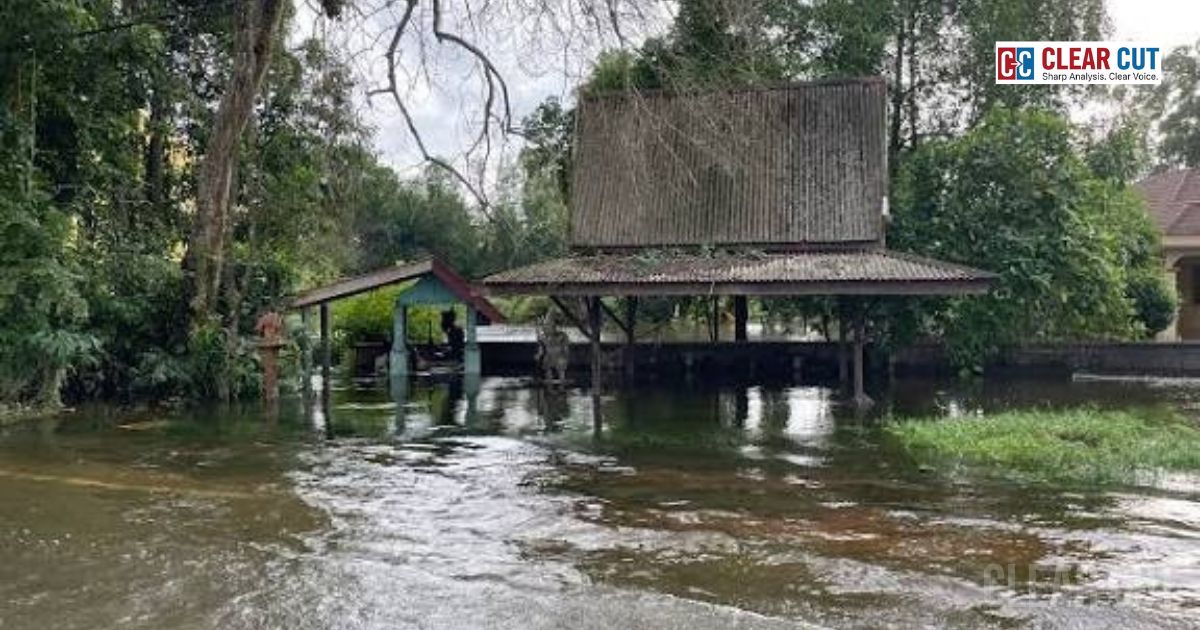
The rain started late in November. For days, it did not seem to stop. Rivers burst their banks, hillsides broke apart, and villages in Indonesia, Sri Lanka, Thailand, Vietnam, and Malaysia were washed away. In parts of the Sumatra region of Indonesia, entire neighbor hoods disappeared under mud and water. Authorities say more than eight hundred people died there alone and many more are still missing. Nature can be beautiful; but it can be unforgiving, too.
When Homes Vanish, Health Suffers First
When the waters retreat, a different battle commences. Homeless families huddle together in temporary shelters. Clean drinking water becomes scarce. Food is available but uncertain. In such situations, children are the most vulnerable. They fall ill easily because their tender bodies cannot resist polluted water or prolonged periods of insufficient food. Health workers warn that in the aftermath of floods, cholera, diarrhoea, and other diseases spread fast and medicines do not necessarily reach remote areas before an outbreak.
Many of the affected regions’ hospitals have been hit by floods or damaged. The doctors and nurses work with limited supplies. It’s hard to transport injured people due to disrupted roads and bridges that have been washed away. We often think of that first moment when we speak about disasters, but long after the rain stops, there is suffering.
The Climate Story Behind the Disaster
These are not unusual floods, say scientists. A warmer atmosphere holds more moisture, meaning the storms are stronger and rains heavier. Climate change is no longer a scientific term. It has entered homes and kitchens and small fields where farmers grow their food. Deforestation and mining have also weakened the land in Southeast Asia. Trees that held the soil together are gone. Without them, even moderate rain can turn into a deadly flood.
It reminds us that when we harm the environment, it ultimately comes back to harm us. When the land weakens, people weaken. When the rivers no longer flow as nature designed them, then communities lose their security.
Why the World Must Care
These floods may be far from India, but their ripples reach us. We share a weather pattern with this region, trade links and migration pathways. When crops fail in one part of Asia, food prices rise in another. When millions lose homes, governments struggle to provide support. And when children fall into severe malnutrition, the world loses a generation that could have learned, grown and dreamed.
A disaster is not only a national problem. It is a human problem. And in today’s interconnected world, stability in one country helps stability in another.
What needs to change
Relief agencies are working day and night, but immediate help is only one part of the solution. These countries need safer homes, stronger roads, early-warning systems and better water management. The forests must be restored. The mining and construction must follow stricter rules. Climate resilience cannot be just a policy document. It must reach villages and towns and coastlines where real people live. Children need vaccination drives to be restarted, pregnant women need health care, and families need food, safe drinking water, and psychological support. Without these, the damage will last for years to come.
A Gentle Reminder for All of Us
As we read about these floods, it is easy to think they happened somewhere far away. But every disaster is also a mirror. It shows us that human life is fragile and deeply dependent on nature’s balance. It also shows us the strength of communities. In many affected places, neighbours rescued neighbours, and people who had very little shared their food with others. At moments like these, humanity proves that kindness is more powerful than any storm. The floods in Southeast Asia are more than a news headline. They are a reminder that climate change is already changing our world. If we do not take care of the earth today, it may not be able to take care of us tomorrow.
Clear Cut Climate Desk
New Delhi, UPDATED: Dec 05, 2025 09:20 IST
Written By: Janmojaya Barik