
Free government school textbooks meant for students were found in a scrap shop in Bahraich, Uttar Pradesh, triggering an official inquiry. Four Basic Education Department officials now face disciplinary action over alleged lapses in the free textbook distribution scheme.
Key Highlights
- Free government school textbooks meant for students were allegedly sold to a scrap dealer in Bahraich, Uttar Pradesh
- District authorities initiated an inquiry after the books were recovered
- Four officials from the Basic Education Department face disciplinary action
- The case raises concerns about monitoring of education welfare schemes
- The incident affects distribution meant for lakhs of government school students
What the Incident Is About
In simple terms, textbooks that the Uttar Pradesh government provides free of cost to students in government schools were found being sold as scrap in Bahraich district. These books were meant for children studying in primary and upper primary schools.
According to district-level administrative findings reported by Hindustan Times (2026) and The Print (2026), a scrap dealer was discovered storing bundles of new textbooks. The books reportedly bore official markings indicating they were distributed under the state’s free textbook scheme.
Once the matter came to light, the district administration ordered an inquiry. Preliminary findings indicated lapses within the Basic Education Department’s local distribution chain.
What Officials Confirmed
As reported by Hindustan Times, Bahraich District Magistrate Monika Rani confirmed that an investigation was launched after information surfaced about government textbooks being sold in the scrap market.
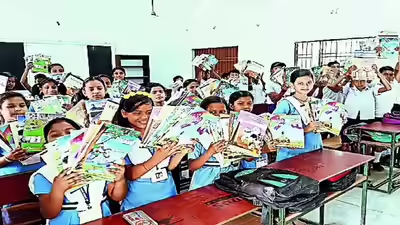
Officials from the Basic Education Department inspected the site and recovered books meant for Classes 1 to 8. These textbooks are printed and distributed under state-funded schemes to ensure that children in government schools receive learning materials at no cost.
The inquiry reportedly identified procedural lapses and suspected negligence in handling inventory. Following the investigation, four education department staff members faced departmental action, as confirmed by district authorities and reported by The Print.
How the Free Textbook Scheme Works
The Uttar Pradesh government distributes free textbooks annually to students enrolled in government primary and upper primary schools. According to data from the state’s Basic Education Department, Uttar Pradesh has over 1.5 crore students enrolled in government-run schools.
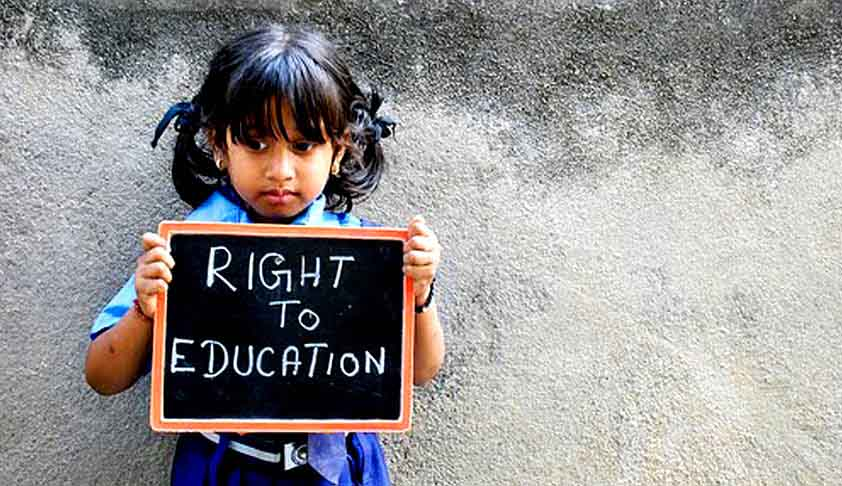
The free textbook initiative is part of broader efforts to improve enrollment, retention, and literacy levels. The scheme aligns with provisions under the Right to Education (RTE) Act, 2009, which mandates free and compulsory education for children aged 6 to 14.
Books are typically printed through government-approved presses and distributed via district education offices to individual schools.
The discovery of these books in the scrap market suggests a breakdown in the supply chain between district warehouses and school-level distribution.
Administrative and Accountability Measures
According to district officials quoted in both reports, the recovered textbooks were traced back to a specific consignment intended for local government schools. Authorities initiated departmental proceedings against four staff members associated with stock management and distribution oversight.
The District Magistrate ordered a detailed review of stock registers, transport records, and school-level receipt documentation to identify how the diversion occurred.
Officials have also stated that disciplinary action could include suspension, withholding of salary, or further legal proceedings if misappropriation is established.
The state government has reportedly directed closer monitoring of textbook distribution across districts to prevent recurrence.
Financial and Social Implications
Free textbook schemes represent significant public expenditure. Uttar Pradesh allocates substantial funds annually for printing and distribution to ensure that children from economically weaker sections are not burdened with purchasing study material.
When such materials are diverted or sold as scrap:
- Public funds are misused
- Students may face delays in receiving books
- Educational outcomes are compromised
- Trust in public welfare schemes erodes
Education experts emphasize that timely textbook distribution is critical for early-grade literacy and learning continuity. Missing textbooks in the beginning of the academic year can significantly affect classroom instruction.
Broader Governance Concerns
This incident reflects larger governance challenges in welfare delivery systems. Leakages in public distribution mechanisms have historically affected sectors such as food grains, scholarships, and midday meals.
The National Education Policy (NEP) 2020 stresses transparency, digitization, and accountability in school governance. Experts argue that textbook distribution systems should incorporate digital tracking mechanisms, barcode systems, and third-party audits to prevent misuse.
Civil society observers note that frontline administrative staff often manage large volumes of materials with limited oversight, creating opportunities for irregularities if monitoring is weak.
The Impact on Students
Government school students depend heavily on state-provided materials. Many families in rural and economically vulnerable districts like Bahraich cannot afford private textbooks.
If books fail to reach students on time:
- Learning progression slows
- Teachers struggle to follow the syllabus
- Students risk falling behind
Education activists argue that such incidents disproportionately affect children from marginalized backgrounds, widening existing educational inequalities.
What Needs to Change
Policy experts suggest several corrective steps:
• Digital inventory tracking of textbook consignments
• Mandatory verification receipts at school level
• Surprise inspections at district warehouses
• Public disclosure of distribution data
• Accountability mechanisms tied to performance reviews
Transparent governance and strong oversight can prevent recurrence and ensure that welfare schemes function effectively.
Conclusion
The recovery of free government school textbooks from a scrap dealer in Bahraich highlights serious lapses in the education supply chain. As confirmed by district authorities , four education department staff members now face disciplinary action.
The case underscores the importance of accountability in public education programmes. Free textbooks are not merely printed material. They represent opportunity, literacy, and access for millions of children.
Protecting these schemes from misuse is essential to maintaining public trust and ensuring that welfare reaches its intended beneficiaries.
Effective governance, transparent monitoring, and swift disciplinary action will determine whether such incidents remain isolated or signal deeper systemic flaws.
Education is a foundational right. Safeguarding its delivery must remain a priority.
Clear Cut Education Desk
New Delhi, UPDATED: Feb 25, 2026 05:00 IST
Written By: Samiksha Shambharkar