

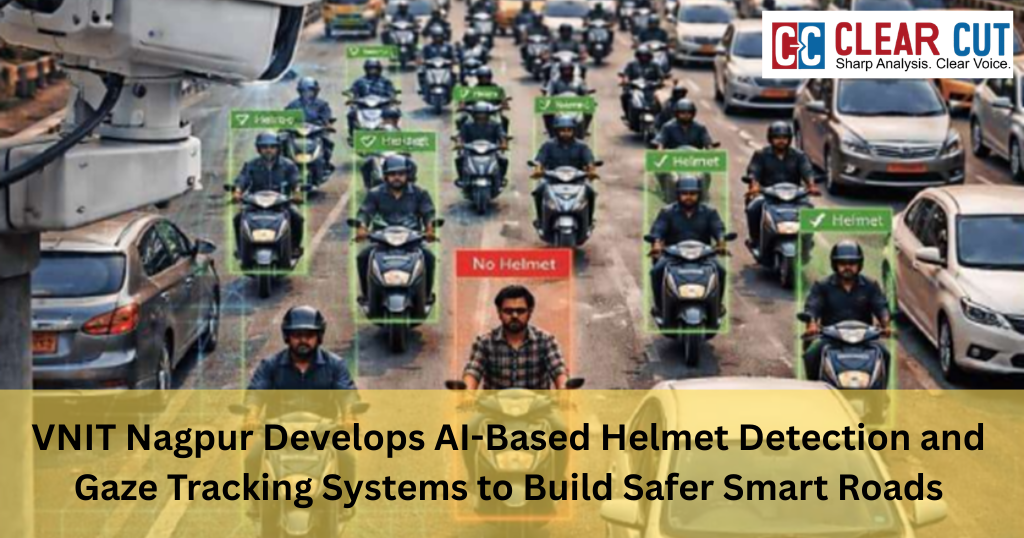
Students and researchers at VNIT Nagpur developed AI-based helmet detection and driver gaze-tracking systems to enhance road safety, reduce traffic violations, and support smart traffic monitoring in India.
Key Highlights
• VNIT Nagpur students developed four technology solutions to improve road safety.
• Innovations include AI-based helmet detection and driver gaze-tracking systems.
• Projects aim to reduce traffic violations and prevent accidents.
• Solutions combine artificial intelligence, computer vision, and smart surveillance.
• The initiative highlights the role of engineering institutions in urban road safety reform.
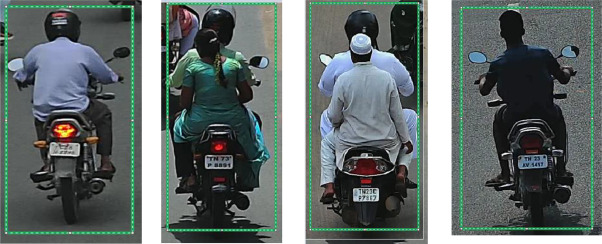
Students and researchers at Visvesvaraya National Institute of Technology (VNIT), Nagpur, have developed four innovative technological solutions to make roads safer and smarter. These include artificial intelligence-based helmet detection systems and driver gaze-tracking tools that monitor driver alertness.
In simple terms, engineering students created smart camera systems that can detect whether a biker is wearing a helmet and whether a driver is distracted. These tools aim to reduce road accidents and improve traffic rule enforcement.
Road safety remains a major public concern in India. According to the Ministry of Road Transport and Highways (MoRTH), India recorded over 1.68 lakh road accident deaths in 2022. Two-wheeler riders accounted for a significant percentage of these fatalities, many due to non-use of helmets.
The VNIT solutions attempt to address these risks using technology-driven monitoring.
What Are the Four Road Safety Solutions?
The VNIT team developed four separate but interconnected systems:
- Helmet Detection System
- Gaze-Tracking System for Driver Alertness
- Smart Traffic Violation Monitoring Tool
- Integrated Road Surveillance Framework
These systems use artificial intelligence (AI), machine learning algorithms, and computer vision to analyze real-time footage from cameras.

AI-Based Helmet Detection
The helmet detection system uses cameras installed at traffic points. The AI model analyzes live video feeds and identifies whether a two-wheeler rider is wearing a helmet.
If the system detects a violation, it can capture vehicle details and generate alerts for enforcement authorities.
Helmet use remains critical in India. MoRTH data shows that thousands of two-wheeler fatalities occur each year due to head injuries. Studies indicate that helmets reduce the risk of death by nearly 42% and severe head injury by about 69%.
By automating detection, authorities can reduce manual monitoring and improve compliance.
Gaze-Tracking for Driver Alertness
The gaze-tracking system monitors a driver’s eye movement and head position. The technology identifies signs of distraction or fatigue.
Driver distraction remains a major cause of road accidents. Common causes include:
• Mobile phone use while driving
• Drowsiness
• Inattention to traffic signals
The system uses computer vision to analyze facial orientation and gaze direction. If it detects abnormal patterns, it can issue alerts.
This innovation can prove especially useful for long-distance drivers and commercial vehicle operators.
Smart Traffic Monitoring and Data Integration
The third and fourth systems integrate surveillance data into a centralized framework. These tools analyze traffic patterns, detect rule violations, and support smarter traffic management.
Urban roads face challenges such as:
- Signal jumping
- Lane violations
- Over-speeding
- Helmet and seatbelt non-compliance
AI-based monitoring reduces dependency on human supervision and increases enforcement efficiency.
Smart city initiatives across India already incorporate surveillance infrastructure. VNIT’s innovation adds intelligence to existing systems.
The Road Safety Crisis in India
India faces one of the highest road accident burdens globally. According to official MoRTH reports:
- Over 4.6 lakh road accidents were recorded in 2022.
- Around 1.68 lakh people lost their lives.
- Two-wheeler riders accounted for over 40% of total fatalities.
Helmet non-compliance significantly contributes to these numbers.
Technology-driven enforcement can reduce violations and improve public discipline.
Public Safety and Behavioural Change
Road safety is not just about infrastructure. It also involves behaviour.
Many riders ignore helmet rules despite knowing the risks. Drivers often use phones while driving.
AI surveillance may improve compliance by increasing the certainty of detection.
However, experts emphasize that awareness campaigns must accompany enforcement. Citizens must understand why rules exist, not just fear penalties.
Safer roads protect families, reduce healthcare burden, and strengthen urban productivity.
Role of Educational Institutions in Innovation
VNIT Nagpur’s initiative shows how engineering institutions contribute to public policy solutions.
Instead of limiting research to academic publications, students applied their knowledge to real-world problems.
Such collaborations between educational institutions and civic authorities can accelerate smart city development.
Universities increasingly serve as innovation hubs in areas such as:
• Traffic engineering
• Urban sustainability
• AI-based governance
• Public safety systems
Privacy and Ethical Considerations
While AI surveillance improves enforcement, it also raises privacy concerns.
Authorities must ensure:
• Data protection safeguards
• Limited and lawful use of footage
• Transparent monitoring protocols
Smart systems must operate within legal and ethical boundaries.
Balancing safety and privacy remains critical in AI deployment.
Future Scope and Implementation
If implemented at scale, VNIT’s solutions can integrate with:
• City traffic control rooms
• Automated challan systems
• National road safety databases
Government agencies under the Smart Cities Mission may explore pilot projects.
Policy support and funding can transform prototype systems into deployable infrastructure.
Conclusion
VNIT Nagpur’s AI-based helmet detection and gaze-tracking systems represent a forward-looking approach to road safety in India.
With over 1.68 lakh road deaths annually, the country urgently needs technology-driven enforcement and behavioural change.
By combining artificial intelligence, computer vision, and real-time monitoring, these solutions aim to create safer and smarter roads.
The initiative highlights how academic innovation can address pressing public safety challenges. With responsible implementation and community engagement, such systems can significantly reduce road fatalities and strengthen urban mobility governance.
Clear Cut Education, Research Desk
New Delhi, UPDATED: March 02, 2026 01:42 IST
Written By: Samiksha Shambharkar