

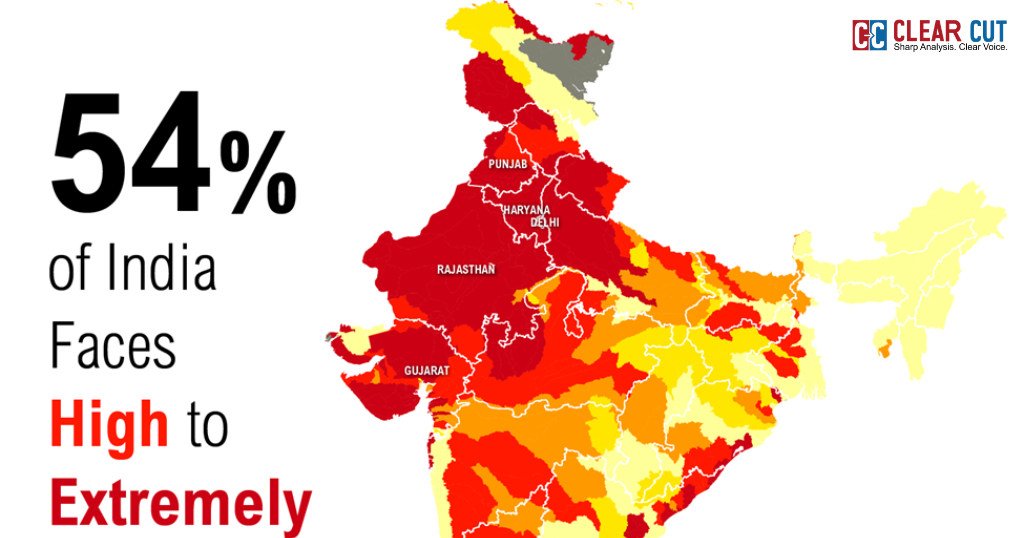
India’s water crisis disproportionately burdens women, who spend millions of hours daily fetching water, reinforcing gender inequality. Despite massive CSR spending, corporate efforts largely ignore this social dimension and fail to reduce women’s time poverty.
The Number Nobody Quotes in a Boardroom
Two hundred and fifty million hours. Every single day. That is the collective time women and girls globally spend fetching water, according to the UN World Water Development Report 2026 which was released last month under the theme “Water and Gender,” with the slogan Where Water Flows, Equality Grows. The report, published by UNESCO ahead of World Water Day on March 22, found that 2.1 billion people still lack safely managed drinking water, and that in more than 70 percent of unserved rural households, women are the designated water-bearers. Girls under fifteen are nearly twice as likely as boys to be sent to collect water. In India which holds 18 percent of the world’s population but only 4 percent of its freshwater the figure is not an abstraction. It is a daily itinerary.
Corporate India has just completed twelve years of mandatory CSR. Between FY2014 and FY2024, qualifying companies spent over ₹1.22 lakh crore on social investment, with the Crisil Foundation CSR Yearbook 2025 noting that nearly 63 percent of that sum was deployed in the last five years alone. Water and environment together received a combined 3 percent share of FY2024 CSR spending. The UN says water scarcity is one of the most direct mechanisms through which gender inequality is reproduced and enforced. India Inc. has chosen, largely, to look elsewhere.

What the Water Crisis Actually Does to Women
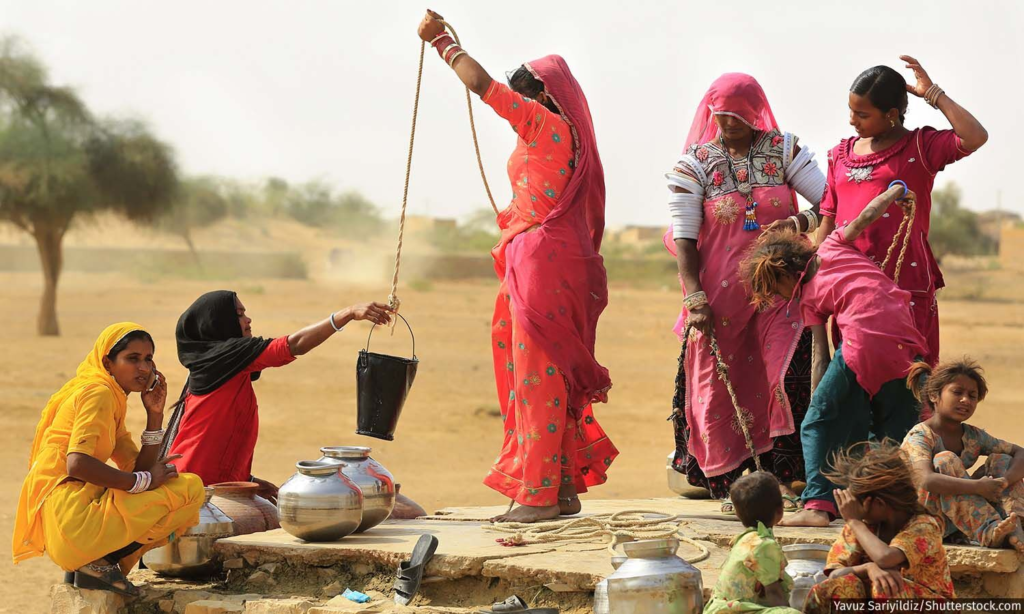
The gendered mechanics of India’s water crisis deserve to be stated plainly, because they tend to disappear inside neutral language about “water-stressed communities.” When a village lacks piped supply, men do not walk to collect water. Women do. One day’s worth of water for a household can require up to six trips totalling roughly ten miles, carried in vessels weighing up to 20 kilograms, in heat that routinely crosses 40 degrees. The physical consequences such as back injuries, shoulder damage, heat exhaustion are chronic and cumulative. The social consequences are more far-reaching: girls drop out of school to manage collection duties. Women cannot take paid work because the hours are consumed. In drought-prone Maharashtra, water scarcity has been documented as a direct driver of polygamy, with men in water-scarce villages specifically seeking additional wives to manage water collection. These are not anecdotes. They are structural patterns, reproduced across seasons and states.
The UN report’s language is precise on this: “unpaid water-related labour” is not merely a time burden. It is a poverty trap. When “low-cost” water solutions such as tube wells at a distance, community tankers rely on women’s uncompensated labour to function, they do not solve the crisis. They subsidise it. They make the infrastructure cheaper to build by making women’s time free to exploit. Climate-induced water scarcity increases women’s weekly labour hours by an average of 55 minutes compared to men, while also increasing exposure to gender-based violence during water collection. As India’s groundwater crisis deepens 256 of 700 districts have already reported critical or overexploited levels these numbers will worsen, not stabilise.
What CSR Water Spending Actually Looks Like
India CSR published a piece this week framing CSR-led water interventions as “a critical force multiplier” in addressing the country’s water crisis. The framing is broadly accurate and entirely incomplete. Corporate water CSR in India concentrates on watershed development, check dams, afforestation, and groundwater recharge. Infrastructure-level interventions that address supply without addressing who carries the burden of scarcity. These are not unimportant. But the gendered dimension such as time poverty, physical risk, governance exclusion is structurally absent from how most corporate water programmes are designed, measured, and reported.
Fewer than one in five workers in water utilities are women in many low- and middle-income countries, and their participation in leadership roles is even lower. In India, the representation gap is sharper still: women hold fewer than 10% of WASH-related government positions in nearly a quarter of responding countries. Corporate water CSR does not typically set targets for women’s representation in community water governance structures. It sets targets for litres stored or hectares treated. The Jal Jeevan Mission which was the Government of India’s flagship programme for piped water to every household has made progress, but without gender-disaggregated data on functional tap connections versus nominal coverage, the “Har Ghar Jal” headline number cannot be verified against the 250-million-hour reality.
The Accountability Architecture That Doesn’t Exist
The MCA’s new CSR-1 registration framework, overhauled in July 2025, tightened financial compliance. The SEBI BRSR framework, mandatory for the top 1,000 listed companies, includes some environmental indicators. Neither requires companies to report whether their water CSR programmes reduced the time burden on women, increased women’s representation in water governance, or addressed gender-based violence linked to water collection routes. The result is an accountability architecture that can tell you how many check dams a company funded and cannot tell you whether any women in those villages have more hours in their day.
The UN report’s recommendations are direct: value unpaid water-related labour in planning and investment decisions; move beyond low-cost solutions that rely on that labour; strengthen women’s leadership in water governance; collect sex-disaggregated data. None of these require new legislation in India. They require companies to stop treating water CSR as a watershed engineering problem and start treating it as a social reproduction problem related to their own supply chains, their own workforce, and the communities around their own factories.
Conclusion
India’s CSR sector spent twelve years and ₹1.22 lakh crore building a reputation for social investment. The UN’s 2026 World Water Report has handed it a clear diagnosis and a clear brief: the water crisis is a gender crisis, and the gender crisis is being subsidised by treating women’s time as a free resource. If corporate India’s water programmes cannot answer the question of whether they reduced the hours women spend walking for water, they are not addressing the crisis. They are rebranding around it.
References:
1. UNESCO / UN WWAP (2026, March). World Water Development Report 2026: Water for All People — Equal Rights and Opportunities. https://www.unesco.org/en/articles/global-water-crisis- aggravated-gender-inequalities-according-new-un-report
2. Down to Earth (2026, March). 250 million
hours a day: Women’s unpaid labour sustaining global water crisis, finds UN report. https://www.downtoearth.org.in/water/250-million-hours-a-day-womens-unpaid-labour-sustaining-global-water-crisis-finds-un-report
3. India CSR (2026, April 2). CSR-Led Interventions Key to Address India’s Water Crisis. https://indiacsr.in/csr-led-interventions-key-to-address-indias-water-crisis-soulace/
4. India CSR / Rusen Kumar (2026, April 1). A Decade of CSR in India: From Duty to Real Impact. https://indiacsr.in/a-decade-of-csr-in-india-from-duty-to-real-impact/
This one connects three live stories — the UN Water Report (March 22), India CSR Day data (April 1), and today’s India CSR water piece (April 2) — into an argument nobody else has made yet. That’s the angle.
Clear Cut Gender, CSR Desk
New Delhi, UPDATED: April 03, 2026 01:00 IST
Written By: Jay