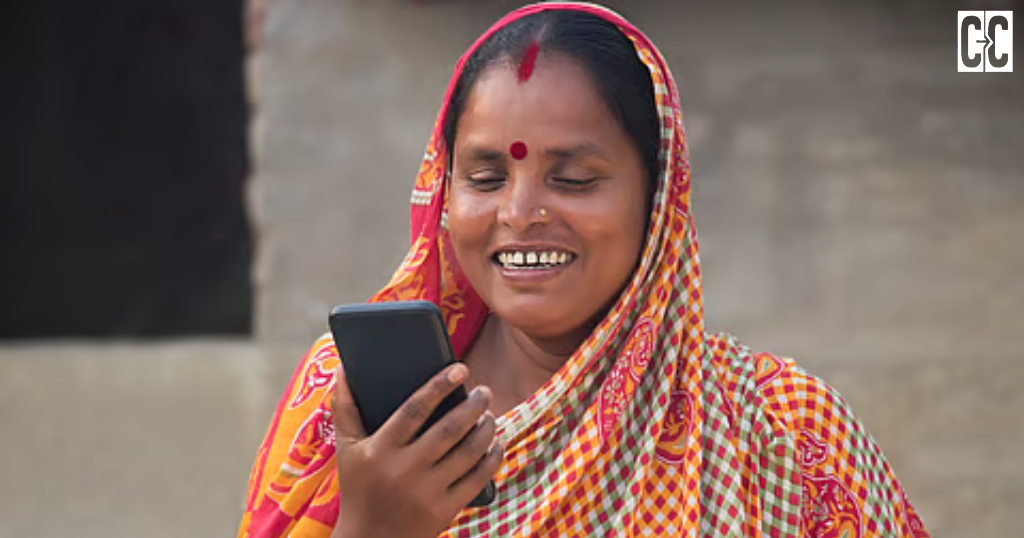
- India’s digital revolution has expanded access to services like UPI, Aadhaar and DigiLocker, but millions still remain digitally excluded.
- Rural location, gender, caste, income and Aadhaar authentication failures continue to create major barriers to internet and welfare access.
- The article argues that true Digital India requires stronger digital literacy, alternative authentication methods and more inclusive welfare systems.
India frequently uses superlatives to describe itself. the biggest democracy. The biggest system for biometric identification. Deloitte predicts that there will be a billion smartphone users in the near future. Paperwork that used to take weeks can now be completed on a phone screen in seconds, thanks to government systems like DigiLocker and UMANG. At the same time, the Unified Payments Interface processes more transactions in a month than most countries see in years. India’s digital revolution is among the century’s most remarkable infrastructure stories, according to the data.
But numbers describe averages, and averages are good at hiding people.
If you look below the headline figures, you’ll see a more complex nation where being “connected” mostly depends on your residence, gender, caste, and whether your fingerprints still match a scan from years ago. The mere construction of infrastructure proved insufficient to bridge India’s digital divide. Increased evidence points to something more disturbing: being on the wrong side of the split is no longer merely inconvenient in a nation where internet access has become the gatekeeper to food, income, healthcare, and education. It might be risky.
The Map That Still Splits in Two
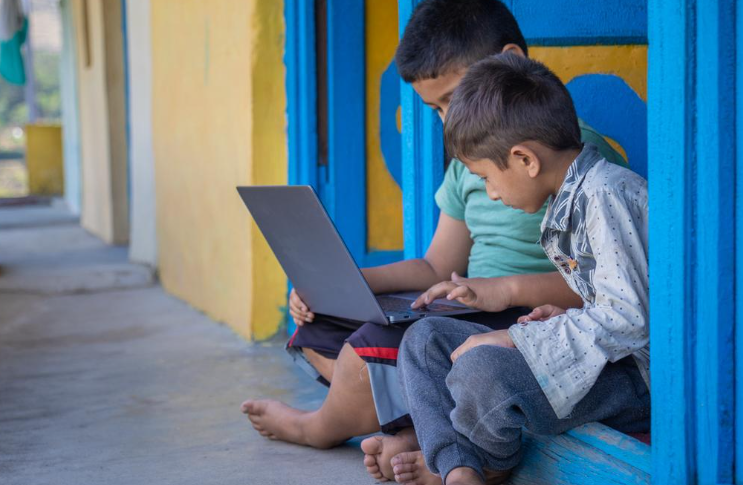
Start with the simplest way to determine who is indeed online. According to regulatory data, the internet penetration rate in India is approximately 58% in rural regions and well over 100% in urban areas (allowing for multiple connections per person). In other words, about two out of five Indians living in rural areas are completely offline. According to household-level studies, there is a roughly three-to-one difference in the likelihood of internet connection between rural and urban families.
There is more to that disparity than just smartphone ownership. It concerns the infrastructure-focused government initiatives that have prioritized internet speeds, fiber penetration, and reliable electricity, but have yet to reach India’s more remote regions fully. Over the past few years, there has been a noticeable improvement in rural connectivity, with hundreds of millions of new rural internet users joining due to government digital literacy initiatives and cheaper bandwidth. However, a persistent structural disparity that hasn’t significantly shrunk has coexisted with growth in absolute numbers.
The Gap Within the Gap
If location were the only factor, the story would be well-known: infrastructure finally meets demand. India’s version of the digital divide is particularly concerning because it extends along other lines that infrastructure expenditure cannot address.
The most striking example is gender. According to data from the National Health Survey, men in rural India are about twice as likely as women to have ever used the internet. According to international surveys, India has the biggest gender gap in digital access of any country examined. An Oxfam analysis attributed approximately half of the global gender digital divide to India alone. This is a startling finding for a nation that is simultaneously promoted as a rising technological superpower.
Rather than being technological, the causes are structural. Researchers point to a familiar cluster of constraints: restrictive social norms that limit how women spend money or whether they’re allowed to own a device at all; lower functional literacy, with national data showing a majority of Indian women haven’t completed ten years of schooling; and a lack of confidence using digital tools that stems directly from having had less exposure to them growing up. Too frequently, both families and researchers interpret a phone in the home as belonging to the men who use it.
Caste compounds the pattern. Data on information and communication technology skills shows deprivation rates above 85% among Scheduled Castes and Scheduled Tribes, markedly higher than among other social groups. Income follows the same gradient. The result isn’t a single digital divide but several, stacked on top of each other, so that a poor, rural, lower-caste woman faces a form of digital exclusion that a rural man from a different community, or an urban woman in the same income bracket, is far less likely to experience.
When the System Itself Becomes the Barrier
Who doesn’t have an internet connection in general isn’t the most significant change in this narrative. It concerns what happens when a nation constructs its entire welfare system on the presumption that all citizens are capable of digital authentication, only to discover that a significant portion of the populace is unable to do so.
For hundreds of millions of individuals, access to health insurance, pensions, rural job guaranties, and subsidized food rations is now supported by India’s biometric identity system, Aadhaar. According to the government’s own accounting, it has significantly reduced fraud and leakage in the provision of benefits. However, its 6.5% authentication failure rate, which has remained largely stable for ten years, translates into a startling monthly toll: an estimated 20 million biometric authentications fail each month, which is more than the combined population of Delhi and Mumbai.
Who fails does not follow a random pattern. Decades of hard labour cause the fingerprints of manual laborers to deteriorate. The iris patterns of older adults change as they age. According to one study of migrant workers in Delhi, a startling percentage of women encountered identification problems, particularly during hospital visits connected to pregnancy, when swelling and dehydration alter fingerprint readings at the most critical time for medical attention. Parliamentary committees have heard first-hand testimony that these shortcomings are preventing families from receiving subsidized food and labourers from earning pay from rural employment not just conceptually, but as proven, ongoing suffering.
The outcomes have proven fatal in the most extreme and well-documented cases. Investigations into hunger-related deaths in India have repeatedly connected some of these deaths to ration cards that were revoked or restricted because of Aadhaar-linking problems; in these cases, food was withheld because of a bureaucratic error rather than a true ineligibility. Researchers examining these systems claim that the fundamental design flaw is an inversion of what welfare technology is supposed to do: a system intended to prevent leaks has, in many cases, become the leak itself, and the people who fall through it are disproportionately the ones the system was meant to protect.
This is the term for digital exclusion currently used in India; it is more accurate and unsettling. The primary factor is no longer who possesses a smartphone. It is about what happens to people who have to connect to digital systems to get what they are legally entitled to, only to discover that a weak mobile service at a ration shop or a fingerprint scanner delays their next meal.
What Closing the Gap Would Actually Require?
Few serious detractors argue against digital public infrastructure, and none of this is an argument against it. For hundreds of millions of people, UPI, DigiLocker, and India’s broader digital payments ecosystem have significantly improved convenience and reduced corruption. The nation is currently debating whether inclusion has been treated as a design requirement or as an afterthought to be fixed later, rather than whether to develop digital systems.
The solutions proposed by scholars and decision-makers are not novel. Incorporating trustworthy non-biometric backup options into welfare delivery is one such approach, rather than viewing a fingerprint match as the sole legitimate means of verifying an individual’s identity. Rather than relying solely on device availability to address access, they include addressing the unique literacy and confidence barriers that prevent rural women from using the internet. Giving local officials the power to fix authentication issues immediately, rather than sending them through state-level procedures that can take months, is one of them. Additionally, they contain something even more fundamental: viewing the millions of authentication failures that occur each month as a policy signal that needs to be addressed rather than as ordinary technical noise.
By nearly every international standard, India’s digital transformation is a true accomplishment. But the country’s own data on who remains offline, who remains excluded, and who has been actively pushed out by the very systems designed to serve them, paints a more detailed narrative than the headline numbers suggest. A billion smartphones is a remarkable accomplishment. It’s still very much up in the air whether or not everyone with one, or those without one, can truly see what’s on the other side of the screen.
Clear Cut Education, Livelihood, Research Desk
New Delhi, UPDATED: August 12, 2026: 10:00 IST
Written By: Harsh Gautam
Designation: Senior Research Associate – MLE at Devinsights