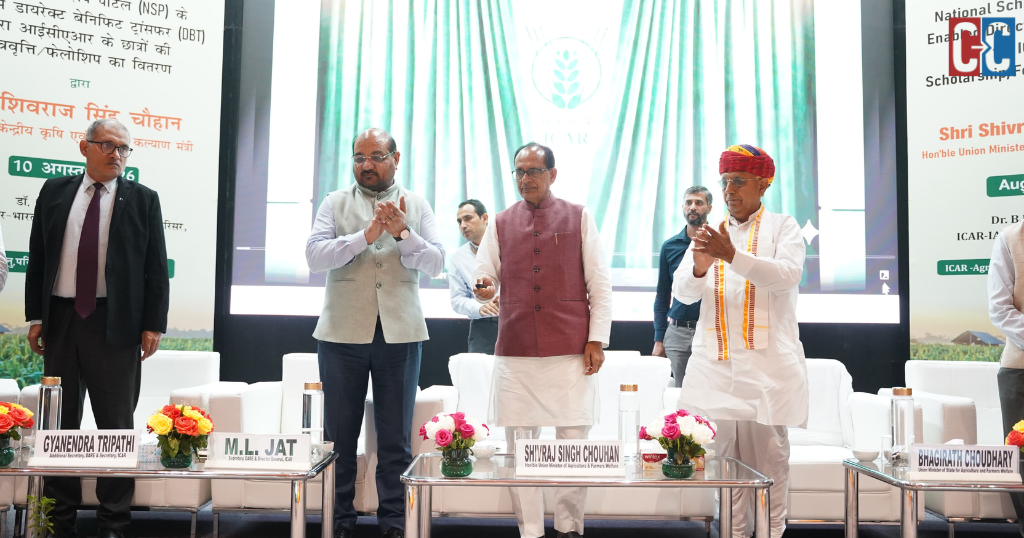
- India has released ₹21.35 crore in scholarships to over 6,000 agricultural students through the National Scholarship Portal’s DBT system.
- While DBT can make payments faster and more transparent, Aadhaar linking, poor internet access and banking gaps may exclude eligible students.
- The key challenge is ensuring that faster scholarship delivery also improves equity across caste, gender and regions.
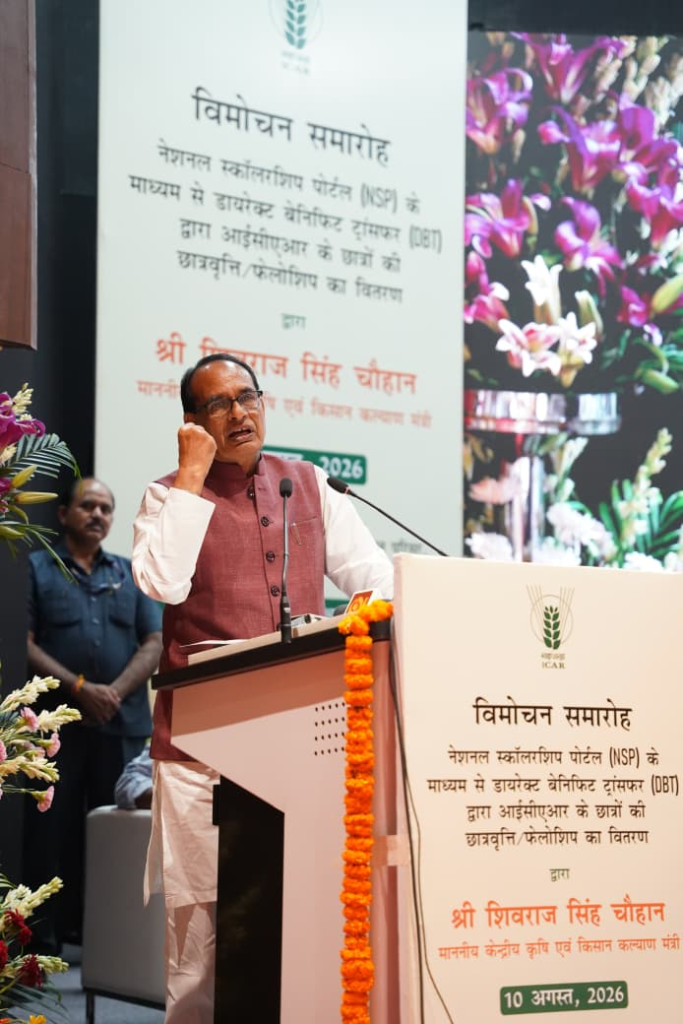
On August 10, Union Agriculture Minister Shivraj Singh Chouhan stood at ICAR-IARI, Pusa, and released ₹21.35 crore to more than 6,000 agricultural students in a single sweep. The money moved through the National Scholarship Portal’s Direct Benefit Transfer mechanism, and students under various ICAR scholarship and fellowship schemes are now to receive their monthly installments, credited directly to Aadhaar-seeded bank accounts instead of the paper trail that has long defined Indian scholarship disbursal. Chouhan assured the audience that timely examinations, admissions, and payments were in themselves the real test of how effectively a system functioned, and was primarily looking to make a more efficient and transparent transition.
Run the numbers, and the scale comes into focus. ₹21.35 crore across “more than 6,000” recipients works out to under ₹35,600 per student on average — a modest sum against a far larger shortfall. The World Bank estimates that India needs roughly 10 lakh agriculture graduates to meet the sector’s needs, yet it currently trains barely half that number. Enrolment across the 74 agricultural universities under the World Bank–ICAR National Agricultural Higher Education Project more than doubled between 2017 and 2022, from over 25,000 to over 54,000 students, while the female share edged up from 43.6% to 45.2% in the same period — real movement, but from a low base, concentrated in institutions with the resources to modernise fastest.
A faster pipe, not a wider one
The premise of DBT is that money moves more quickly and with less leakage when cut off from middlemen, a premise supported by extensive literature in the Indian welfare context. The one they do not support as effectively is on who ensures the eligible student can even be captured in the first place. Economist Reetika Khera, who has for more than a decade examined how welfare is delivered using Aadhaar, has frequently asserted that biometrics and seeding have served as an additional vector of exclusion from the very groups such programs claim to aim to include.
According to a recent academic study based on data from NABARD and across the country, 27 percent of rural Indians were financially illiterate, and their scholarships were stalled predominantly due to a lack of Aadhaar linking, limited internet connectivity, and the absence of a local bank.
Adding a gender layer to this, fieldwork in semi-urban Rajasthan indicates that even when the bank account is in a woman’s name, obtaining cash usually requires help from a male family member.
The same portal, a cautionary tale
The NSP serves as an almost live example of something that a payment jump cannot replace. Scholarships for minority students via the same NSP have been on hold since 2022-23, following the discovery of hundreds of ghost and bogus institutions sucking the money. The sum of ₹3,400 crore allocated for such students, according to a parliamentary standing committee, has reportedly been lying underutilized since then because verification and targeting remained inoperative, and the mechanisms to redress grievances also remained in an overstrained, largely digital-immune public administration, which was supposed to be bypassed through digitization.
Elsewhere, equity is designed in, not bolted on
Another bunch of systems tries to build equity into the architecture of support, not making equity a by-product of speedy disbursement. In the US, for example, its “1890 Scholarships Program” is a cash (i.e., government support) flow into historic “Black land-grant and tribal” agricultural institutions. Instead of feeding people cash, they’re building institutional capacity in agricultural colleges.
Meanwhile, the Brazilian “Bolsa Família”-probably the world’s best-understood system of unconditional cash transfer-leaves “up to 20% of the tenth poorest Brazilians out of the system, two decades later”: so, they know that the problem is a feature of large means-tested transfer systems everywhere, and not just an artifact of India’s “DBT push”.
In any case, the Indian agricultural education system already includes some targeting (ICAR dedicates 7.5% of its undergraduate places to Scheduled Tribe students, for example). Still, the delivery of scholarships was approached purely as a logistical issue. Faster disbursement will be a welcome relief for those who received money today. The extent to which NSP-DBT proves to be a genuine equity tool remains to be seen. A question posed by the launch event, though not answered: how many eligible students never appeared on the beneficiary list at all, and whether ICAR monitors that gap (by caste, gender, and region) as carefully as its own gender strategy states it intends to.
Clear Cut Education Desk
New Delhi, UPDATED: August 13, 2026: 18:00 IST
Written By: Yatharth Pathak