
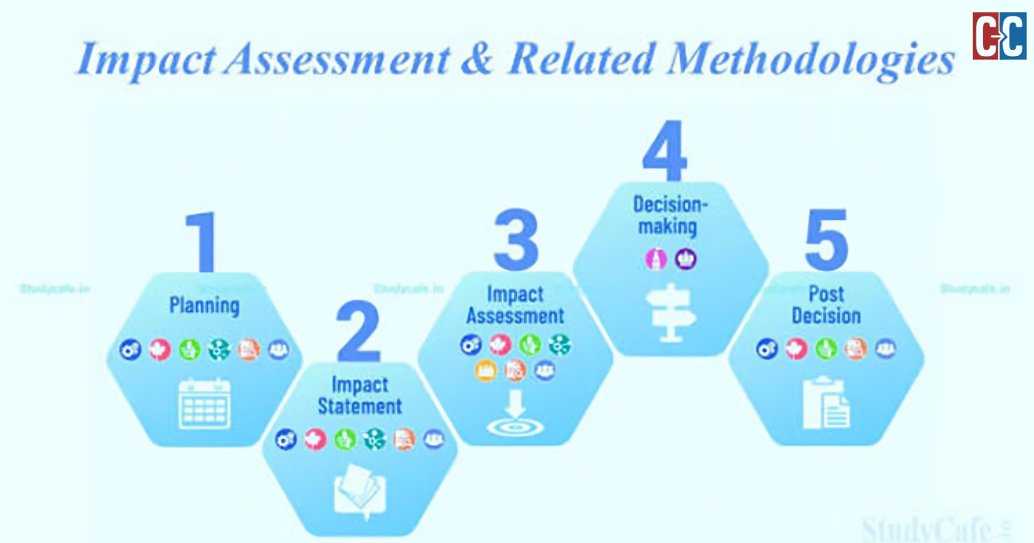
India’s CSR impact assessment rules require eligible companies to independently assess qualifying CSR projects, but disclosure practices remain inconsistent. A KPMG India review of Nifty 250 companies highlights gaps in assessment methodology, sample-size reporting and public access to detailed studies. Standardised reporting of baselines, comparison groups and outcomes could improve transparency and comparability in CSR impact measurement.
What the rule requires
India’s CSR impact assessment rule is narrowly scoped. A company must commission an independent assessment only if its average CSR obligation over the three preceding years was ₹10 crore or more. The rule then applies to projects with outlays of ₹1 crore or more that finished at least a year earlier. The report is presented to the board and annexed to the annual CSR report (Mullick, 2021). The rule came through an amendment notified in January 2021.
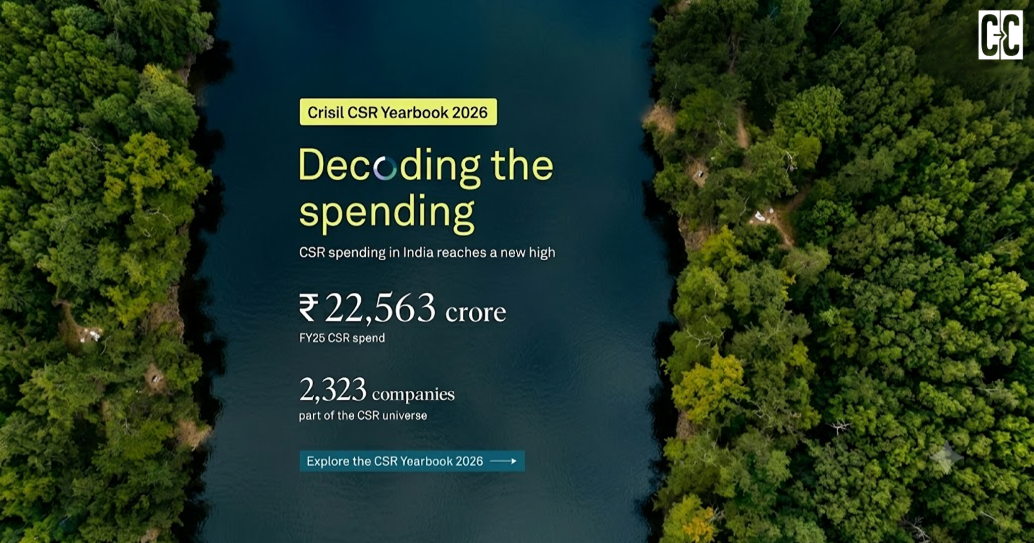
The stakes are large. Sattva’s analysis of FY2024 covered ₹30,086 crore of CSR spending across 4,149 companies (IndiaSpend, 2025).
What KPMG found
KPMG in India reviewed impact reporting by Nifty 250 companies and published its findings in December 2024. Of the 250 companies, 114 (46%) were eligible to carry out impact assessments. Of those, 91 (80%) disclosed information on assessments in their annual reports. Fifty-one (45%) gave access to the detailed study (KPMG India, 2024; India CSR, 2024). KPMG’s web summary gives a different figure for the last group, but its report text and press coverage give 51.
Several reports have reported on the core principles of the study. 94% of the companies shared the framework used, while 59% shared the demographic profile of the respondents. However, the methodology is weak. Only 35% of the companies shared primary, secondary and institutional stakeholders. KPMG reports that 67% shared the sample size, but only 18% of companies explained the statistical method used to determine the sample size (KPMG India, 2024; India CSR, 2024).
These are findings about disclosure. KPMG reviewed what companies reported. It did not test whether the assessments’ conclusions were correct.
Inputs, outputs, outcomes and impact
A funder can report an input, such as money spent. It can report an output, such as classrooms built or people trained. An outcome is a change in people’s lives, such as better reading or a higher income. Impact is narrower. It asks whether the change would have happened without the programme. A beneficiary count reports an output. It cannot show impact.
Comparison is another differentiator between the two. The Haryana literacy bond, for example, compared the reading speeds of intervention and non-intervention schools (Parekh & Iyer, 2026). Moreover, a report that interviews participants only after programme implementation may reflect satisfaction, but cannot take a stand on outcomes for non-participants.
Some assessors are candid about this. A company-commissioned study of eight science start-ups stated plainly that it examined activities rather than outcomes and that it could not attribute results because the grants were partial (Goodera, n.d.). That candour helps a reader judge what the study can bear.
What a public report can show
Some companies publish their assessments. Oil India Limited, for example, posted a third-party evaluation of 11 CSR projects from FY2022-23. The scope covered socio-economic impact, effectiveness, relevance and sustainability, and sample sizes were set by the number of beneficiaries in each project (Oil India Limited, 2024).
A reader can still check any of them against five questions. Was there a baseline? Was there a comparison group? How was the sample chosen? Were beneficiaries, implementers and local officials all heard? Was anyone followed up with after the first year?
The threshold also leaves many companies outside the scope of the rule. KPMG found that 114 of 250 large companies were eligible. Because the trigger is an average CSR obligation of ₹10 crore, a company with a ₹5 crore obligation has no duty to commission an assessment, even if one of its projects costs more than ₹1 crore (Mullick, 2021). Public visibility of impact, therefore, depends on a company’s size as much as on a project.
The rule created a market for assessments. The next step is a market for comparable ones. If companies reported sample, baseline, and comparison groups in a standard table, 51 separate studies could be consolidated into a single dataset. Would a regulator ask for that?
Clear Cut CSR, Research Desk
New Delhi, UPDATED: September 18, 2026 18:00 IST
Written By: Tanmay J. Urs