

Students across India are protesting against teacher shortages, poor school infrastructure, unsafe conditions and educational inequality. Dr Deepti Priya Mehrotra explores the struggles of marginalised students, the legacy of alternative education and the urgent need to rethink India’s school education system.
School students today are raising basic issues, calling for sufficient teachers, good teaching, infrastructure, accessibility, safety and dignity. Pain and rage are evident in an unprecedented wave of protests, searing slogans and reasoned argument. They understand, perhaps from Gen Zee’s Jantar Mantar protest (June 20 to July 25), that collective voices, clearly articulating legitimate demands, can yield results. Most of these Gen Alpha protestors hail from marginalised sections of society.
Hope versus Hopelessness
Children’s collective voices, refusing to accept indignity and neglect, are beacons of light in a bleak landscape. Students of Eklavya Model Residential School (EMRS), Tamiya, Madhya Pradesh, challenge officials: “Will you eat such worm-infested food?” Ironically, EMRS schools are run by the Tribal Welfare Department. In EMRS, Khatali, Uttarakhand: “No electricity, no benches. How will we study?”
Students of Mata Shabri Avasiya Kanya Shiksha Parisar, Nisarpur, Dhar, MP, walk out at night to the police station: ‘We don’t get enough food! Fifty beds for 140 students! The warden scolds us. Are we animals to be treated thus?!” In Gaya, Bihar, Simuara Middle School students walk 4 km to the sub-divisional office, demanding proper food, water, fans, and toilets. Schoolchildren in Alwar ask an official: “If your children studied here, would you have the same facilities?”
In Sarvodaya Inter-college, Fatehpur, UP, 1500 students stage dharna, demand subject teachers, drinking water, fans, and action against their abusive Principal; they do not budge until the District Magistrate comes to meet them. In Jalore, Rajasthan, students lock their school and stage dharna until officials arrive. In Azamgarh, UP, students say: “Bina chemistry teacher ke hamara bhavishya acid ki tarah jal raha hai!” (Our future is burning like acid without a chemistry teacher!). In Durg, MP, students of Swami Atmanand Hindi Utkrisht Vidyalaya block the road, demanding subject teachers. The protests bear fruit: teachers are appointed, school repairs initiated.
In Baghera village, Kekri, Rajasthan, and Dahanu, Maharashtra, students allege sexual harassment and demand suspension of culpable teachers. Students of Kanya Vidyalaya, Chhindwara, protest teachers’ abuse, beatings, and forced domestic labour. Students of Jayaprakash Narayan Vidyalaya, Lucknow, run 8 kilometres, form a human chain, blocking the highway. They demand teachers, dignified treatment, and proper infrastructure. Only after Social Welfare Department officials promise resolution, do they open the blockade. In Jodhavas, Thanagazi, Rajasthan, students sit-in for days, holding placards: ‘Teacher Lao, School Bachao’, ‘School Banao Bhavishya Bachao’ (Bring teachers, save schools. Make schools, protect futures). Classrooms leak, a roof has partially collapsed, there is no playground; “Teachers beat us. What right do they have to beat us?”
In Sehore, MP, schoolchildren demonstrate against privatisation of education, and closure of schools. In Ujjain, schoolgirls in large numbers protest at the DM’s office against impending school closure. They speak up: “Our parents are labourers. We cannot travel to far-off schools! Most of us will be forced to leave studies. Are only the children of the rich to become doctors and engineers?”
In Gugrapur PM SHRI School, Kannauj, students shout in unison, ‘Headmaster hataya jaye!’ He is abusive, casteist; teachers don’t teach. PM SHRI (Pradhan Mantri Schools for Rising India) schools are supposedly exemplars of ‘smart’, ‘green’ schools! But PM SHRI School Chorhata, Satna, MP, is flooded; students block traffic, demand a functional school, shouting: “Hum apna adhikar mangte, nahin kisi se bheekh mangte!”(We demand our rights, not charity!)
From Kasturba Gandhi Balika Vidyalaya (KGBV), Koderma, Jharkhand, students walk 4 kms, surround the block education office, protest mismanagement and poor infrastructure. KGBVs are residential schools for girls from SC, ST, OBC, minority, and BPL (Below Poverty Line) households. In Panchli village, Meerut, students give a memo to the DM, demanding a road: “We fear snakebites due to waterlogging.” Students of Delhi’s Sonia Vihar too, demand a safe approach road to school.
In Jaipur, hearing and speech-impaired students at Seth Anandilal Poddar Badhir School demonstrate against acute water shortage, broken toilets, heaps of garbage, unsafe buildings and transport. Their silent, highly expressive protest leads to removal of the principal, and promises to fulfil other demands. In NEIPVD, Dehradun, visually impaired students protest, for access to books, and functional infrastructure.
In Mahoba, UP, students demand a road to school; police removes them forcibly. Students of Jamrehi, Hamirpur, UP, walk 5 km, many of them barefoot. They sit-in outside the DM’s office. Policemen wield lathis. Undeterred, the 8-12 yearold children chant: “Hamari mangen poori karo!” (Fulfil our demands!). The road to school is potholed and waterlogged. Finally, official agree. Clearly students’ demands are legitimate and justified. Some demands are being met. However, they are vulnerable to further harassment, once media attention fades. Gen Zee’s ‘School Theek Karo’ campaign too is already facing violence. Although they are harbingers of change, we can hardly leave young students to shoulder the entire responsibility for school reform.
Schools At the Margins
Government schools account for the majority of students from under-priveleged backgrounds. Around twothird SC and ST students are in government schools, compared to approximately half OBC, and onethird General category students. Minorities comprise 21% of students enrolled in government schools. At Grade 3, students from marginalised sections perform somewhat on par with General category students. But by Class 8, there is a performance gap.
By Class 12, 53% students have dropped out. Dropout and failure rates are higher for marginalised students. In the latest Class 12 CBSE exams, 15% — that is 2.61 lakh students –failed.
Social composition of teachers differs significantly from that of students. Over 40% teachers are from the General category, 38% OBC, only 13% SC, and 8% ST (UDISE+ 2026). Teacher attitudes, including casteist/ communal slurs, are often a barrier to students’ progress. And well over 1 lakh schools are single-teacher schools—all in rural, remote, tribal areas. Some 94,000 government schools closed down between 2014-15 and 2024-25. Enrolment is shrinking, most sharply for SC students. The education sector is under-funded, at 4.3% of GDP, substantially below the 6% promised by NEP2020. Official figures show 30% schools lack computer facilities, 19% have no playground, and 5% no electricity! A CAG audit found 40% toilets non-existent, incomplete or never-used. The PM Poshan (midday meal) scheme persists with chronic poor hygiene, inadequate nutrition and instances of caste-based discrimination.
Looking Back, Looking Ahead
What has led to this anomalous situation? Beyond corruption, bureaucratic glitches, and Jotiba Phule, Fatima Sheikh, Rokeyalack of political will, are there deeper problems? What all needs to change?
Teacher-activist-thinkers such as Savitribai Phule, Jotiba Phule, Fatima Sheikh, Rokeya Sakhawat, Pandita Ramabai, Bhimrao Ambedkar conceived of education as integral to social transformation. In 1855, Mukta Salve, an 11- year old in Savitribai’s school, wrote a searing essay on the plight of Dalits, and importance of education: “… the medicine of knowledge will cure and heal you. It will stop your exploitation. People who treat you like animals, will not dare
to anymore.” Ambedkar exhorted oppressed people to “educate, agitate, organise”, to transform self and society.
Scores of Nai Taleem schools were set up during the 1930s- 40s, focused on self-reliance (svavalamban) through meaningful work. Head, heart and hands educated in tandem, via crafts such as spinning, weaving, agriculture, pottery, along with art, music and academics. Gandhi spoke of education as “drawing out the best in child and man.” Abhay Bang describes in his essay ‘My Magical School’ the enjoyable learning in Sevagram, within an ethos of vibrant, warm relationships. He excelled at medical school because of this early grounding. Youngsters imbued with the spirit and skills for self-reliance could build a different society. Were each individual able to produce goods essential for life, they would not need to depend on external job markets. Everyone could be usefully employed, retaining independence, interacting and exchanging resources where needed. Multi-national conglomerates, vast empires of capitalism, would crumble in the face of decentralised production fulfilling everyone’s needs, and wisdom to appreciate limits to consumption. To date, schools such as Anand Niketan in Sevagram, and Lakshmi Ashram in Kausani, pursue such an approach. At Lakshmi Ashram, students learn skills to sustain, protect, and improve life in the hills. Staff, students, and alumni like Vimla Bahuguna, are torch-bearers, leading environmental movements, practitioners of sustainability with global relevance. Post-independence, national policymakers opted for the academics-heavy ‘factory’ system of schooling, rather than Nai Taleem. Educationist E.W. Aryanayakam observed (in 1959): “A state which does not accept the principles of social and economic equality for its people, and equality of educational opportunity for its children, cannot carry out a programme of Nai Taleem. The principle of education through productive work cannot be practised with success because as a nation we think that education loses caste if it comes into contact with productive manual labour.”
The system we adopted runs parallel schools — for the masses, and for the classes. They follow similar rigid curriculum, competition and exams. Yet they are weighted against the under-privileged, and reproduce inequalities. Students are trained basically to follow instructions, become obedient subjects, fit into slots — white-collar jobs for the elite, bluecollar for the underdogs. Children are forcibly drawn away from self-reliant agriculture, forestry, dairy-farming, animal husbandry, crafts and local livelihood options. Schools de-skill entire populations, while claiming to prepare youngsters for viable careers. In fact, employment in the modern world is scarce, and rapidly shrinking. A small proportion will ‘succeed’, while the vast majority is doomed to fail.
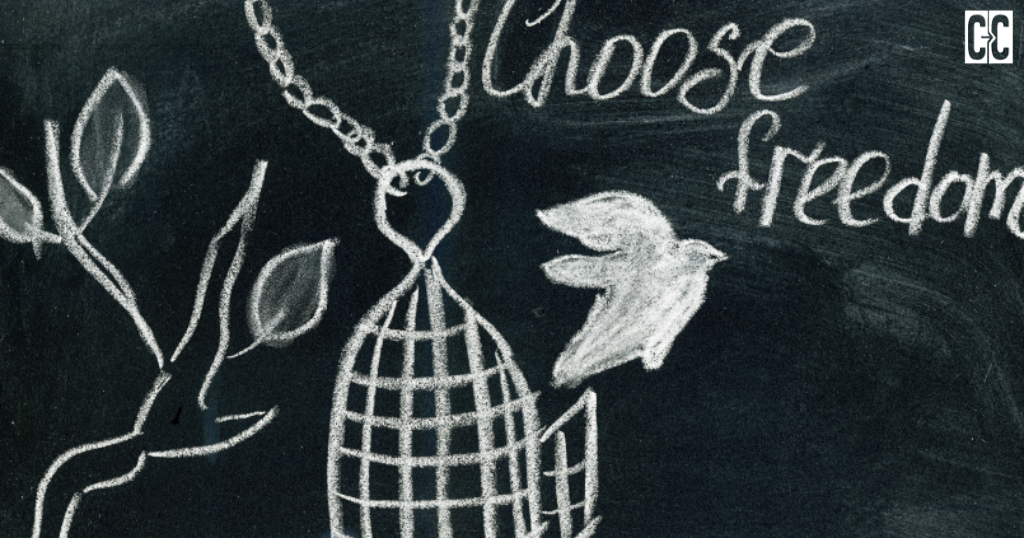
Classrooms or Cages? — Alternative Imaginaries
We need fundamental change in our very conception of schools, and education. Tagore found school unbearable: “All of a sudden I found my world vanishing from around me, giving place to wooden benches and straight walls.” He later started a school where children freely explored nature, music, art, and life. To date the school, Patha Bhavan, exists in Santiniketan, classes sometimes still held under trees. Tarabai Modak and Gijubhai, in the 1920s, brought play into the centre of learning. Tarabai later moved to a remote tribal area in Maharashtra, and set up centres where small children learned creatively, in a caring atmosphere. Rama Sastry and B. Ramdas set up Vidyodaya in Gudalur in the 1990s, today a vibrant space for adivasi children, run by adivasi communities. Students remain rooted in their culture, while enabled to navigate the external world. Tejgadh Adivasi Academy, Gujarat, has encouraged local youngsters to run schools with curriculum tuned to local lifestyles, while meeting a changing world. Outstanding schools exist across the country—such as Adharshila in MP, Kanavu in Wayanad, Rishi Vanam in Chitoor, Marudham Farm School in Thiruvanamalai, Tibetan undamentalVillage School in Dharamsala, Auro-Mira in Kechla (Odissa), Mirambika in Delhi, Muktashala in Dahanu, SECMOL in Ladakh, Shloka Waldorf School in Hyderabad, Yakai Nature School in Imphal, Rajghat Besant School in Banaras. Much can be learnt from such ‘alternative’ schools, about relevant, sound education. Instead, the wider system continues to train children with outdated curriculum and heavy-handed methods of control and discipline.
Philosopher-educationist Jiddu Krishnamurti wrote of ‘intelligent revolt’ – where the intent is fundamental transformation, rather than mere reaction. Intelligence may be awakened if children are allowed, encouraged, to think for themselves, freely enquire, explore, investigate, and act. We smother that awakening if we tell them what to think and how to act. When young people look with their own eyes, question, rebel, revolt, they journey into the unknown, reimagine, reinvent — perhaps towards a better future, a better world.
About the Author:
Dr Deepti Priya Mehrotra is a political scientist, teacher, and consultant with specialization in gender, education and social issues. She writes in English and Hindi, has authored several books including acclaimed biographies of Irom Sharmila, Gulab Bai, stories of single mothers, and a history of street theatre in India.
Clear Cut Education Desk
New Delhi, UPDATED: October 23, 2026 18:00 IST
Written By: Dr. Deepti Priya Mehrotra