
India’s para-athletes deserve recognition for their achievements, but disability inclusion must extend beyond sporting events. The article examines persistent barriers in education, accessibility and employment, reviews India’s disability rights framework, and argues that inclusive development requires consistent action in schools, workplaces and communities.
India has good reason to celebrate.
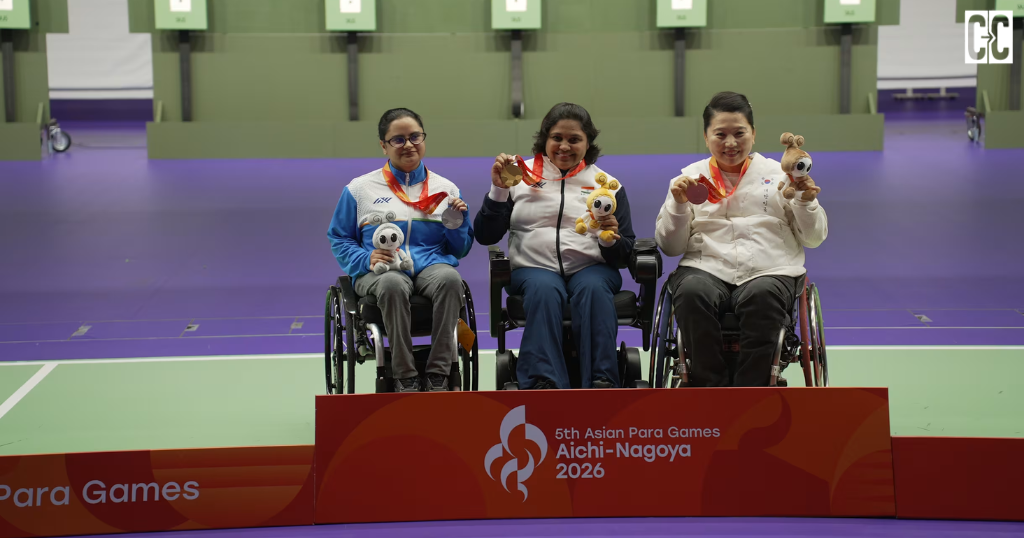
At the Asian Para Games 2026 in Aichi-Nagoya, Indian athletes are winning medals across athletics, shooting, archery and other disciplines. Mona Agarwal defeated Paralympic champion Avani Lekhara for shooting gold. Para-athletes have produced podium sweeps, Games records and performances that have pushed India high up the medal table. The tally is still rising.
For a few days, para-athletes are on television screens. Their photographs fill newspapers. Social media celebrates their determination. Ministers congratulate them.
All of this is deserved.
But there is an uncomfortable question: what happens to our conversation on disability when the Games end?
Disability cannot be a seasonal conversation
Our engagement with disability is often selective.
Public attention to disability tends to rise around major para-sport events or observance days.
But once those moments pass, the conversation around accessibility, education, employment and inclusion often fades with them.
Then disability recedes from public conversation.
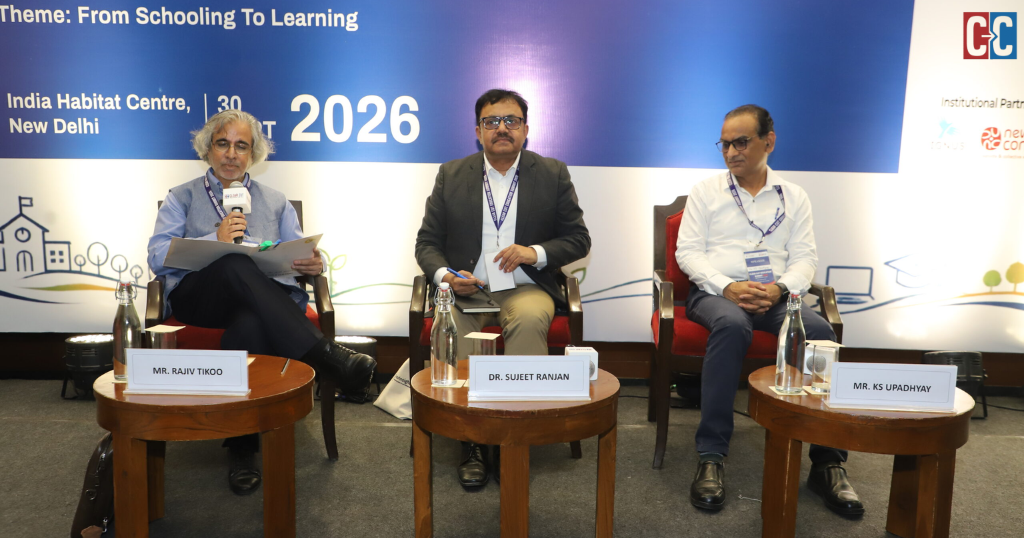
This point came up sharply at the Clear Cut Education Summit 2026 during the session Leaving No Child Behind – Equity, Inclusion and Foundational Learning. Disability rights advocate Nipun Malhotra spoke, in essence, about how disability receives greater public attention around events such as the Paralympics, while the everyday barriers faced by persons with disabilities remain far less visible.
One of his observations during the discussion captured the problem particularly well:
“Accommodations are not provided when disability is invisible.”
The discussion went beyond ramps and wheelchairs. It highlighted intellectual, social and attitudinal barriers, and the particular difficulty faced by people whose disabilities are not immediately apparent.
That distinction matters. Disability is not merely about an individual’s physical or intellectual condition. Very often, it is the environment around that person that determines whether he or she can participate.
The numbers should make us uncomfortable
India’s official disability numbers themselves deserve attention.
The 2011 Census counted 2.68 crore persons with disabilities, representing 2.21% of India’s population. More than a decade later, this remains one of the most commonly cited official population estimates, even though the Rights of Persons with Disabilities Act, 2016 subsequently expanded recognised disabilities from seven to 21.
The National Sample Survey’s 76th Round on Persons with Disabilities, conducted in 2018, provides a more disturbing picture of opportunity.
Employment shows an equally stark gap. Among persons with disabilities aged 15 and above, the labour-force participation rate was only 23.8%, while the worker-population ratio was 22.8%.
These are not merely disability statistics. They represent lost education, income, independence and human potential.
Getting into school is only the first barrier
But physical accessibility remains uneven.
Of India’s roughly 14.7 lakh schools, around 8.08 lakh reported ramps with handrails—about 55%. Only around 5.23 lakh schools, or 36%, reported toilets for Children With Special Needs.
And infrastructure is only one layer.
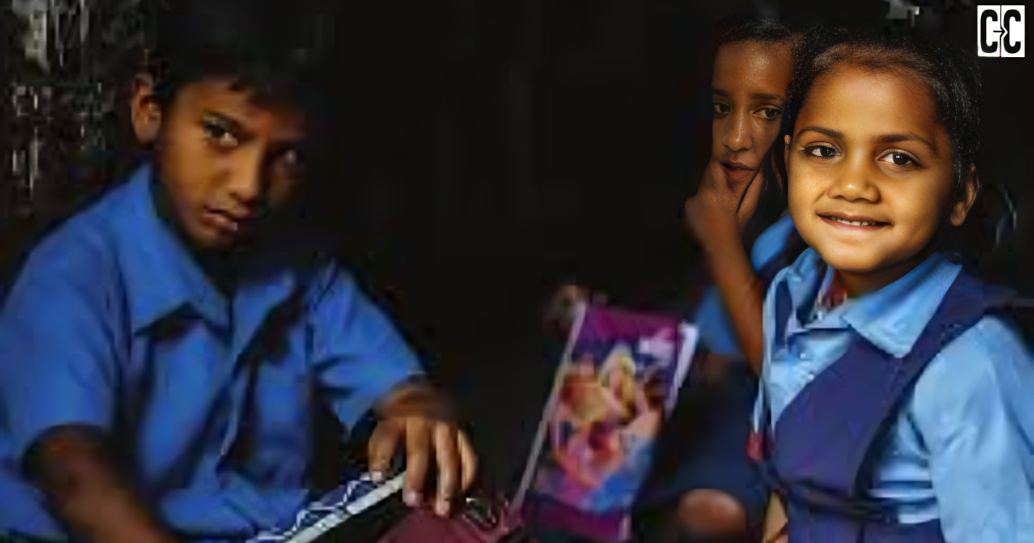
A ramp cannot help a child with dyslexia if the examination system cannot accommodate her. A wheelchair-accessible classroom does little if teaching materials are inaccessible to a visually impaired child. Enrolment does not equal inclusion if a child cannot participate, learn or progress.
The same barriers follow people into universities and workplaces.
Even sport begins long before the podium
The medals from Aichi-Nagoya show what becomes possible when talent meets opportunity.
But reaching that stage requires identification, equipment, coaching, accessible facilities, travel, classification and sustained family and institutional support. For every para-athlete receiving national attention, there are many children with disabilities for whom simply reaching a playground can be difficult.
Government intervention in para-sport has expanded. Under Khelo India, 1,068 para-athletes participated in the 2023 Khelo India Para Games and 1,233 participated in the 2025 edition.
That is important progress. But the real test is whether the pathway begins in ordinary schools and communities—not only after exceptional talent has somehow survived the barriers.
The policy architecture exists
India is not starting from zero.
The Rights of Persons with Disabilities Act, 2016 created a stronger rights-based framework. It recognises 21 disabilities, provides 5% reservation in government and government-aided higher educational institutions for persons with benchmark disabilities, and mandates 4% reservation in government employment.
The Accessible India Campaign addresses accessibility across buildings, transportation and information and communication systems. New accessibility standards have also been issued for schools and higher-education institutions.
The UDID programme is creating a national disability identification system; its portal reported more than 1.43 crore disability certificates/UDID records generated by October 18, 2026.
And PM-DAKSH-DEPwD connects persons with disabilities with skill training and employment opportunities, alongside programmes for assistive devices, scholarships and rehabilitation.
The challenge, therefore, is increasingly one of implementation and everyday inclusion.
Viksit Bharat cannot leave disability behind
The Government’s Viksit Bharat@2047 vision speaks of an inclusive and empowered India. April 2026, the Ministry of Social Justice and Empowerment explicitly placed accessibility, disability certification and empowerment within its roadmap towards Viksit Bharat.
That connection is fundamental.
A developed India cannot be measured only by GDP, highways, digital infrastructure or Olympic medals. It must also be measured by whether a child with a disability can enter a neighbourhood school, whether a graduate can compete fairly for a job, whether public transport can be used independently, and whether sport is accessible before someone becomes a champion.
Our para-athletes deserve celebration.
But perhaps the greatest tribute to them would be to ensure that disability remains part of India’s conversation even after the medals have been counted and the stadium lights have gone out.
Clear Cut Child Protection, Education Desk
New Delhi, UPDATED: October 21, 2026 16:10 IST
Written By: Paresh Kumar
[The Author serves as the managing editor and the CEO of DevInsights]