Mobis India Foundation has distributed 60 customised wheelchairs across West Bengal under its ₹6.3 crore Accessibility & Freedom programme, implemented in partnership with NeoMotion. The initiative aims to improve mobility and independence, but its long-term impact on education, employment and social participation remains to be measured.
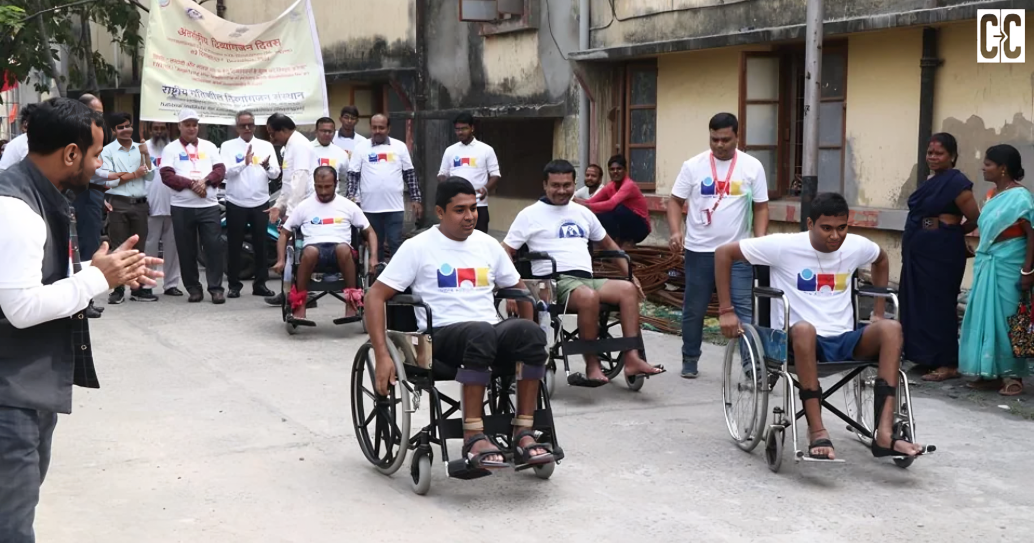
On 13 October, news reports said Mobis India Foundation had completed the West Bengal leg of a nationwide wheelchair programme. The final handover took place at the National Institute for Locomotor Disabilities (Divyangjan) in Kolkata, where 32 people received devices. Another 28 had received theirs earlier in Siliguri, which brought the state total to 60.
What the programme provides
The programme titled “Accessibility & Freedom”, is a ₹6.3 crore initiative of the CSR arm of Hyundai Mobis in India. It is implemented with NeoMotion, an assistive technology company incubated at IIT Madras, under a memorandum of understanding announced in March 2026. NeoMotion calls it its largest mobility initiative to date. In all, 600 devices are planned for eight states and union territories. West Bengal’s allocation of 60 matches those of Delhi, Haryana, Madhya Pradesh and Maharashtra. Tamil Nadu is allotted 120, and Telangana and Andhra Pradesh 90 each.
Simple division puts the average outlay at about ₹1.05 lakh per recipient. The announcements do not say how the budget is split between devices, assessment camps, training and administration, so that figure is only an average.
Each recipient receives two products. The NeoFly is a wheelchair made to the user’s measurements after a clinical assessment. The NeoBolt is a clip-on motor that converts the chair into a powered vehicle for outdoor travel. The organisers say the chair offers 18 customisation options and that the motor reaches 25 km/h with a range of up to 50 km on a charge. In Tamil Nadu, where the first 50 devices were handed over at the Chengalpattu collectorate, beneficiaries were assessed at several camps where their backgrounds were verified and their measurements taken. Selection criteria beyond that were not published. The technical specifications come from the programme’s own announcements, and no independent test of them was identified in the sources examined.
Why fit is the selling point
The organisers present customisation as the alternative to a one-size-fits-all approach. They argue that posture, fit and the ability to travel farther with each push shape whether a wheelchair user can study, work and move around independently. The need is considerable. The 2011 Census recorded about 2.2 per cent of Indians as having a disability. A statistical profile from the Ministry of Statistics and Programme Implementation, as summarised in Business Standard, found that nearly 20 per cent of them had a movement disability.
Delivery is documented. Outcomes are not.
The announcements describe expected benefits: recipients will be able to pursue education, employment and social participation. They do not report results. A count of devices handed over measures delivery, not independence. Whether a recipient enrols in a course, takes up a job or travels more than before is not documented in the sources reviewed, and no follow-up study has been described.
The partnership’s history adds a complication. In December 2022, Mobis announced a project with NeoMotion to fund motorised wheelchairs for 500 people, with the first 50 handed over at its Sriperumbudur plant. The 2026 programme covers 600 beneficiaries. The sources do not explain how the two relate, or whether recipients from the earlier project are counted in the new total.
Progress elsewhere shows how the rollout works. In Andhra Pradesh, 48 devices were handed over in Sri Sathya Sai district in June and 42 in Kakinada and Peddapuram at the start of July, completing that state’s allocation of 90, according to the foundation’s release and local press reports.
What a wheelchair cannot fix?
A powered chair is only as useful as the roads and buildings around it. The announcements reviewed say nothing about servicing, battery replacement or repairs once the CSR project ends. They also do not describe how recipients will manage footpaths, public transport and buildings without ramps. The government’s Accessible India Campaign targets exactly those areas: the built environment, transport and information systems. A device distributed through CSR depends on progress there.
The measure of the West Bengal leg will not be the 60 devices handed over. It will be what those 60 people are doing a year from now, and whether the chairs still work. A short follow-up survey, ideally with a comparison group of wheelchair users who received standard chairs, would show whether customised powered mobility changes education and employment, or mainly shortens journeys.
Clear Cut CSR Desk
New Delhi, UPDATED: November 15, 2026 18:00 IST
Written By: Tanmay J. Urs