
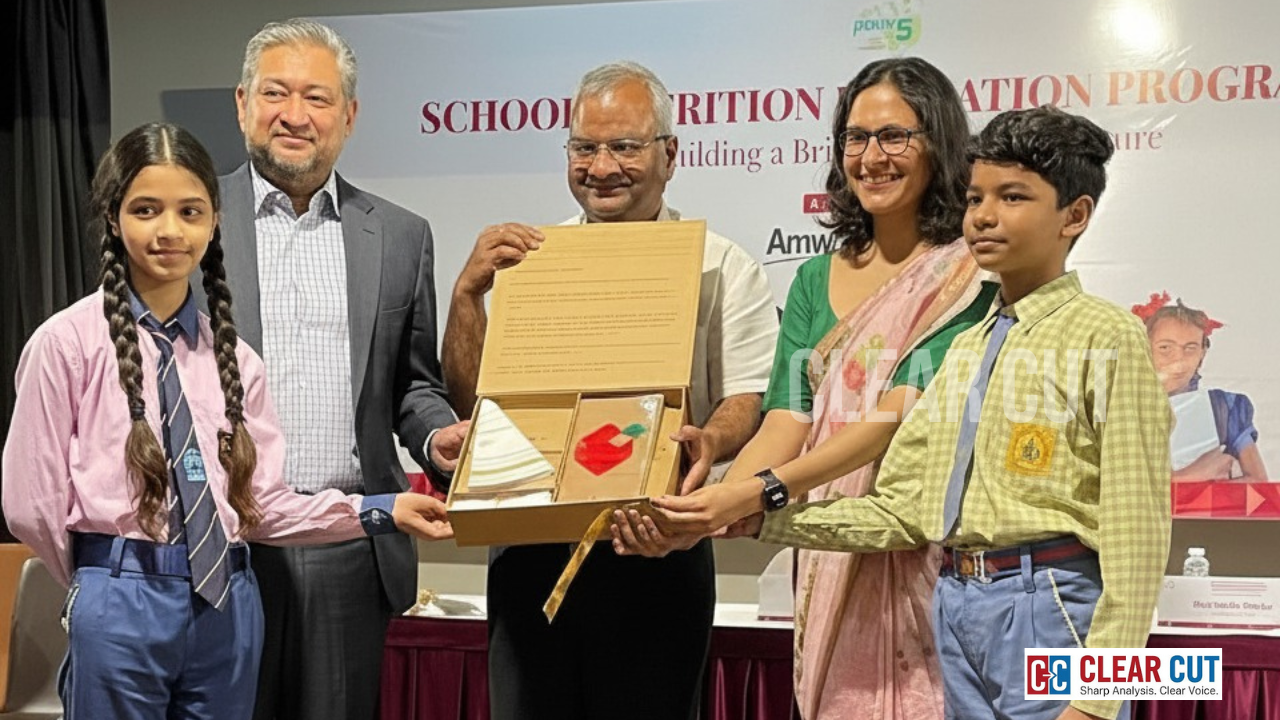
Representatives of Amway India and Nourishing Schools Foundation with the students | Photo Credit: Janmojaya Barik
Clear Cut CSR Desk
New Delhi, UPDATED: Sep 04, 2025 03:17 IST
Written By: Janmojaya Barik
The need for a response to the growing percentage of lifestyle diseases and poor dietary habits among the Indian population, especially the youth, needs to be addressed. As part of its CSR commitment, Amway India (one of the leading nutraceutical companies supporting health and wellbeing), in collaboration with the Nourishing Schools Foundation, has unveiled a school nutrition education program in certain regions of Delhi. This initiative integrates food literacy and basic education about nutrition into daily learning and empowers students to become advocates for promoting a healthier lifestyle. The program is expected to positively impact over
- 6,000 individuals, including approximately
- 1,500 children in its first year of operation.
The program is planned to be rolled out in six government- and NGO-run schools across the national capital, Delhi. Its curriculum and structure include
– games,
– interactive activities, and
– specially developed toolkits that make nutritional learning enjoyable and interesting for the students.
While it’s important to educate students about their nutrition, it’s equally important to teach the adults about what they are putting into their bodies and to be mindful about it. That’s why the initiative also includes teacher training programs that will make the educators aware, and they will encourage children to adopt and disseminate healthy practices within their parents, family, and community.
The launch event was attended by officials from the Delhi education department, teachers, and representatives of non-profit organizations who also participated in discussions on the importance of food literacy and healthy habits from a young age. Students were also encouraged to participate, and they also made presentations on nutrition and well-being.
“School age is a decisive stage to shape lifelong habits, and nutrition is at the heart of that journey. By investing early in preventive action, we are empowering children to become agents of change in their communities.”
– commented Mr. Rajneesh Chopra, Managing Director of Amway India.
Representatives of the Nourishing Schools Foundation, such as co-founder Archana Sinha, emphasized that schools are a much-needed mechanism in the progress of a healthy society. “By equipping children with the right knowledge and skills, we can create a ripple effect of healthier choices that lasts a lifetime,” she added.
This school nutrition initiative is being heralded as a precedent and a replicable model for future nutrition campaigns nationwide. By placing the young souls at the forefront of this initiative, the program seeks to establish a foundation for healthier habits.
The bigger picture isn’t as sunny as it seems. According to the National Family Health Survey (NFHS-5, 2019–21), approximately 36% of Indian children under five are stunted, 19% are wasted, and 32% are underweight, and India ranks 111 out of 125 countries in the Global Hunger Index 2023, with one of the world’s highest child wasting rates. The situation doesn’t seem to improve, as recent data shows children aged 4–10 derive 13% of their daily energy from sugar, and those aged 11–18 get 15%, far exceeding WHO (World Health Organisation) recommendations.
This initiative matters, as the country is at a critical crossroads in nutrition and public health. Despite decades of government programs, the country still struggles with high levels of child malnutrition and lifestyle-related health issues. The government schemes like the Mid-Day Meal scheme focus largely on providing food to the underprivileged children. However, what has been missing is nutrition education—ensuring that children understand why certain foods matter and how to adopt sustainable, healthy habits. This is where the Amway–NSF initiative fills a vital gap and is what the nation needs to focus immediately on.
Note: (with inputs from Free Press Journal)