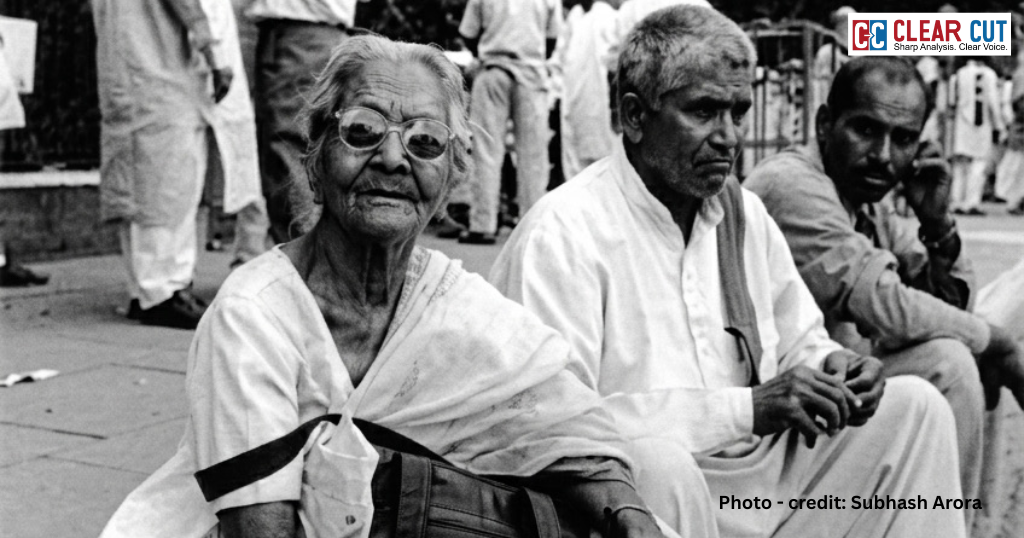
Shanta Toofani (1929-2011) was an unusual social worker, activist and educator. She completed her schooling at the age of 34, while running a household single-handedly and bringing up seven children. Having educated herself despite all odds, she was committed to educating others, with fierce love. For several decades this tiny woman stood tall, teaching children and adults, be it parents, community members, or policemen, lawyers and organizational heads.
Her uncompromising sincerity made her fearless. She encouraged people to rebel against exploitation and degradation; and told off the powerful. Young activists remember her with gratitude, having learnt from her what it means to empathize, and work from the ground up.
A recent study by The Solidarity Network notes the urgent need to “acknowledge frontline social work as skilled, essential and dignified labour.” As with other committed social workers, Shantaji was observant, analytical, possessed interpersonal and psycho-social skills, field expertise, and knowledge across several subject domains. She embodied dedication, worked ceaselessly, and fought for her rights as well as the rights of all workers.
Early Life: Survival Skills
Shantaji was born in Burma, to Nepali parents. Her father, often violent, forced her mother to leave. Shanta felt angry, abandoned, and motherless despite her father’s remarriage. In 1942, amid war and bombing, they fled to India, walking hundreds of kilometers over rugged terrain. As refugees, the family lived hand to mouth. Her father found employment in Dehra Dun, but refused to send Shanta to school beyond Class 3. She was married to a middle-aged already-married man, who gambled, committed thefts and was frequently jailed. Shanta earned through stitching, knitting and odd jobs, ensuring survival. She tried to educate all her children, and studied their school textbooks with them.
Her parents had named her Shanti. But when filling the form for her Class 10 exam, she wrote ‘Shanti’, thus changing her name, thinking, ‘I am angry and restless, not peaceful and tranquil.’ Much later, at the height of her activism, someone playfully called her ‘Shanta Toofani’ – and the sobriquet caught on—for she was energetic, like a storm.
Working Among the Deprived
After completing her schooling, Shantaji opened a one-room primary school, and put her all into teaching disadvantaged children. The results were palpable. She ran the school for several years. Meanwhile, her daughter Madhu completed post-graduation, secured a steady job and moved to Delhi. She persuaded Shantaji to move with her.
In 1979, Shantaji joined Ankur (then a non-formal education project, formally registered in 1983 as Ankur Society for Alternatives in Education). Ankur worked in low-income communities, developing skills of literacy and critical thinking, in line with the ‘pedagogy of the oppressed’. When Shantaji joined, the praxis grew stronger, the roots went deeper. Her dream of an equitable society resonated with the vision of Ankur’s founder-directors, Lalita Ramdas and Feisal Alkazi. Though they handed over charge by the 1990s, Shantaji stayed on much longer. Ankur provided space, opportunity and a loving support system, enabling her to help countless people.
Shantaji’s first posting was in Basti Chausath Khamba, Nizamuddin, where rates of out-of-school and child labour were high. Ankur’s NFE (Non-Formal Education) centre soon became popular, children enjoyed learning with Shantaji. The area had open drains, few toilets, no street lights—conditions she found replicated in Sundar Nagri, J.P. Colony, Mirdard Lane, New Seemapuri and other areas subsequently assigned to her. She began mobilizing community members to demand civic amenities. In one area, evening classes were held under an electricity pole. Bothered by long power cuts, she led a delegation of tiny tots to the Electricity Department; thereafter, electricity outages reduced.
Shantaji taught women at Adult Literacy Centers run by the city’s Education Department. In 1983, the Education Department recognized and awarded her as ‘Best Educator.’ She attended training courses in creative pedagogy and adult education, at Xavier Institute of Social Service (Ranchi), NCERT, Mata Sundari College (Delhi University), and in-house workshops in Ankur. By 1984, she was appointed Coordinator for eight NFE centers.
In 1983, Basti Chausath Khamba was demolished, and people resettled in Sundar Nagri. Sundar Nagri Primary School refused to admit many children, who had studied in Urdu medium. Shantaji coached the children, enabling them to pass the Hindi test and gain admission. A student, Nafisa, was denied admission because her parents had no certificates for her. Shantaji got a birth certificate made, secured admission in Class 3, and paid her school fees. Over the years, she paid fees for several children, recalling how her own son, Prem, was expelled from school because she couldn’t pay his school fees (of Rs 2)!
Wherever she worked, Shantaji integrated with families and communities. In Sundar Nagri, she built a tiny room, and frequently stayed overnight to fulfil various tasks. She traveled everywhere by bus—and those bus journeys too would often become sites of activism!
Independent Social Activism
Alongside her daily work in Ankur, Shantaji joined various groups, notably Jhuggi Jhopri Sangharsh Samiti, AIDS Bhedbhav Virodhi Andolan, and Sanjha Manch (a forum of 60 grassroots organizations). Fiery Shanta Toofani became a trusted presence at meetings, rallies and dharnas, campaigning against evictions, caste violence, draconian laws, championing the rights of slum-dwellers, street children, factory workers, hawkers, domestic workers, rickshaw pullers, construction workers, sex workers, sexual minorities, persons infected with HIV, drug addicts, blood donors, Bangladeshi refugees, survivors of communal violence… and more.
In 2005, Shantaji was selected a Nobel Peace Prize winner, one of thousand Peace-Women globally. She was almost indifferent. When a working-class comrade asked what she’d do if she were Prime Minister of India, she replied: `I will break all samadhis and burial sites, except that of Mahatma Gandhi, and get flats constructed on the land…. I will house thousands of poor people in the President’s house…. The houses of all leaders, business persons, capitalists will be outside the city and we the people of the working class, middle class, will live inside the city…. But I am not interested in becoming the Prime Minister or attaining high position. I am only interested in struggling along with my people for their basic Rights Within the NGO sector, labour laws were routinely flouted. Suddenly, Shantaji was informed that the retirement age was 62 years, and since she was nearly 80, she must leave. She was furious: `I was working with as much enthusiasm and efficiency as I used to earlier.’ She petitioned Delhi Commission for Women and the Labour Commissioner, against arbitrary policies. In demanding accountability, she was ahead of the times. Lakhs of NGO workers fall in a grey zone of precarious work, undervalued, akin to women’s unpaid care-work. The Solidarity Network’s survey found that even today, barely a quarter (25.4%) of frontline social workers enjoy any job security and formal work arrangements; and only 36.5% get employee benefits.
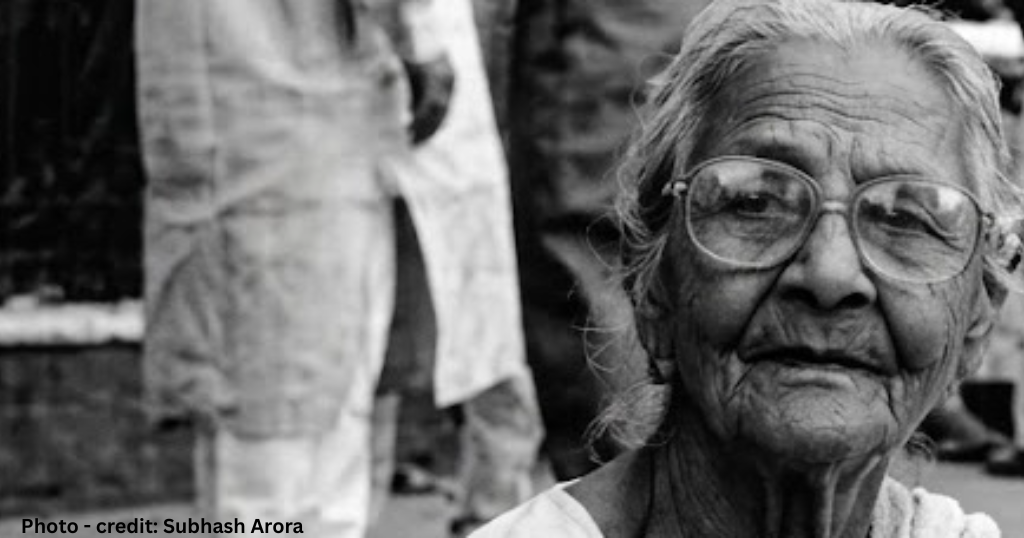
Shantaji remained incredibly active. Her politics, as always, flowed organically from experience: ‘… nurturing, connecting tiny and beautiful acts and currents of compassion and resistance, helping to reduce the suffering of any being, helping the downtrodden to stand for their rights.’ She worked intensively in Bhalaswa and Bawana, where over 3 lakh people from Yamuna Pushta were forcibly resettled.
She suffered from diabetes and blood pressure, but drove herself relentlessly. Her spirit remained strong, up to the end. Shantaji passed away on 7 December, 2011.
Remembrance
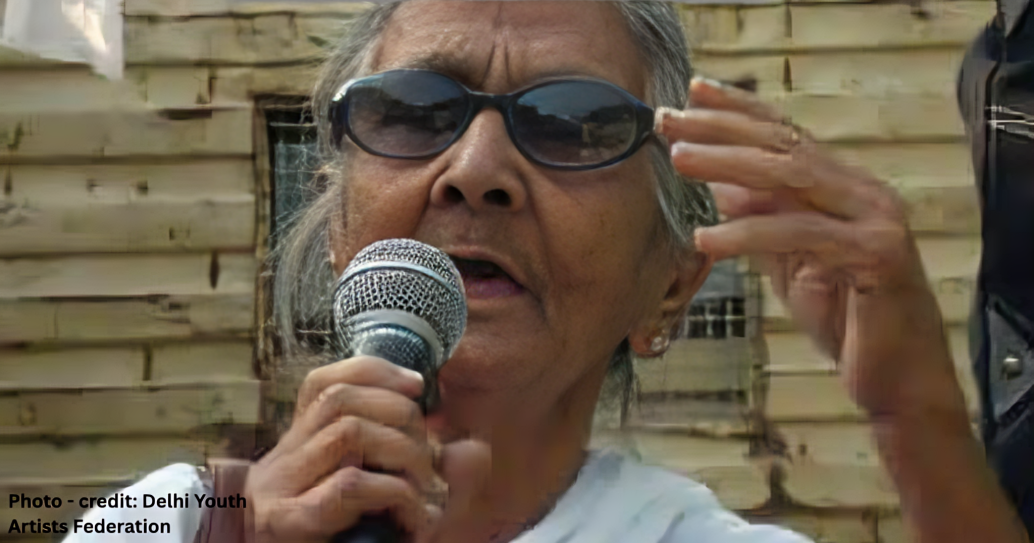
The Delhi Youth Artists Federation (DYFA) holds an annual memorial for her. On 7 December 2020, they organised ‘Mata Shanta Toofani ki Yaad Mein–Discussion on Violence against Urban Women Workers.’ Hemlata Kansotia of Labour Education and Development Society (LEADS) recalled: “I was 20 when I met Mata Shanta Toofaniji. I am from a Dalit working-class family. She gave me courage and confidence. Today, I organize women workers. At small warehouses in basements in Karol Bagh, no factory laws operate, owners don’t pay wages, foremen shout insults. Shantaji stood by the workers, day or night, rain or sun. That is what I learnt to do.”
Ashfaqullah noted, `Mataji was a wonderful guide, and inspired people like me. I was 22, she was 80. At Jantar Mantar during protests we sat on a hawker’s cart and drank chai. We held meetings in her house in Sundar Nagri. She was an independent woman, she set off wherever she wanted to. She was truly connected to movements. People like her build society. We should bring all those qualities into our life–that is a true tribute.’
We may well recall Shantaji’s prescient question: `To whom does the city belong?’ Her deeply inspirational life resonates with the struggles of youth, women, workers, all marginalised people, who reclaim the city and the world, and strive to bring about a just, equitable social order.
Clear Cut Gender, Education Desk
New Delhi, UPDATED: May 24, 2026 06:00 IST
Written By: Dr. Deepti Priya Mehrotra